Getting the Most from Dhul-Hijjah
I’ve a question for you to think about, something I’ve been thinking about a lot recently: If you have a day or an hour to live, what would you run after? What would you strive for in your last few hours or minutes on this dunya?

Allah gives us a lot of opportunities to gain His blessings, some of us would run to salat, some of us would run to family and friends, some would run to the Quran… We would run to all different things.
I guess depending to what your focus has been on in life, you would run towards that thing because your nafs would take you towards that thing automatically.
Another Chance for Great Rewards
Just something to think about really: Now, we’ve just come out of Ramadan, maybe two months ago, and for me, Ramadan under lockdown is a very spiritual time; it was just amazing and there were so many benefits from this.
What seemed at first to be something negative and quite difficult, I found it very spiritual.
I think back to when I was a new Muslim, my first Ramadan was quite difficult and tough to fast and really, I fell over many times and I thought “this is a wasted Ramadan”.
When it came the month of Dhul Hijjah, I didn’t know, for maybe ten years, I was never taught that the first third of Dhul Hijjah, apart from the Day of Arafah, is amazingly important opportunity that Allah gives us.
Allah tells us in the Quran:
Indeed, mankind is in loss. (103: 2)

We are at a loss except four categories:
1- Those who believe
2- Those who do righteous deeds
3- Those who call to truth
4- Those who call to patience
What Can We Do During These Days?
If you felt you had a difficult Ramadan, and that time was maybe not as well spent as you thought, now is your special chance that Allah has given you in order to gain back the blessings and the rewards.
According to Prophet Muhammad (peace be upon him), these ten days of this month are a special time of devotion:
There are no days on which good deeds are greater or more beloved to Allah than on these 10 days; so recite much tahlil (saying La ilaha illa Allah), Takbeer (saying Allahu Akbar), and Tahmeed (saying Alhamdulillah).
What does this mean?
This means that these first ten days are spent in thinking and remembering Allah, doing dhikr and many other righteous deeds.
What Else?
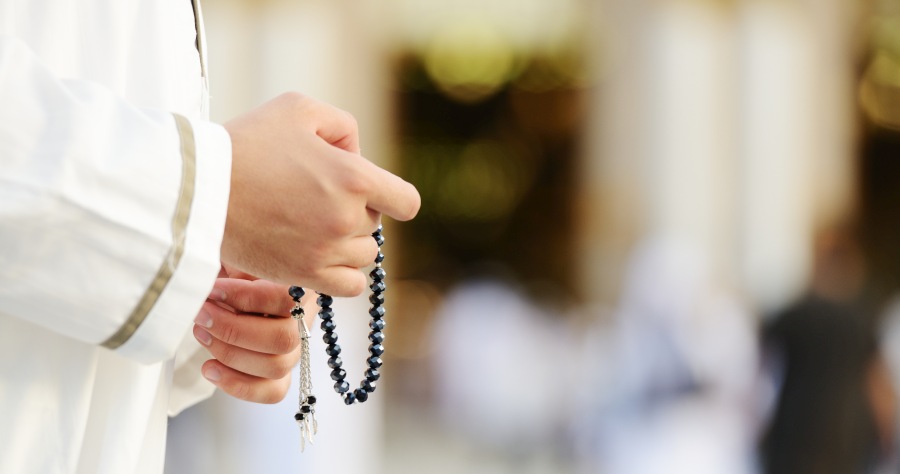
We already talked about doing dhikr, living takbeer, living tahmeed, but also we can do other types of dhikr.
Even thinking about Allah is a type of dhikr. We’re told in a hadith that whoever remembers Allah inside themselves, Allah remembers them. Who doesn’t want Allah to remember them?
Another thing you can do during thes days is renew your connection with Allah and also do what’s called “qurbani” (paying for an animal to be sacrificed and the meet going to poor people).
Ibn Umar reported that when Prophet Muhammad (peace be upon him) lived in Madinah for ten years, every year he slaughtered an animal. There is another hadith that says that for each hair on that slaughtered animal’s body, we get our sins forgiven.
Who doesn’t need that?
– Fasting on the Day of Arafah might be tough but it’s well worth doing
– Repenting and making sure that we are renewing our connection with Allah during these days
– Doing selfless deeds, giving in charity…
If you had that Ramadan that you felt you didn’t quite get therein, Allah has given you this new beautiful opportunity, so take it with both hands, make the most of it.
May Allah help you and accept your deeds and make it a road to one of the doors of Paradise.
The post Getting the Most from Dhul-Hijjah appeared first on About Islam.
source https://aboutislam.net/reading-islam/living-islam/getting-the-most-from-dhul-hijjah/


Comments
Post a Comment