Dhul-Hijjah 7: Keep Your Tongue Moist with Dhikr
Diligence is a hallmark of good protection. An unwavering eye looking over what you hold dear is a well valued asset in and of itself.
How to Feel the Divine Presence?
In order to remain protected and in divine presence, consistency is the key. Allah says:
{O you who believe, remember God with much remembrance; glorify Him morning and evening. It is He who blesses you, and his angels, to bring you from the shadows into the light. He is oft-Merciful with the believers.} (Al-Ahzab 33:41-43)
He also says:
{O you who believe, when you meet an adversary be firm and remember God so that you may be successful.} (Al-Anfal 8:45)
Dhikr: The Prophet’s Practice

It’s important to implement this at all times of the day. The Prophet’s (peace be upon him) practice was to make dhikr after every prayer. He would also reserve a special time after Fajr until the sun rose and after the Asr prayer until the sun declined to make dhikr.
Also the Prophet would awake to recite the best of dhikr – the Quran – in the middle of the night when others were sleeping. He would begin eating with “Bismillah” and end with “Alhamdulillah.” He would make dhikr while getting dressed, grooming, entering and exiting the lavatory, before sleep, and before relations with his wives.
In tune with his surroundings, the Prophet would make dhikr when he would hear storms in the distance, when rain would descend, when a gust of wind would blow, and when he was sitting idly. While speaking, he would intersperse dhikr in his speech.
He said: “Do not speak much without remembering God. Speech without the remembrance of God hardens the heart. And the farthest heart from God is a hardened one.” (At-Tirmidhi)
A man came to him and said “O God’s Messenger, the rulings of Islam have overwhelmed me. Give me something that I may stick to.”
He replied “Never allow your tongue to cease being moist with God’s remembrance.” (At-Tirmidhi)
Abu al-Darda’, a companion of the Prophet, was one of his most attentive companions. He would practice the regimented dhikr found in the Sunnah, following the Prophetic practices mentioned above.
Dhikr: Make It an Act of Second Nature
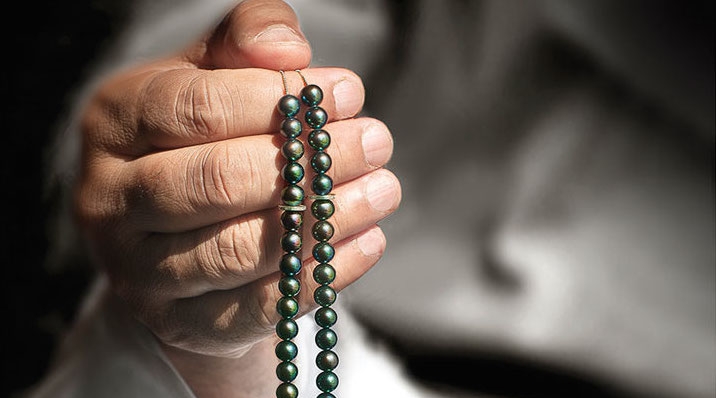
Dhikr is something that has to be an act of second nature, something that occurs like breathing and walking. Someone said to Abu al-Darda’ “I see you never ceasing to make dhikr. How many times a day do you do so?” He replied “One hundred thousand times, unless my fingers lose count.” (Siyar Alam al-Nubala)
Al-Rabi` ibn Anas said: “A sign that you love God is to remember him often. You never love something truly except that you mention it all the time.”
Fath al-Mawsli said “The one who loves God is not distracted from remembering him for even the blink of an eye.”
In this video, Imam Joe Bradford explains the importance of making dhikr all the time in order to gain the pleasure of Allah.
Source: JoeBradford
The post Dhul-Hijjah 7: Keep Your Tongue Moist with Dhikr appeared first on About Islam.
source https://aboutislam.net/shariah/refine-your-heart/advice/dhul-hijjah-7-keep-your-tongue-moist-with-dhikr/


Comments
Post a Comment