
Covid-19: Here’s How Burton Muslims Plan to Celebrate `Eid Al-Adha

The Muslims’ `Eid Al-Adha, also known as the Festival of Sacrifice, is one of the most important events in the Islamic Hijri calendar.

Marked on July 31, it begins with special prayers to mark the day. Muslims then offer udhiyah, a ritual that commemorates the great act of sacrifice Prophet Ibrahim and his son Isma`eel.

Coming in the middle of a pandemic, the local Muslim community in Burton have been urged to take precautionary measures towards a safe `Eid celebration.

The measures, which came as a result of discussions between health bosses and the local mosques, include:
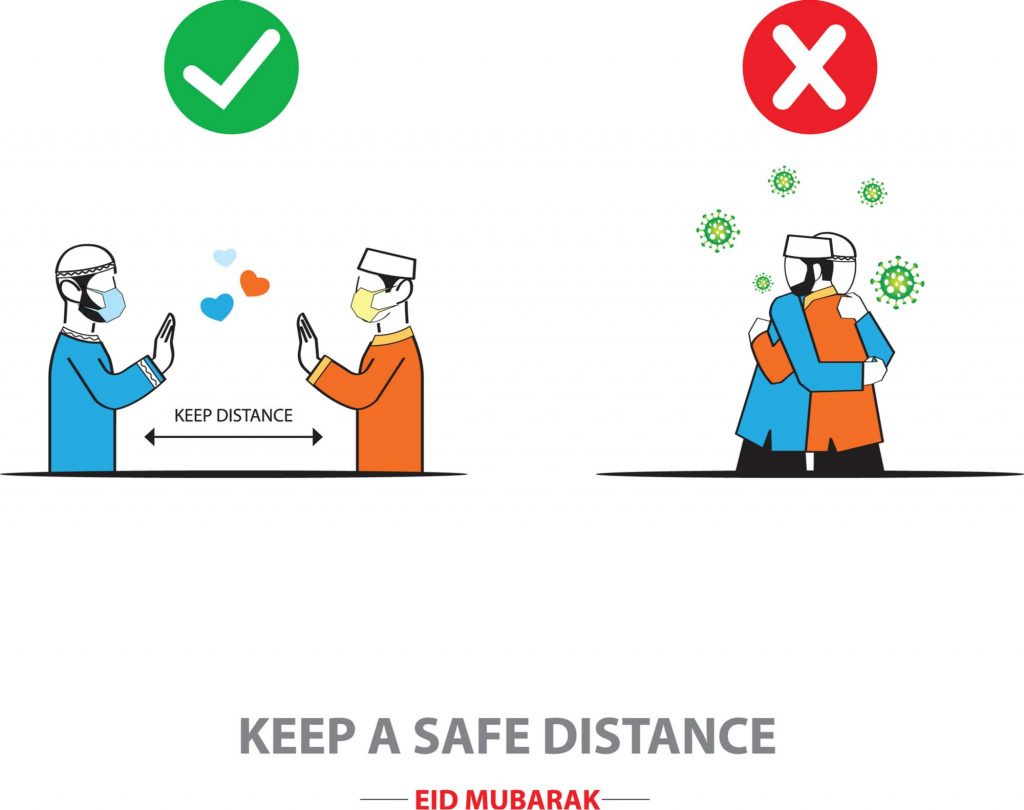
Covid-19: Here’s How Burton Muslims Plan to Celebrate `Eid Al-Adha
  • Maintaining social distancing with no handshakes or hugs.
  • Praying at home or outside if you can, especially if you are over 65 or have a health condition.
  • Do not visit other homes or allow visitors to come into your home this `Eid.
  • Wear face masks in all enclosed public spaces
  • No more than two people from the same household should meet with another household – either indoors or outdoors

Members of the Muslim community said they will observe these regulations to prevent an outbreak of virus.

“We will endeavor to cooperate and work with all authorities and Masjids,” Zahid Ali, trustees chairman at Princess Street Masjid, told Derby Telegraph.  

“We greatly urge everyone to follow the guidelines to beat the virus and save our loved ones.”

The post Covid-19: Here’s How Burton Muslims Plan to Celebrate `Eid Al-Adha appeared first on About Islam.


source https://aboutislam.net/muslim-issues/europe/covid-19-heres-how-burton-muslims-plan-to-celebrate-eid-al-adha/

Comments

Popular posts from this blog

List of Times and Places Where Dua is Accepted

A short reminder regarding the recommended times of dua . And I think what you need to know here is that the recommended times of dua or recommended things that can cause your dua to be accepted, can be divided into two sort of large groups: Am I Good Enough to Make Dua for Myself? Situations where your dua is accepted. Times where your dua is accepted So I’m going to very briefly mention them one after the other as much as possible. As for situations where your dua has been accepted: – The person who has been wronged or oppressed . – A person who finds themselves in severe difficulty after a calamity has struck. – The person who is traveling. – Someone who is fasting. – The one who is reciting the Quran or has just recited the Quran – Someone who is performing Hajj or Umrah or jihad. – The one who is making dua for someone in their absence . Because we know that when you make dua for someone in his absence an angel says: “ Ameen and to you”. – A person...

Ghuraba (The Strangers): Nasheed with English Subtitles

Islam began as something strange, and it shall return to being something strange, so give glad tidings the strangers. (Sahih Muslim 145) This famous nasheed has many versions; this one is from Muhammad al-Salman and has the subtitles in English embedded. [We are] strangers and we do not bow the foreheads to anyone besides Allah  […] Transliteration to help in the pronounciation:  Ghurabaa’ wa li ghairillaahi laa nahnil jibaa Aisha Stacey  wrote in an article for Aboutislam.net : “I think that many of you would agree that being Muslim in the 21st century makes you well acquainted with being strange. It might even be a metaphor for random, as in you have been randomly selected. […] many converts to Islam will tell you about feeling as if they were strangers, before finding Islam. They will speak of feeling that they belonged somewhere else that their lives were just slightly off center. They often speak about a vague sense of knowing they were not like everyone else...

Taqwa – Living the Main Purpose of Ramadan

Taqwa is a major purpose for the month of Ramadan. The people of taqwa are those who do the things that they are commanded and avoid the things which Allah has made prohibitive. And evidently, to reach a state of taqwa requires vigilance, it requires patience and sincerity. The verse is pertaining to fasting I found in a single set of verses in chapter 2 starting at verse 183: O you who have believed, decreed upon you is fasting as it was decreed upon those before you that you may become righteous. ( 2:183 ) A Collective Act of Worship Allah is telling us that fasting has been made obligatory and then Allah tells us that just as it was prescribed for those before us. We often get asked this question in Ramadan, “how’s the fast going for us?” And if we gave ourselves a moment to think about it, we see that Allah Most High has made the fast inside the month of Ramadan easy for us because we know that there is a collective spirit to fasting; we know that we’re not alone in this ...