
UK Heritage Honors Muslim WWII Heroine

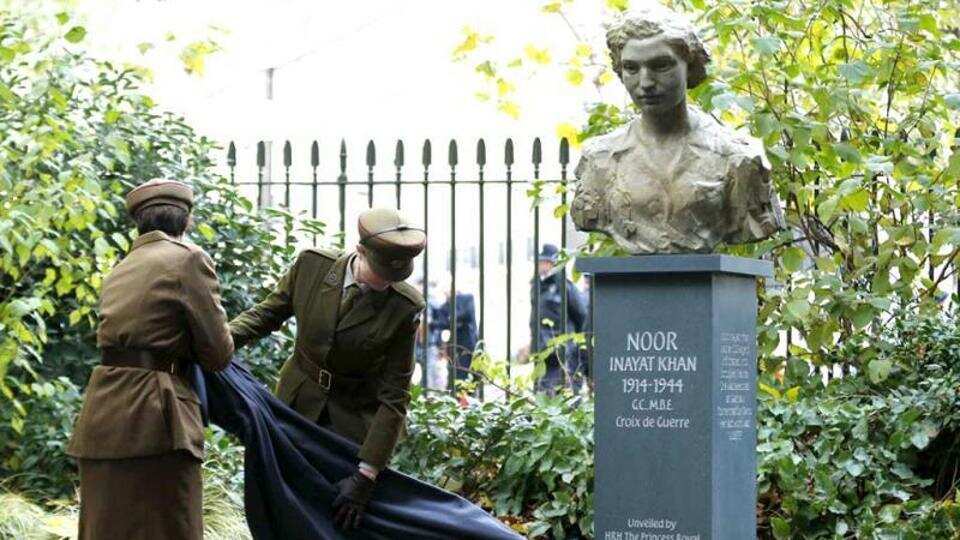
Noor Inayat Khan, a British Muslim woman who served British military during WWII, has become the first woman of South Asian descent to receive a heritage blue plaque in London.

English Heritage, a UK-based charity, called her “Britain’s first Muslim war heroine in Europe,” and unveiled the blue plaque at her family home in Bloomsbury, London in a live-streamed online event.

📚 Read Also: Petition Wants Muslim Woman on UK Bank Note

“When Noor Inayat Khan left this house on her last mission, she would never have dreamed that one day she would become a symbol of bravery. She was an unlikely spy,” her biographer Shrabani Basu said in a statement ahead of the ceremony, Reuters reported.

“As a Sufi she believed in non-violence and religious harmony. Yet when her adopted country needed her, she unhesitatingly gave her life in the fight against Fascism.”
True Heroine

Serving as a secret agent, Khan was born in Moscow to an Indian father and an American mother.

When France fell to the Nazis in 1940, she fled to the UK and joined the Women’s Auxiliary Air Force. In 1942, she was sent into Nazi-occupied France working as a spy for the Special Operations Executive (SOE).

In 1943, she was sent to Pforzheim prison in Germany where she was locked up in solitary confinement. Despite being tortured repeatedly, the young Muslim woman refused to reveal any information to her captors.

In 1944 she and three other SOE agents were moved to the Dachau concentration camp where they were killed.

In recognition of her services to her nation, Khan, who died at the age of 30, was awarded the George Cross, the second highest award of the honor system in the United Kingdom.

Following a long campaign in 2012 by Basu, a statue of Khan was put up in London.

The post UK Heritage Honors Muslim WWII Heroine appeared first on About Islam.


source https://aboutislam.net/muslim-issues/europe/uk-heritage-honors-muslim-wwii-heroine/

Comments

Popular posts from this blog

List of Times and Places Where Dua is Accepted

A short reminder regarding the recommended times of dua . And I think what you need to know here is that the recommended times of dua or recommended things that can cause your dua to be accepted, can be divided into two sort of large groups: Am I Good Enough to Make Dua for Myself? Situations where your dua is accepted. Times where your dua is accepted So I’m going to very briefly mention them one after the other as much as possible. As for situations where your dua has been accepted: – The person who has been wronged or oppressed . – A person who finds themselves in severe difficulty after a calamity has struck. – The person who is traveling. – Someone who is fasting. – The one who is reciting the Quran or has just recited the Quran – Someone who is performing Hajj or Umrah or jihad. – The one who is making dua for someone in their absence . Because we know that when you make dua for someone in his absence an angel says: “ Ameen and to you”. – A person...

Derechos de Las Mujeres en Islam

Durante el Tiempo del Profeta (la paz sea con él) Veamos cómo fueron tratadas las mujeres de todo el mundo durante la época del Profeta (la paz sea con él). En la Europa del siglo VIII, la religión principal era el catolicismo y durante este tiempo debatían si las mujeres tenían alma. Dijeron que las mujeres eran impuras y que no tenían derecho a la herencia. A las mujeres tampoco se les permitía tocar la Biblia. No era como ahora en el Islam, donde ellas no pueden tocar el Corán durante la menstruación, pero a las mujeres en la Europa del siglo VIII nunca se les permitió tocar la Biblia. En China e India, fueron quemadas vivas cuando murieron sus maridos. En Arabia Saudita practicaron infanticidio femenino en el que, si nacía una niña, la enterrarían viva. Si el marido de una mujer muere, un miembro de su familia se unirá a ella para demostrar que ahora es de su propiedad. Mujeres en el Islam Con el Islam llegó una nueva era para las mujeres. En el Islam, las mujeres tienen la...

Ghuraba (The Strangers): Nasheed with English Subtitles

Islam began as something strange, and it shall return to being something strange, so give glad tidings the strangers. (Sahih Muslim 145) This famous nasheed has many versions; this one is from Muhammad al-Salman and has the subtitles in English embedded. [We are] strangers and we do not bow the foreheads to anyone besides Allah  […] Transliteration to help in the pronounciation:  Ghurabaa’ wa li ghairillaahi laa nahnil jibaa Aisha Stacey  wrote in an article for Aboutislam.net : “I think that many of you would agree that being Muslim in the 21st century makes you well acquainted with being strange. It might even be a metaphor for random, as in you have been randomly selected. […] many converts to Islam will tell you about feeling as if they were strangers, before finding Islam. They will speak of feeling that they belonged somewhere else that their lives were just slightly off center. They often speak about a vague sense of knowing they were not like everyone else...