
Any Benefits of Muslim “Earthing” Prostration?

Prostration is the placement of the body in a reverentially or submissively prone position as a gesture.

Typically prostration is distinguished from the lesser acts of bowing or kneeling by involving a part of the body above the knee touching the ground, especially the hands.

Major world religions employ prostration as an act of submissiveness or worship to a supreme being or other worshiped entities (i.e. God or the gods), as in the sajdah of the Islamic prayer, salat, or to show reverence to persons or other elements of the religion.

In various cultures and traditions, prostrations are similarly used to show respect to rulers, civil authorities and elders or superiors. The Chinese kowtow or Ancient Persian proskynesis are examples.

The act has often traditionally been an important part of religious, civil, and traditional rituals and ceremonies. It remains in use in many cultures.

Prostrations in Islam

In Islam, prostrations are used to praise, glorify and humble oneself in front of Allah. They are a vital part of the five obligatory prayers performed daily; this is deemed obligatory for every Muslim whether the prayers are being performed individually or in congregation.

Additionally, the 32nd surah of the Qur’an is titled As-Sajdah. The Arabic word sujud (prostration) appears about 90 times in the Qur’an. Many Muslim scholars claim that this fact is another example of its significance in Islam.

In addition to the prescribed prayers in Sajda, with the exception of the Ahmadiyya thought, many schools of jurisprudence disallow individuals to beseech God as they please in their own language.

According to a traditional account of the words and deeds of Muhammad as contained in the collection of hadith of Ibn Majah, Muhammad is reported to have said that “The prayer [salah] is a cure for many diseases”.

In another hadith, he advised people to perform prostration calmly and to get up only when the body eases. It is also important to note that in Islam, prostration to any one but Allah is absolutely forbidden.
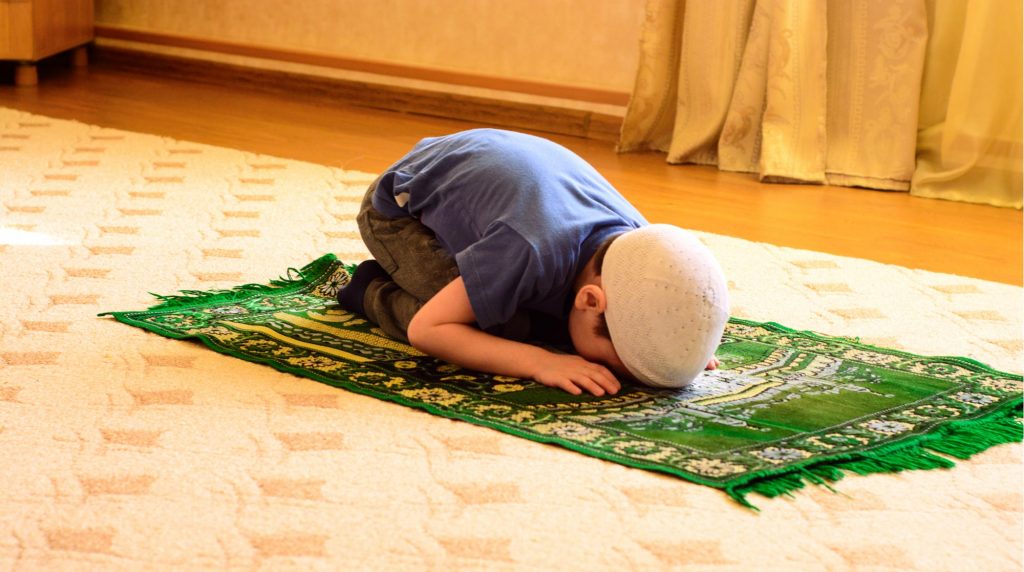
Muhammad strictly prohibited Muslims from prostrating before him, because prostration should only be performed to Allah, not to creatures. Regardless of the circumstances, no Muslim should request, or even accept, it from others.

This article is from our archive, originally published on an earlier date, and now republished for its importance.

The post Any Benefits of Muslim “Earthing” Prostration? appeared first on About Islam.


source https://aboutislam.net/muslim-issues/science-muslim-issues/benefits-muslim-earthing-prostration/

Comments

Popular posts from this blog

List of Times and Places Where Dua is Accepted

A short reminder regarding the recommended times of dua . And I think what you need to know here is that the recommended times of dua or recommended things that can cause your dua to be accepted, can be divided into two sort of large groups: Am I Good Enough to Make Dua for Myself? Situations where your dua is accepted. Times where your dua is accepted So I’m going to very briefly mention them one after the other as much as possible. As for situations where your dua has been accepted: – The person who has been wronged or oppressed . – A person who finds themselves in severe difficulty after a calamity has struck. – The person who is traveling. – Someone who is fasting. – The one who is reciting the Quran or has just recited the Quran – Someone who is performing Hajj or Umrah or jihad. – The one who is making dua for someone in their absence . Because we know that when you make dua for someone in his absence an angel says: “ Ameen and to you”. – A person...

Ghuraba (The Strangers): Nasheed with English Subtitles

Islam began as something strange, and it shall return to being something strange, so give glad tidings the strangers. (Sahih Muslim 145) This famous nasheed has many versions; this one is from Muhammad al-Salman and has the subtitles in English embedded. [We are] strangers and we do not bow the foreheads to anyone besides Allah  […] Transliteration to help in the pronounciation:  Ghurabaa’ wa li ghairillaahi laa nahnil jibaa Aisha Stacey  wrote in an article for Aboutislam.net : “I think that many of you would agree that being Muslim in the 21st century makes you well acquainted with being strange. It might even be a metaphor for random, as in you have been randomly selected. […] many converts to Islam will tell you about feeling as if they were strangers, before finding Islam. They will speak of feeling that they belonged somewhere else that their lives were just slightly off center. They often speak about a vague sense of knowing they were not like everyone else...

Taqwa – Living the Main Purpose of Ramadan

Taqwa is a major purpose for the month of Ramadan. The people of taqwa are those who do the things that they are commanded and avoid the things which Allah has made prohibitive. And evidently, to reach a state of taqwa requires vigilance, it requires patience and sincerity. The verse is pertaining to fasting I found in a single set of verses in chapter 2 starting at verse 183: O you who have believed, decreed upon you is fasting as it was decreed upon those before you that you may become righteous. ( 2:183 ) A Collective Act of Worship Allah is telling us that fasting has been made obligatory and then Allah tells us that just as it was prescribed for those before us. We often get asked this question in Ramadan, “how’s the fast going for us?” And if we gave ourselves a moment to think about it, we see that Allah Most High has made the fast inside the month of Ramadan easy for us because we know that there is a collective spirit to fasting; we know that we’re not alone in this ...