American Muslims Condemn Black Man Shooting
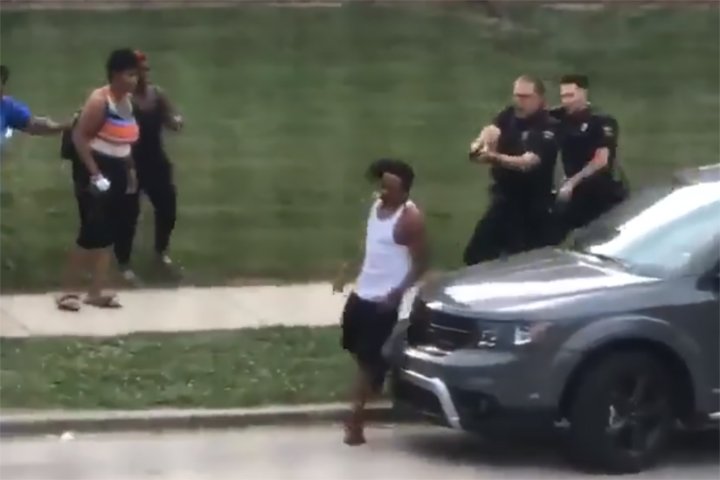
Jacob Blake, another African American man, became the latest victim of police brutality after he was tased and shot seven times in the back by a Wisconsin police officer in front of his kids.
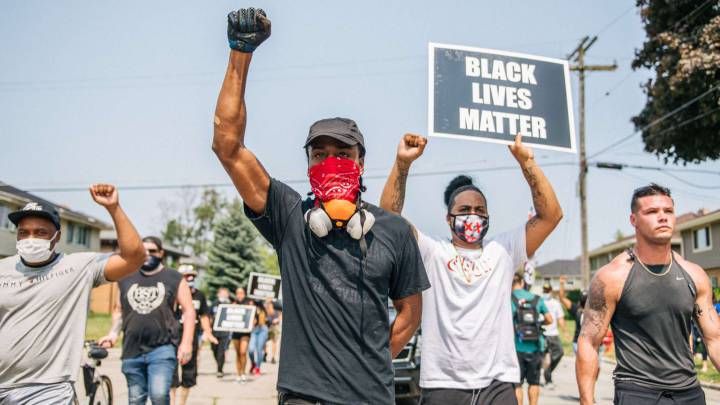
The video showing the horrible incident spread across social media, sparking protests and leading county officials to institute a curfew that remained in place until Tuesday morning.
Blake is in stable condition in an intensive care unit, according to attorney Ben Crump, who represents the family. But his father says his son has been paralysed from the waist down.
 Read Also: What Does Islam Teach About Justice
The shooting has sparked angry reactions from Muslim scholars and groups, asking for putting an end to the police brutal attacks.
“If you haven’t watched the video, you don’t need to. Just know that his kids watched it in real life. #JacobBlake,” imam Omar Suleiman wrote on Facebook.
Hussam Ayloush, the executive director at CAIR Greater Los Angeles also wrote on Facebook, “Jacob Blake was unarmed and non-violent when police shot him 7 times in the back. He was there to BREAK UP A FIGHT. He broke no laws and caused no harm.”
Abuse of Power

The Muslim Public Affairs Council (MPAC) also issued a statement to condemn the attack.
“In a nation which has in its most sacred text-; the U.S. Constitution, a promise of protection from cruel and unusual Punishment– we ask why Jacob Blake was not protected? We ask what could ever justify 8 bullets in the back? We ask how many more Black men and women have to face a similar fate before justice is served?” the angry statement read.
“The Muslim Public Affairs Council recognizes the egregious abuse of power by the Kenosha Police Department. It urges the Department and Governor Evers to ensure the removal and trial of all officers involved.
“The Muslim Public Affairs Council will always stand in solidarity with our brothers and sisters in the black community, and we strongly stand with Jacob Blake now,” it added.
Enough Is Enough

The Council on American Islamic Relations also issued another statement commenting on the incident.
“Enough is enough. The fact that these horrific and unnecessary shootings continue to occur serves as further proof that we must quickly and radically reform the way that law enforcement agencies operate, especially in communities of color,” CAIR National Deputy Director Edward Ahmed Mitchell said in a statement.
“We join Muslims across America in praying for God to grant swift justice and complete healing to Jacob Blake.
“We also call for authorities to take immediate action against any and all officers who violated the law by confronting and then shooting Jacob Blake after he reportedly attempted to break up a fight.”
America has been boiling after the death of another African American at the hands of a Minnesota police officer.
The killing of George Floyd sparked high profile demonstrations against racism across the United States and the world.
The post American Muslims Condemn Black Man Shooting appeared first on About Islam.
source https://aboutislam.net/muslim-issues/n-america/american-muslims-condemn-black-man-shooting/


Comments
Post a Comment