The Virgin Mary & Baby Jesus – A Unique Story
Birthdays are a common celebration among all groups of people.
While many of us don’t celebrate them, I have often wondered (sarcastically) why the child is showered with gifts and congratulations.
I know only too well what a mother goes through while delivering a child, so if anyone should be showered with gifts every year, it’s the mothers!
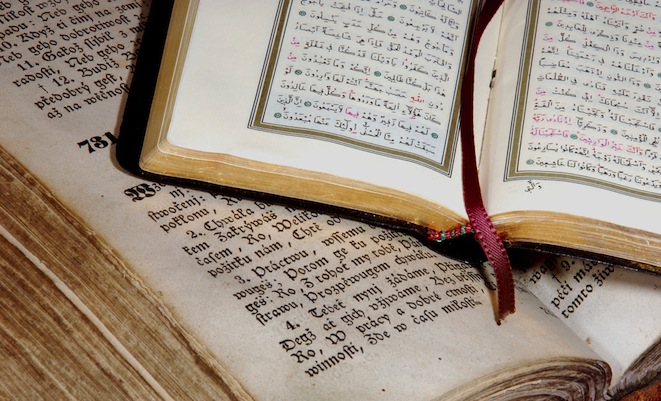
Christmas time comes around every year with a bang in the western world— an intricate birthday party celebrated by millions of people around the world.
So, while everyone celebrates the birth of Jesus, let us look to his mother. The inspirational and incredible story of the Virgin Mary.
Mary was born to an elderly couple during the time of the Prophet Zachariah AS.
In time, Mary was entrusted to the care of Zachariah.
She was righteous, pure, and pious and spent most of her time worshipping Allah SWT. Zachariah often noticed the blessings and miracles that seemed to surround her.
“So her Lord accepted her with good acceptance and caused her to grow in a good manner and put her in the care of Zechariah. Every time Zechariah entered upon her in the prayer chamber, he found with her provision. He said, “O Mary, from where is this [coming] to you?” She said, “It is from Allah. Indeed, Allah provides for whom He wills without account.” (Surah Al-Imran: 37)
From the above verse, we can see Mary had utter faith and belief in Allah SWT and His power.
Therein lies a major difference between Mary and many of us today; of course, we believe in Allah, but often, our du’as to Him are overshadowed by doubt, no matter how small.
We often wonder if Allah will answer our du’as; some even believe their requests to be futile and impossible to achieve and only turn to Allah as a last, desperate plea.
However, Mary’s statement, “Indeed, Allah provides for whom He wills without account,” shows her complete conviction in the limitless power of Allah SWT.
And [mention] when the angels said,
“O Mary, indeed Allah has chosen you and purified you and chosen you above the women of the worlds.” (Surah Al-Imran: 42)
Mary in Islam
Muslims hold Mary in high esteem, given that both Allah (SWT) and His Messenger (PBUH) have noted her importance. The Prophet Muhammad (PBUH) said:
“From among the women of the world who have reached perfection and who are worthy of following are (the following four): Maryam the daughter of Imran; Khadijah daughter of Khuwaylid; Fatima daughter of Muhammad and Asiyah wife of Fir’aun” (Tirmidhi).
The greatest miracle granted to Mary was the birth of Jesus (AS).
As Mary was a chaste woman when she conceived Jesus, his birth is that much more miraculous.
She said,
“How can I have a boy while no man has touched me and I have not been unchaste?” He said, “Thus [it will be]; your Lord says, ‘It is easy for Me, and We will make him a sign to the people and a mercy from Us. And it is a matter [already] decreed.‘ ” (Surah Maryam: 20-21)
As astounding and incredible as Mary was, some argue that this makes it difficult to relate to her; however, let us look at her for a moment as a mother.
A mother who still had to experience the sting of childbirth, a sensation a lot of us can actually relate to.

And the pains of childbirth drove her to the trunk of a palm tree. She said,
“Oh, I wish I had died before this and was in oblivion, forgotten.” But he called her from below her, “Do not grieve; your Lord has provided beneath you a stream. And shake toward you the trunk of the palm tree; it will drop upon you ripe, fresh dates. So eat and drink and be contented.
And if you see from among humanity anyone, say, ‘Indeed, I have vowed to the Most Merciful abstention, so I will not speak today to [any] man.’ ” (Surah Maryam: 23-26)
Motherhood Bond
As a mother of three, I can only too well recall the bond I had with my babies before they were even born, a bond that can be dismissed by a lot of modern society.

A mother’s intuition regarding her child can often be disregarded and even overruled by conventional medicine and scare tactics.
However, the bond between a mother and her unborn child is not to be dismissed so easily, and it is a bond that Islam recognizes and respects.
It was narrated that ‘Ali said:
“The Messenger of Allah (SAW) said: ‘The miscarried fetus will plead with his Lord if his parents are admitted to Hell. It will be said: “O fetus who pleads with your Lord! Admit your parents to Paradise.” So he will drag them out with his umbilical cord until he admits them to Paradise.’” (Ibn Majah)
From this, we can see that just because a child is still in the womb, it doesn’t mean that child doesn’t yet exist, and the same goes for the bond with the mother.
The moment a mother knows she is holding a life inside of her is the moment she begins to bond with her unborn child.
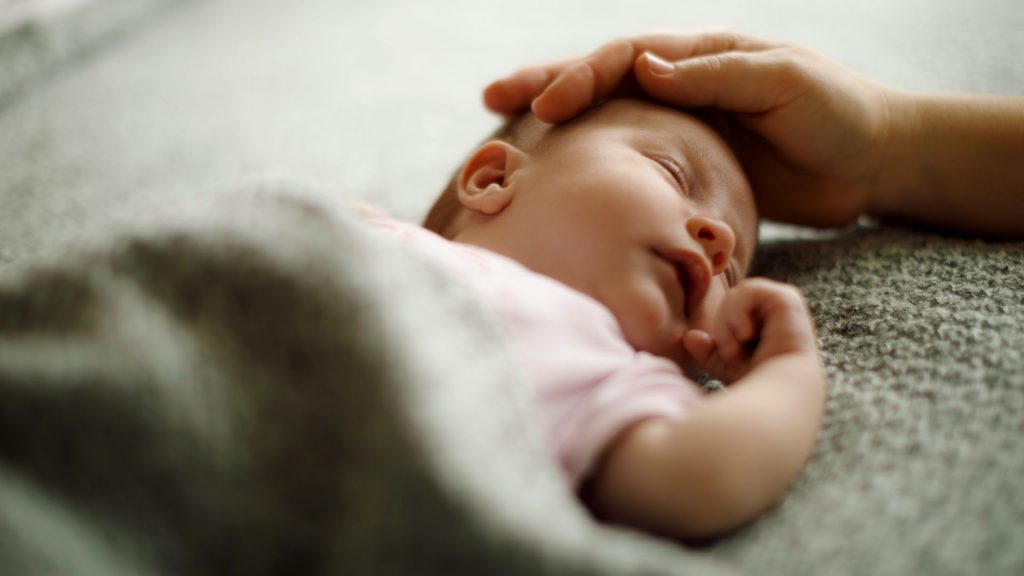
Every woman bonds differently, yet the bond is there in many ways and different degrees.
Most commonly, a mother talks to her child, soothes her child, and dreams of the moment she can hold and kiss her baby.
However, notice ayah 24 in Surah Maryam:
But he called her from below her, “Do not grieve; your Lord has provided beneath you a stream. (Surah Maryam: 24)
There are many explanations of this ayah that indicate these words were spoken to Mary by Jesus (AS) himself.
How beautiful is it to know that this mother’s bond was reciprocated by her baby, and he comforted her and encouraged her when she was at her most vulnerable and most isolated?
Amazingly, her baby’s support did not end there.
When Mary returned to her people with baby Jesus, she was scolded, as many assumed she had been unchaste.
In the face of these cruel accusations, her baby son jumped to her aid again and spoke directly to those harassing his mother.
“Then she brought him to her people, carrying him. They said, “O Mary, you have certainly done a thing unprecedented. O sister of Aaron, your father was not a man of evil, nor was your mother unchaste.” So she pointed to him. They said, “How can we speak to one who is in the cradle a child?”
[Jesus] said, “Indeed, I am the servant of Allah. He has given me the Scripture and made me a prophet. And He has made me blessed wherever I am and has enjoined upon me prayer and zakah as long as I remain alive. And [made me] dutiful to my mother, and He has not made me a wretched tyrant. And peace is on me the day I was born and the day I will die and the day I am raised alive.” (Surah Maryam: 27-33)
Again, when Mary was vulnerable, her son, Prophet Jesus (AS), aided her and supported her in a miraculous feat only made possible through the power of Allah SWT, a power that Mary, the mother of Jesus, had complete and utter conviction in.
May Allah SWT bless the Virgin Mary, Maryam Umm Isa, one of the greatest women this world has ever known.
***
This article is from our archives.
The post The Virgin Mary & Baby Jesus – A Unique Story appeared first on About Islam.
source https://aboutislam.net/family-life/moms-dads/the-virgin-mary-baby-jesus-a-unique-story/


Comments
Post a Comment