Why Most Converts Feel Down at Christmas Time But They Won’t Tell You
Warning: long post about being a convert at Christmas time. Some self-pity and much nostalgia are involved. Proceed at your own risk.
So I just walked home from the campus dining hall with tears dripping down my cheeks.
It’s 27° outside, so I was a little afraid of icicles forming instantaneously on my face, but mostly I was just trying to get a grip on myself.
Again. After nearly 19 years of going through this.
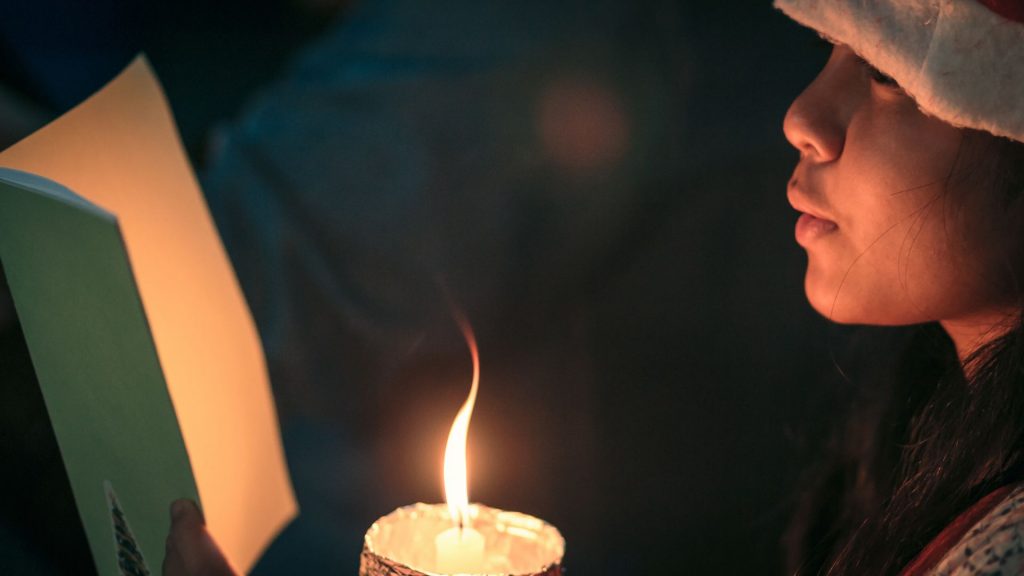
An acapella group was singing Christmas carols in the lobby, and I must say their arrangements were unique and beautiful. Thus, the tears. The memories. The nostalgia. The icicles.
My husband, who was born into a Muslim family in a Muslim-majority country, loves me, I know he does.
But he just doesn’t—just can’t—understand why this time of year always finds me moody and weepy.
To him and many born-Muslims, Christmas is just a consumer-driven, over-hyped, overdone extravaganza that starts right after Thanksgiving (or even shortly after Halloween) and doesn’t really end until after New Year’s Day (or even longer, depending on how long your neighbors procrastinate about taking down their Christmas lights and inflatable front-yard Santa).

He didn’t grow up here, and he didn’t grow up in a Christian family that made a BIG deal every year about Christmas. So he just doesn’t get it, and I understand that.
I put on a brave face most of the time.
When talking to non-Muslims who ask me if I miss Christmas, I tend to put on that stoic and cheerful persona that so many converts do.
I tell people that I’m fine.
That my husband, kids, and I (and millions of other Muslims) celebrate other holidays, and we have good times. And all of that is true.
But now that I’m talking to my Muslim sisters here, I’m going to let my guard down a bit.
You see, for me and so many converts, Christmas is a really hard time of year.
Our nostalgia about Christmas isn’t tied to Jesus’s birth; it’s not the religious aspects that we miss.
No, what we pine for (pun not intended, but now I’m gonna embrace it) are the memories that formed our childhoods, those sensations that were cemented in our brains through the appeal to ALL of our senses.
The fragrance of pine, peppermint, gingerbread, nutmeg.
The sight of twinkling lights and colorful trees. The sound of angelic voices singing familiar carols, and bells, and laughter, and squeals of excitement.
The feel of a warm fire, of a velvety stocking.
And don’t even get me *started* on the tantalizing flavors of all the Christmas treats. I’m gaining weight just thinking about it.
No wonder most people in this country grow up LOVING Christmas. It’s a pure delight for all the senses.

Some people think the hype about Christmas is really all about the gifts and the toys. Of course, those are lovely.
I’m not going to lie and pretend that the year I got a real Cabbage Patch Kid (named Bradley Garth) under the Christmas tree was not a watershed moment for me. Who wouldn’t love the presents?!
But most of all, we love the togetherness.
My family had simple holiday traditions that I still remember with so much nostalgia and gratitude.
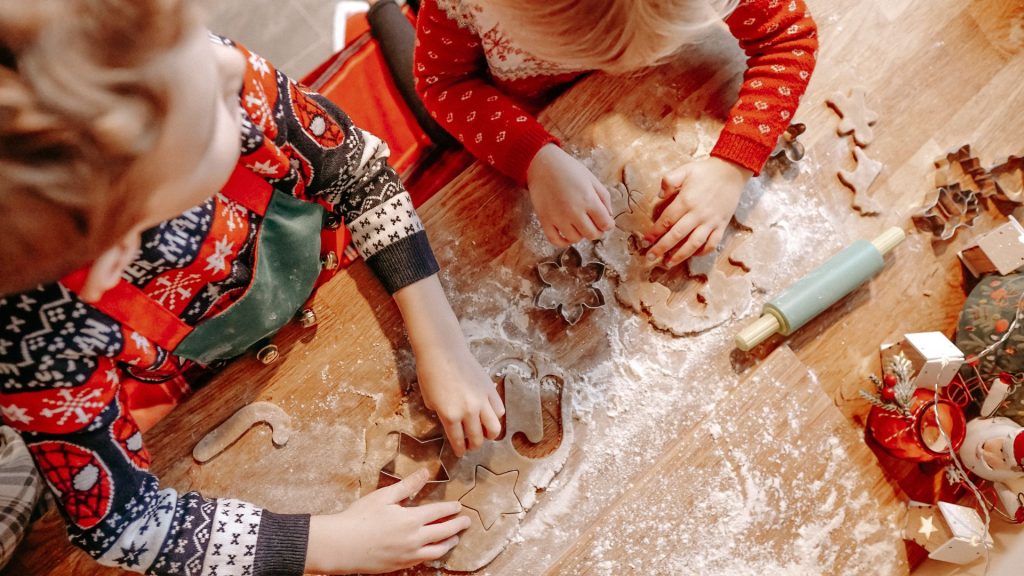
Every year, for instance, we had a gingerbread cookie decorating contest.
My dad was always the judge, and I didn’t realize until I was 10 years old that the whole thing was rigged. I was fiercely competitive and truly did not see that my dad was going to let every child win at least once.
Then, after each of us had won, he kept proclaiming himself the winner, year after year. We were furious.
Ok, *I* was.
I find myself nostalgic even about the things that I used to resent, like spending every Christmas night at my aunt’s house with my whole extended family.

She always had at least five cats living with her, and I’m extremely allergic to cats. I would spend the whole night either sniffing and sneezing or nearly comatose from a massive dose of Benadryl.
But my grandparents were still alive then, and I could hug and kiss them. My Grandpa would play “last tip” with me, which was like Tag but with less running and more of an element of surprise.
He always won, you crafty old sneak. My Grandma, who always smelled like Ponds Cold Cream, would make a huge pan of Rice Krispy Treats and somehow always know the perfect gift for me.
My dad was still alive back then, and we would play board games with all the cousins. I inherited my competitive streak from him. Dad and I usually win. We tried not to gloat.
And what hurts so much for me and many converts now is that after we embraced Islam, our family reunions were never quite the same.
Everyone has different family dynamics, of course, but I, personally, will never again receive the same warm, friendly reception amongst my relatives.
There are too many who cannot accept me as a Muslim. The few who still love and support me are far away, but more dear than ever to me.
It’s funny because over the years I have advised countless new Muslims to create their own family traditions.
“Make Eid as elaborate and wonderful as you can,” I always encourage them.
The theory is that if you create your own new Muslim family traditions, you will raise children who have the same kind of warm and fuzzy feelings about their deen as you did growing up with Christmas.

And maybe you will grieve less for those traditions you have left behind.
It’s good advice, if I do say so myself. And I do take it. I try to make Eids in our household special and memorable with decorations, food, and laughter.
All that is lovely, but it does not take away the longing I feel every Christmas.
It’s been nearly 2 decades, but I’m still not immune to the carols and the decorations and the general environment of fun and togetherness.
At this time of year, more than any other, I feel like an outsider: one foot firmly planted in the memories of my past, my culture, and my upbringing, but one foot stoically outside. Planted there purposefully, but not without sacrifice or longing.
Please make duaa for us, that Allah SWT will accept any sacrifice we’ve made for Him and that He SWT will make us pure of heart, steadfast in our deen, and committed to obedience to Him alone.
And we wouldn’t say no to some peppermint bark, just saying.
***
The article is from our archives.
The post Why Most Converts Feel Down at Christmas Time But They Won’t Tell You appeared first on About Islam.
source https://aboutislam.net/family-life/culture/converts-feel-christmas-time-wont-tell/


Comments
Post a Comment