Two Phases of Quran Revelation: What Differences?
The growth and development of the Muslim Ummah went through two great phases:
– The period in Makkah, before the Hijrah (622 CE)
– The period in Madinah, after the Hijrah.
Naturally the revelation from Allah to guide the Muslims also responded, to some extent, to these particular situations.
The Makkan Phase

The Makkan phase of the revelation lasted about 13 years, from the first revelation up to the Hijrah.
This phase is determined by the prime task of the Prophet to call people to Islam. The main themes of this call, based on the Qur’anic revelation are
– Allah and His unity (tawheed)
– The coming resurrection and judgment
– Righteous conduct
The role of the Prophet in this phase is in particular that of an announcer and warner.
The Madinan Phase
The Madinan phase lasted about 10 years, from the Hijrah to the death of the Prophet (peace and blessings be upon him).
While the basic themes of the Makkan phase remain, the factor of the Muslims’ growing together into a community and the formation of the Ummah, now makes its presence clearly felt.
In Madinah, there are four groups of people:
1. The Muhajirun (immigrants), who migrated from Makkah to Madinah
2. The Ansar (helpers), who originated from Madinah and helped the Muhajirun
3. The munafiqun (hypocrites), who are from Madinah and who pretended to support the Muslims
4. The Ahl Al-Kitab (People of the Book), that is, Jews and Christians, with their respective scriptures
In addition to these, the Qur’an also continued to address an-nas (mankind), that is, all people. It also referred to the disbelievers and ignorant ones.
Makkan and Madinan Surahs
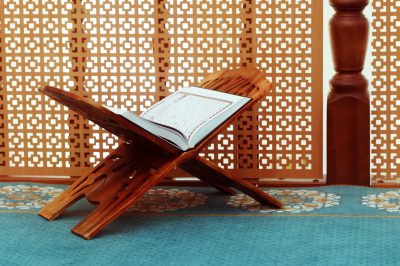
Surahs of the Qur’an have also been classified, according to their origin, into Makkan and Madinan surahs.
A surah is said to be of Makkan origin when its beginning was revealed in the Makkan phase, even if it contains verses from Madinah.
A surah is said to be of Madinan origin when its beginning was revealed in the Madinan phase, even if it has verses from the Makkan period in its text.
The following 85 surahs are, according to Az-Zarkashi, of Makkan origin:
96, 68, 73, 74, 111, 81, 87, 92, 89, 93, 94, 103, 100, 108, 102, 107, 109, 105, 113, 114, 112, 53, 80, 97, 91, 85, 95, 106, 101, 75, 104, 77, 50, 90, 86, 54, 38, 7, 72, 36, 25, 35, 19, 20, 56, 26, 27, 28, 17, 10, 11, 12, 15, 6, 37, 31, 34, 39, 40, 41, 42, 43, 44, 45, 46, 51, 88, 18, 16, 71, 14, 21, 23, 32, 52, 67, 69, 70, 78, 79, 82, 84. (Az-Zarkashi 1:193)
There is a difference of opinion as to what was last revealed in Makkah. Some say, following Ibn `Abbas, that it was Surah 29 (Al-`Ankabut); others say Surah 23 (Al-Mu’minun); still others say Surah 83 (Al-Mutaffifun). Some believe that Surah 83 is actually Madinan.
The following 29 Surahs are, according to Az-Zarkashi, of Madinan origin:
2, 8, 3, 33, 60, 4, 99, 57, 47, 13, 55, 76, 65, 98, 59, 110, 24, 22, 63, 58, 49, 66, 61, 62, 64, 48, 9, 5. (Az-Zarkashi 1:194)
Some hold that Surah 1 (Al-Fatihah) is of Makkan, others that it is of Madinan, origin.
The Makkan surahs constitute about 11, and the Madinan about 19 juz‘ (parts) of the text.
From the above division it is obvious that the Madinan surahs are the longer ones and comprise a much larger part of the Qur’an.
Page 1 of 2
The post Two Phases of Quran Revelation: What Differences? appeared first on About Islam.
source https://aboutislam.net/shariah/quran/introduction-to-the-quran/two-phases-of-quran-revelation-what-differences/


Comments
Post a Comment