Uyghur Muslims Detained for Hijab, Beards and Families: Leaked Data
“Big brother is watching you.”
George Orwell’s 1984 is a real-life experience for Uyghur Muslims living in Xinjiang.
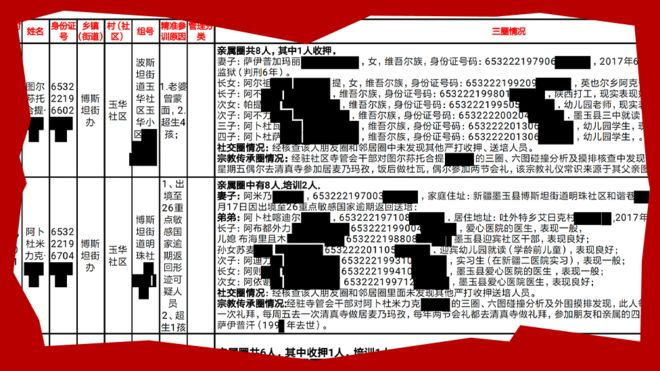
Newly revealed database showed that China detained Muslim minority Uyghurs for beards, wearing a hijab, visiting foreign countries and having “too many” children.
The database, known as the ”Karakax list”, exposes in extraordinary detail the main reasons for the detentions of Uyghurs.
The 137-page Chinese document, seen by the BBC, was leaked to Deutsche Welle News, along with German broadcasters NDR and WDR and newspaper Süddeutsche Zeitung.
The official list of detainees shows how Beijing is tracking every face, every family and every movement of the Uighurs.
One of the world’s leading experts on China’s policies in Xinjiang, Dr. Adrian Zenz, a senior fellow at the Victims of Communism Memorial Foundation in Washington, believes the latest leak is genuine.
“This remarkable document presents the strongest evidence I’ve seen to date that Beijing is actively persecuting and punishing normal practices of traditional religious beliefs,” he said.
Arbitrary Punishment
The Karakax List appears to be the most substantial evidence of the way this detailed information gathering has been used to sweep people into the camps.
It reveals, for example, how China has used the concept of “guilt by association” to incriminate and detain whole extended family networks in Xinjiang.
In one of the arbitrary, retrospective punishment, the list includes the case of a 38-year-old woman who was sent to a re-education camp for wearing a hijab some years ago.
Others were detained simply for applying for a passport, which proves that even the intention to travel abroad is now seen as a sign of radicalization in Xinjiang.
In row 66, a 34-year-old man with the first name Memettohti was interned for precisely applying for a passport, despite being described as posing “no practical risk”.
Authorities detained another 28-year-old man for “clicking on a web-link and unintentionally landing on a foreign website”.
Internment Camps
Many refer to China’s Xinjiang Uyghur Autonomous Region — home to many ethnic minorities, including the Turkic Uyghur people — as East Turkestan.
For years, Chinese authorities have imposed restrictions on Uyghur Muslims in the north-western region of Xinjiang.
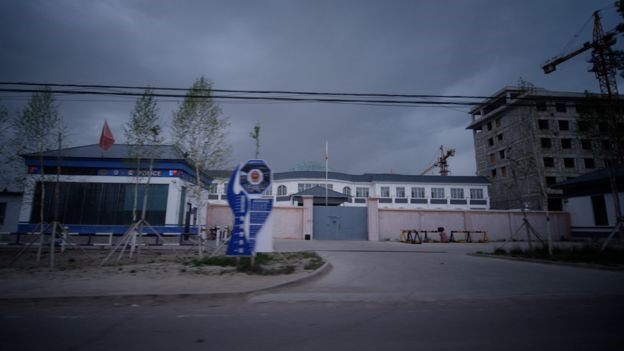
According to several reports by media and rights groups, more than one million Uyghurs and people of other mostly Muslim ethnic minorities have been rounded up in the camps in the tightly-controlled region.
In its 117-page report, “‘Eradicating Ideological Viruses’: China’s Campaign of Repression Against Xinjiang’s Muslims,” Human Rights Watch presented new evidence of the Chinese government’s mass arbitrary detention, torture, and mistreatment, and the increasingly pervasive controls on daily life.
After initially denying the camps existed, China describes them as vocational schools aimed at dampening the allure of Islamist extremism and violence.
The post Uyghur Muslims Detained for Hijab, Beards and Families: Leaked Data appeared first on About Islam.
source https://aboutislam.net/muslim-issues/world/uyghur-muslims-detained-for-hijab-beards-and-families-leaked-data/


Comments
Post a Comment