
Prayers and Healing

We, the physicians, have now come to accept a fact known to our patients for centuries: that healing is from God, and we are just an instrument of the Healer.

We give the same medication to two different patients with the same type of medical problem or perform similar operations on two patients otherwise at the same risk and one will survive and the other one doesn’t. It is more than simple luck.

As Socrates put it, “I dress the wound and God heals it.”? This was also acknowledged by Prophet Abraham (peace be upon him) as he was quoted in the Qur’an saying: “…and when I am ill, it is He who cures me” (Qur’an 26:80). God Himself attests to it by saying “If God touches thee with an affliction, no one can remove it but He” (Qur’an 6:17).
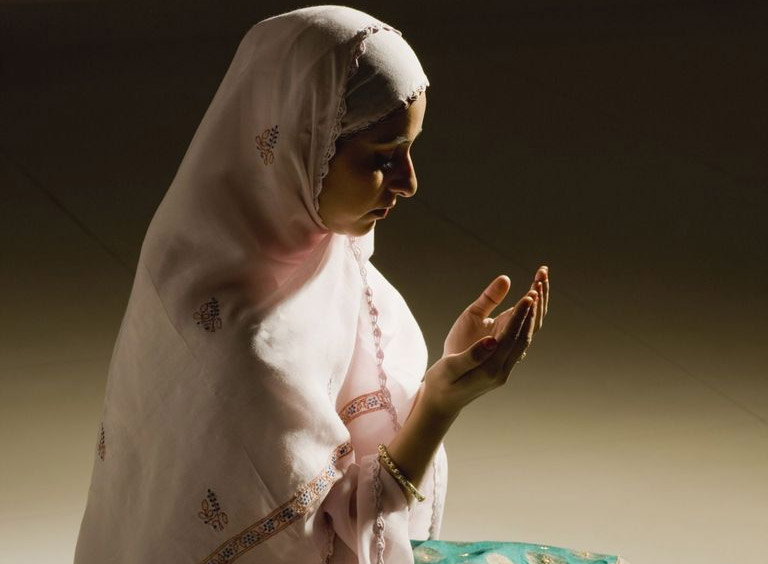
Prayers and Healing

Healing from the Qur’an

The Qur’an is not a textbook of medicine, rather it contains rules of guidance that if followed will promote good health and healing. This is why the Qur’an calls itself a book of healing.

“O mankind, there has come unto you a direction from your Lord and a healing for the heart and for those who believe in guidance and mercy” (Qur’an 10:57).

“We have sent down in the Qur’an that which is healing and a mercy to those who believe” (Qur’an 17:82)

📚 Read Also: 5 Practical Tips to Find Sweetness of Prayer

Healing from the Qur’an is of Three Types:

a. Legislative effect: This includes faith (iman) in God as not only the Creator but the Sustainer and the Protector. This also includes the medical benefits of obligatory prayers, fasting, charity, and pilgrimage.

b. Health Guidelines: Health-promoting items from the Qur’an and the tradition of the Prophet Mohammed (peace and blessings be upon him) including the use of honey, olives, fruit, lean meat, avoiding excessive eating, and the prohibition of alcohol, pork, homosexuality, sexual promiscuity, and sex during menstruation.

c. The direct healing effect of the Qur’an: Recitation of the Qur’an by the ill or for the ill (ruqya) has shown to have a direct healing effect. This most likely uses the medical benefits of echo.

The echo of sound is such a powerful force that it has been used to blast off mountains. Now the miniaturized version of echo is used in medicine to break kidney stones (lithotripsy), gallstones, and even vegetations in the subendothelial bacterial endocarditis (SBE). Listening to the recitation of the Holy Qur’an has been shown in a study conducted by Dr. Ahmed E. Kadi and his associates to lower blood pressure, heart rate, and to cause smooth muscle relaxation in Muslim Arabs, non-Arab Muslims and even in non-Muslims.? It is postulated that the echo target of? Alif Lam Meem? (the first three words of Surat Al-Baqarah-the 2nd chapter of the Qur’an) is in the heart and that of Ya-seen (chapter 36) is in the pituitary gland of the brain. Thus the Prophet Mohammad always stressed reading the Qur’an (Qur’an-recitation) loudly and not silently by saying, “The comparison between a silent reader and a recitor is like a bottle of perfume when it is closed and when it is opened.”

To Be Continued

This article is from our archive, originally published on an earlier date, and highlighted now for its importance

The post Prayers and Healing appeared first on About Islam.


source https://aboutislam.net/muslim-issues/science-muslim-issues/prayers-and-healing/

Comments

Popular posts from this blog

List of Times and Places Where Dua is Accepted

A short reminder regarding the recommended times of dua . And I think what you need to know here is that the recommended times of dua or recommended things that can cause your dua to be accepted, can be divided into two sort of large groups: Am I Good Enough to Make Dua for Myself? Situations where your dua is accepted. Times where your dua is accepted So I’m going to very briefly mention them one after the other as much as possible. As for situations where your dua has been accepted: – The person who has been wronged or oppressed . – A person who finds themselves in severe difficulty after a calamity has struck. – The person who is traveling. – Someone who is fasting. – The one who is reciting the Quran or has just recited the Quran – Someone who is performing Hajj or Umrah or jihad. – The one who is making dua for someone in their absence . Because we know that when you make dua for someone in his absence an angel says: “ Ameen and to you”. – A person...

Derechos de Las Mujeres en Islam

Durante el Tiempo del Profeta (la paz sea con él) Veamos cómo fueron tratadas las mujeres de todo el mundo durante la época del Profeta (la paz sea con él). En la Europa del siglo VIII, la religión principal era el catolicismo y durante este tiempo debatían si las mujeres tenían alma. Dijeron que las mujeres eran impuras y que no tenían derecho a la herencia. A las mujeres tampoco se les permitía tocar la Biblia. No era como ahora en el Islam, donde ellas no pueden tocar el Corán durante la menstruación, pero a las mujeres en la Europa del siglo VIII nunca se les permitió tocar la Biblia. En China e India, fueron quemadas vivas cuando murieron sus maridos. En Arabia Saudita practicaron infanticidio femenino en el que, si nacía una niña, la enterrarían viva. Si el marido de una mujer muere, un miembro de su familia se unirá a ella para demostrar que ahora es de su propiedad. Mujeres en el Islam Con el Islam llegó una nueva era para las mujeres. En el Islam, las mujeres tienen la...

Ghuraba (The Strangers): Nasheed with English Subtitles

Islam began as something strange, and it shall return to being something strange, so give glad tidings the strangers. (Sahih Muslim 145) This famous nasheed has many versions; this one is from Muhammad al-Salman and has the subtitles in English embedded. [We are] strangers and we do not bow the foreheads to anyone besides Allah  […] Transliteration to help in the pronounciation:  Ghurabaa’ wa li ghairillaahi laa nahnil jibaa Aisha Stacey  wrote in an article for Aboutislam.net : “I think that many of you would agree that being Muslim in the 21st century makes you well acquainted with being strange. It might even be a metaphor for random, as in you have been randomly selected. […] many converts to Islam will tell you about feeling as if they were strangers, before finding Islam. They will speak of feeling that they belonged somewhere else that their lives were just slightly off center. They often speak about a vague sense of knowing they were not like everyone else...