Are Our Mosques Youth-Friendly?
It took exactly fifty-four days to plan what was intended to be the event of the year. I was planning a child-friendly Jumu`ah event at my local mosque and I was so proud of the work I put into this project. My aim was to help parents feel comfortable with bringing their children to the mosque for Jumu`ah.

I provided a top-notch sensory-friendly child care room with providers, extra space in the mosque for parents, and alerted the Masjid community about the importance of being understanding and patient with children and their caregivers.
Well, something went wrong during the day of the event. I could see her faintly scurrying towards me from the corner of my large brown eyes.
Tears rolled down her flushed red face, as she pushed past me to go outside. I had no choice but to run after her. I stopped her and turned her around to identify the panic I saw on my thirteen-year-old daughter’s face.
“I hate coming to the Masjid!” my daughter exclaimed as she pushed past my embrace. I nudged her to tell me more.
“I was only trying to help my friend find the bathroom when a sister came up and told us we were rude for talking during Jumu`ah. She said I should be with my mother and the Masjid isn’t for talking,” my daughter said in between frequent sobs.
This caused me great pause and sadness, as I thought I planned my event to the exact detail.
The intention of this event was to allow parents and their children to feel safe and welcome in a space that is intended to serve their spiritual needs.
However, I was instantly shocked at how quickly people fell back into their old habits and faulty beliefs about how children should behave in the Masjid.
The Masjid’s Purpose
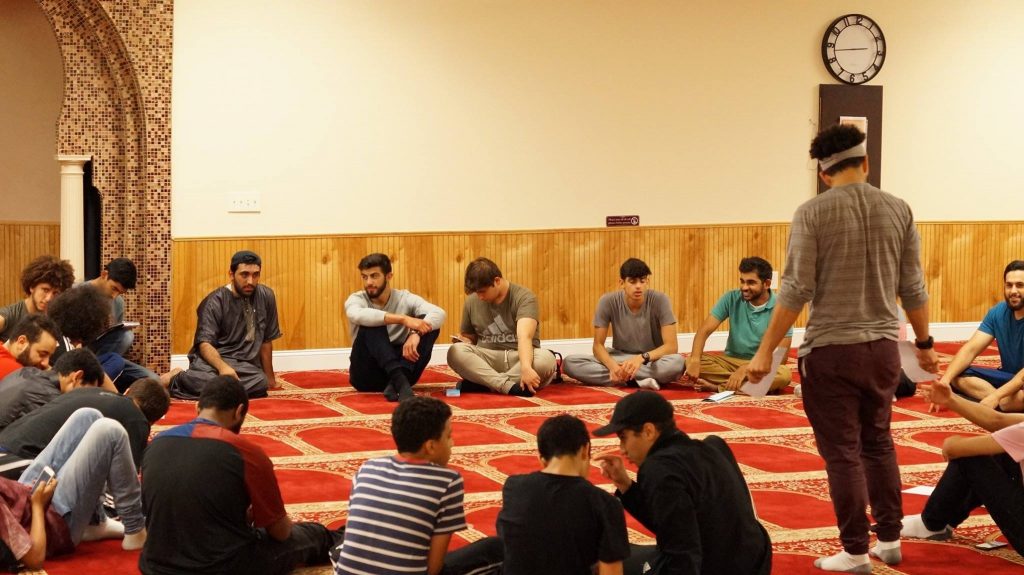
The Masjid is a place of worship for Muslims but it also serves as a social gathering spot for the community. There is an old fundamental belief that Masjids are quiet sanctuaries for people to visit, concentrate, and pray. However, this has never been the sole purpose of the mosque.
During the time of Prophet (PBUH), the Masjid served as a place to workshop, socialize, feed the poor, cure the wounded, and conduct town hall meetings. The Masjid has always served as the central hub for community affairs and this includes the affairs of our youth.
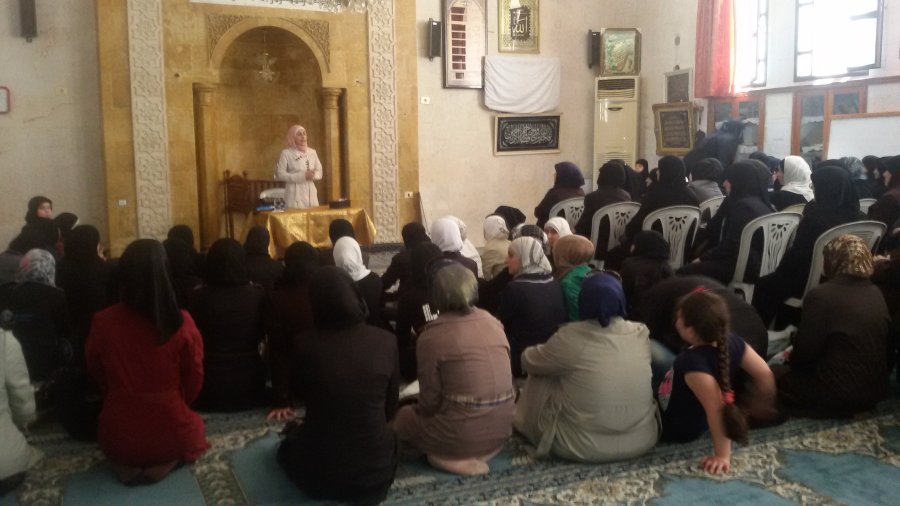
According to an article written by Soundvision, “Children were around the Masjid all the time. This was why the Prophet would sometimes shorten prayers when he heard a baby crying, knowing that prolonging it would inconvenience the child’s mother. Children were also known for playing and even jumping on the Prophet’s back while he was praying.”
Are Our Mosques Intended for Our Youth?
The historical purpose of the mosque was never intended to be a quiet and still sanctuary, however, many of our children experience being constantly silenced and scolded in our houses of worship.
This naturally creates a strained and negative relationship between the youth and the Masjid, as the Masjid becomes a place where they recall being punished, silenced, and unwelcome.
“I remember attending the mosque as a young child but as soon as I turned fourteen, I never wanted to go back. There wasn’t anything for me to do there and I felt really out of place,” Rayanah Shabazz told AboutIslam.net.
Many mosques struggle with becoming more than Jumu`ah prayers and occasional Sunday school programs.
Additionally, programs are often designed by adults, who may struggle to adequately meet the needs of the younger generation. Many adults believe Sunday schools are what the youth need and Masjid leaders focus on Qur’an schools and Islamic educational programs.
“My Sunday school experience was horrific. I remember being yelled at more than smiled at. Everything was about respect, being quiet, and being a perfect Muslim child. I grew to hate it,” Halima Abdullah, 16 told AboutIslam.net.
Creating Authentic Relationship Between the Masjid and Its Youth
Stop yelling, scolding, and reprimanding children in the masjid
Human behavior is often shaped and molded in the primary years. The research, published in the journal Psychological Science, found that what a parent believes about a child, plays a critical role in the development of a child’s mindset.
Scolding children and telling them to constantly be quiet and sit still in the Masjid often creates a permanent mindset of anxiety and fear amongst children.
On the contrary, it is also dangerous to create a mindset of unleashed play and chaos from children who are left unattended by their parents in the Masjid. This chaos can often lead to negative feelings surrounding the mosque by young children, teenagers, and adults, as it is human nature to desire balance and a safe and nurturing environment.
Create youth-friendly spaces
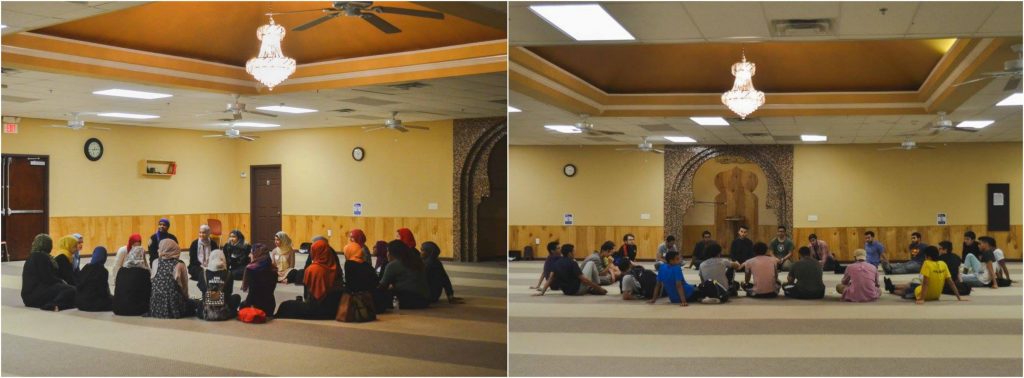
Many of us are tired of seeing child designated areas, which are often kept in the back of the Masjid or in an unkempt small room. There is a difference between a place and space. While a place provides a physical location, space is created by those who interact in it. Youth-friendly spaces should be designed by the youth and for the youth. Games, activities, comfy resting areas, and sensory-friendly spaces create a safe and welcoming environment for the youth to build relationships with their peers.
Include youth representatives on your Masjid board
Representation is critical to an organization’s success. It is counterproductive to plan programs, activities, and spaces for the youth without their input. As adults, we often believe that we know what’s best for them. They don’t often have a voice, which leads to further isolation and disinterest.
Masjid boards should make a consistent effort to engage the youth in the community decision making process. Their voice is critical and the future of our generation depends on it.
Allow the youth to design and create youth programs
Again, programs should not be designed by adults for the youth. Programs should be created by a team or panel of passionate youth members who understand the needs of their generation. Programs created by the youth have a stronger chance of surviving and sustaining future generations. Youth programs in the masjid will help create a positive relationship between the youth and the Masjid.
The post Are Our Mosques Youth-Friendly? appeared first on About Islam.
source https://aboutislam.net/muslim-issues/n-america/are-our-mosques-youth-friendly/


Comments
Post a Comment