Celebrating Al-Biruni: A Muslim Genius and Polymath
Scientific developments didn’t come on a silver platter. It had taken men and women throughout the ages to create the innovations we benefit from today, with Muslim scientists being no less involved than others. One such renowned scholar was the great Persian scientist Aburayhan Al-Biruni.
A distinguished Muslim medieval scientist, Al-Biruni rose to fame during the Golden Age of Islamic civilization which arguably extended between 750 CE -1258 CE.
“Al-Biruni is one the greatest scientists of all times,” Mohamed Said Abdi, a high school teacher of Islamic Studies, told AboutIslam.net. “He studied so many branches of science, and did a lot of practical work on a number of scientific innovations.”
Al-Biruni has had considerable influence on modern science, but none of his work was translated into western languages until the 20th century.
“His influence as a Muslim Scientist was above board. But in the study of history he wasn’t granted the kind of publicity he required, like those given to the Renaissance scientists in Europe,” says Fatuma Saman, a history teacher and a Principal at Nairobi Muslims Academy.
“This phenomenon not only affected Al-Biruni, but many Muslim medieval scientists whose ambitious and ground-breaking discoveries were hidden under the shelves only to gather dusts.”
However, historians believe that the role Al-Biruni played in scientific discoveries is by far one of remarkable achievement among not only Muslim scholars, but among scientists of all times.
Polymath
Born on September 4, 973 CE in Khwarezm, Khorasan (modern-day Uzbekistan,) Al-Biruni studied science tirelessly until his death in 1052 CE.
According to many historical sources, Al-Biruni was one of the most accomplished scientists of the entire middle ages.
He became legendary for his intellect and ingenuity in producing revolutionary science, leaving an indelible mark in the studies of so many disciplines. In scholarly parlance, he is regarded as a polymath. He left nothing to chance in his unbounded ambition for advancing the scientific understanding of his day.
He had his finger in every pie, from voluminous anthropology to complex astronomy and astrology; from composite chemistry to comparative sociology; from scientific mathematics to phenomenal physics; and yet more demanding from behavioral psychology to principle philosophy.
He is on record to have said, “I have begun with geometry and proceeded to arithmetic and the science of numbers, then to the structure of the Universe, and finally to judicial astrology, for no one is worthy of the style and title of astrologer who is not thoroughly conversant with these four sciences.”
English renaissance astrologer William Lilly in his book ‘Christian Astrology’ described Al-Biruni as a man of great wisdom with unmatched desire for science during the Middle Ages.
“An excellent disputant or logician, arguing with learning and discretion, and using much eloquence in his speech, a searcher into all kinds of mysteries and learning, sharp and witty, learning almost anything without a teacher; ambitious of being exquisite in every science, desirous naturally of travel and seeing foreign parts: a man of an unwearied fancy, curious in the search of any occult knowledge; able by his own genius to produce wonders; given to divination and the more secret knowledge,” Lilly wrote.

Al-Biruni is said to be the first man to carry out elaborate experiments linked to the astronomical occurrence. He pragmatically experimented and described the solar eclipse on April 8, 1019, and the lunar eclipse on September 17, 1019.
In 1031, Al-Biruni concluded an all-embracing astronomical encyclopedia called Kitab al-Qanun al-Mas’udi (Latinized as “Canon Mas’udicus,”) in which he recorded his astronomical results and invented astronomical tables with logical conclusions.
According to Encyclopedia Britannica, Al-Biruni’s original input into astronomy and astrology is clearly noticeable in almost every chapter of the book.
“Al-Biruni drew a subtle distinction between the motion of the solar apogee and the motion of precession and explored many other applied mathematical techniques to achieve much higher precision and ease of use of tabulated astronomical results,” Britannica states.
According to the website MacTutor History of Mathematics Archive, maintained by Professor John J. O’Connor and Edmund F. Robertson at the University of St Andrews, Scotland, Al-Biruni determined the latitude of his hometown using the maximum altitude of the Sun at the tender age of 17.
“Important contributions to geodesy and geography were also made by Al-Biruni. He introduced techniques to measure the Earth and distances on it using triangulation. He found the radius of the Earth to be 6,339.6 km, a value not obtained in the West until the 16th century,” explains the website.
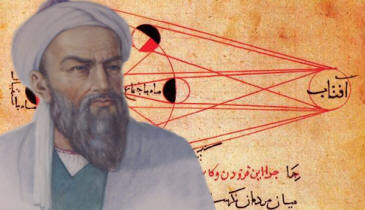
146 Books
The Muslim scientist also racked his brain to expose and study gemstones and metals. Mineralogy was one among his best findings and here he put his best foot forward to precisely measure mineral densities.
He is said to have described about 100 known minerals, their varieties and rock occurrences, as well as characteristics such as color, hardness, production, and cost.
“This important reference on precious stones was quoted by many later scientists. It is the third authentic text known on mineralogy and equal precision in density measurement was not achieved in Europe until the 18th century,” wrote James Sandusky Aber, a Professor of Geology, in his work on History of Geology.
Elsewhere in anthropology, he studied the Indian community of his century, thus becoming the father of Indology. His remarkable achievements studying the history, philosophy, medicine of India earned him the title “the first anthropologist.”
According to many historians, the world’s enthusiastic clinch of modern anthropology could not have come easily without the pioneering footprint of Al-Biruni.
In a nutshell, Al-Biruni’s works total of 146 books. These include 35 books on astronomy, 4 on astrolabes, 23 on astrology, 5 on chronology, 2 on time measurement, 9 on geography, 10 on geodesy and mapping theory, 15 on mathematics, 2 on mechanics, 2 on medicine and pharmacology, 1 on meteorology, 2 on mineralogy and gems, 4 on history, 2 on India, 3 on religion and philosophy, 16 literary works, 2 books on magic, and 9 unclassified books.
According to scientists, among all these works, only 22 have survived, and only 13 of these works have been published.
This article is from our archive, originally published on an earlier date, and highlighted now for its importance
References:
- James S. Aber. Abu Rayhan al-Biruni. History of Geology. 2003.
- George Saliba. Al-Bīrūnī. Encyclopaedia Britannica.
- Michio Yano. Bīrūnī: Abū al‐Rayḥān Muḥammad ibn Aḥmad al‐Bīrūnī. 2007.
The post Celebrating Al-Biruni: A Muslim Genius and Polymath appeared first on About Islam.
source https://aboutislam.net/muslim-issues/science-muslim-issues/celebrating-al-biruni/


Comments
Post a Comment