
Muslim Youth Find Religious Education in London Faith Hub

Finding a reliable source of religious education might be a challenge to some Muslim youths living in the West.
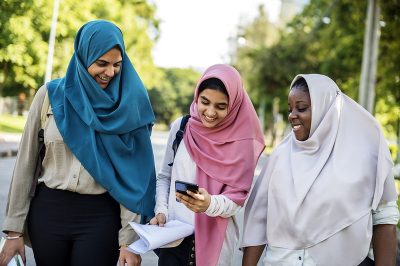
Yet, British Muslim youths are finding their long-sought target in a new faith community that has been established in London recently.

Founded by three young Muslim men one year ago, Faith offers a community space that facilitates spiritual growth while prioritizing fellowship, openness, accessibility, and relevance.

The spiritual community hub for Muslims offers Qur’an classes as well as tafsir, or Qur’anic exegesis.

With many youth feeling neglected by their mosques, Faith was set up to foster spiritual and social community growth among millennial Muslims beyond the traditional mosque environment.

Faith community co-founders Adel Chowdhury, center, and Imam Shabbir Hassan, right, chat during a break in a session, Jan. 27, 2020, in the group’s new permanent space in London. RNS photo by Aysha Khan

“The reality is that there is a disenfranchised kind of feeling people may have, and because of religious trauma or a bad experience, they don’t feel welcome in the masjid or other Muslim spaces,” co-founder Sheikh Hasib Noor explained, Religion News reported.

“People feel like their voices are not being heard, or that the relevance wasn’t there, or their spiritual needs are not being met. We felt like we could provide that to people with an environment where the social is just as important as the spiritual.”
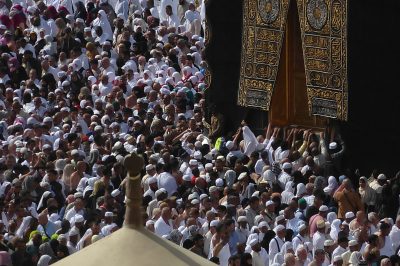
Fresh Community

Organizers say Faith is particularly aimed at offering a nonjudgmental and welcoming environment for those who may feel uncomfortable at their local mosque.

Faith’s tagline, quoted in countless social media posts alongside emojis of brown-skinned prayer hands, drives the message home: “Come as you are, to faith as it is.”

In that way, co-founders Imam Shabbir Hassan said he hopes to build young British Muslims a bridge back to traditional Islamic spaces.

“We hope we can connect with the masajid that are already out there, and start gently pushing people toward the mosque,” he said.

“Because obviously there’s a disconnect, and we want to bridge that gap. We want to get people to a level where they’re comfortable going to a mosque and continue coming to us.”

📚 Read Also: The Black American Conference: Reclaiming Muslim Youth

Youth-Friendly Mosques?

The Masjid is a place of worship for Muslims but it also serves as a social gathering spot for the community.

During the time of Prophet (PBUH), the Masjid served as a place to workshop, socialize, feed the poor, cure the wounded, and conduct town hall meetings. The Masjid has always served as the central hub for community affairs and this includes the affairs of our youth. 

However, many Muslim youths have been complaining that mosques do not accommodate them, fail to offer programs interesting to them, and give traditional sermons that are no longer related to their age and time.

For interesting advice on how to encourage youth into mosques, check this:

The post Muslim Youth Find Religious Education in London Faith Hub appeared first on About Islam.


source https://aboutislam.net/muslim-issues/europe/muslim-youth-find-religious-education-in-london-faith-hub/

Comments

Popular posts from this blog

List of Times and Places Where Dua is Accepted

A short reminder regarding the recommended times of dua . And I think what you need to know here is that the recommended times of dua or recommended things that can cause your dua to be accepted, can be divided into two sort of large groups: Am I Good Enough to Make Dua for Myself? Situations where your dua is accepted. Times where your dua is accepted So I’m going to very briefly mention them one after the other as much as possible. As for situations where your dua has been accepted: – The person who has been wronged or oppressed . – A person who finds themselves in severe difficulty after a calamity has struck. – The person who is traveling. – Someone who is fasting. – The one who is reciting the Quran or has just recited the Quran – Someone who is performing Hajj or Umrah or jihad. – The one who is making dua for someone in their absence . Because we know that when you make dua for someone in his absence an angel says: “ Ameen and to you”. – A person...

Derechos de Las Mujeres en Islam

Durante el Tiempo del Profeta (la paz sea con él) Veamos cómo fueron tratadas las mujeres de todo el mundo durante la época del Profeta (la paz sea con él). En la Europa del siglo VIII, la religión principal era el catolicismo y durante este tiempo debatían si las mujeres tenían alma. Dijeron que las mujeres eran impuras y que no tenían derecho a la herencia. A las mujeres tampoco se les permitía tocar la Biblia. No era como ahora en el Islam, donde ellas no pueden tocar el Corán durante la menstruación, pero a las mujeres en la Europa del siglo VIII nunca se les permitió tocar la Biblia. En China e India, fueron quemadas vivas cuando murieron sus maridos. En Arabia Saudita practicaron infanticidio femenino en el que, si nacía una niña, la enterrarían viva. Si el marido de una mujer muere, un miembro de su familia se unirá a ella para demostrar que ahora es de su propiedad. Mujeres en el Islam Con el Islam llegó una nueva era para las mujeres. En el Islam, las mujeres tienen la...

Ghuraba (The Strangers): Nasheed with English Subtitles

Islam began as something strange, and it shall return to being something strange, so give glad tidings the strangers. (Sahih Muslim 145) This famous nasheed has many versions; this one is from Muhammad al-Salman and has the subtitles in English embedded. [We are] strangers and we do not bow the foreheads to anyone besides Allah  […] Transliteration to help in the pronounciation:  Ghurabaa’ wa li ghairillaahi laa nahnil jibaa Aisha Stacey  wrote in an article for Aboutislam.net : “I think that many of you would agree that being Muslim in the 21st century makes you well acquainted with being strange. It might even be a metaphor for random, as in you have been randomly selected. […] many converts to Islam will tell you about feeling as if they were strangers, before finding Islam. They will speak of feeling that they belonged somewhere else that their lives were just slightly off center. They often speak about a vague sense of knowing they were not like everyone else...