
Veiled Racism: Europe between Banning Niqab, Forcing Face Masks

Since the outbreak of the COVID-19 pandemic, the World Health Organization has advised people to wear face masks.

While face coverings are fast becoming the norm to slow the spread of the novel coronavirus, many people are questioning the law forbidding niqab on the basis of public safety.

For example in the UK in 2018, the now-prime minister Boris Johnson compared women who wear the burqa/niqab to “letterboxes” and “bank robbers”.

📚 Read Also: Aren’t Women in Niqab Too Oppressed?

Shaina Ahmed, a 32-year-old nursery teacher and wife of an imam in the south east of England, says that prior to COVID-19, wearing niqab or face covering in Britain could be “so exhausting”.

“[I] feel like I have to be extra friendly in public, because I am representing the Muslim community to the non-Muslim community,” she told The Independent.

Difference Narrative
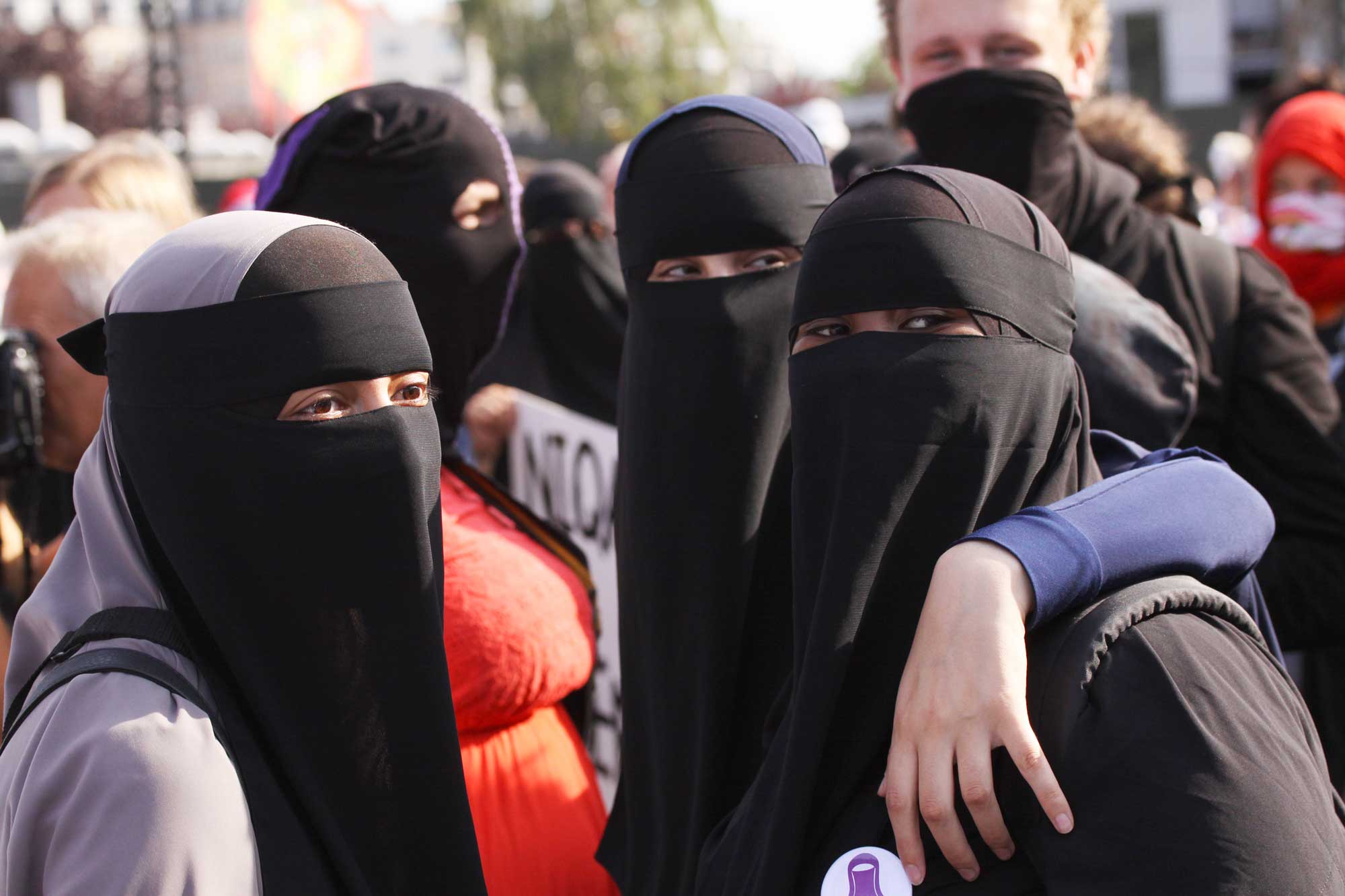
Niqabi Muslim women say that although they welcome the introduction of face coverings now, they feel frustrated at the difference in narrative.

“If I’m wearing the niqab and the person next to me is wearing the face mask, we’re covering the same parts of our face, we’ve just done it for different reasons,” said Yasmin Bakkar, 26, a cover teacher in secondary schools across Leicester.

France made all religious face coverings illegal in 2011. On 10 May 2020, they made COVID-19 face coverings mandatory with penalty fines for those who disobey. Yet, the Burqa is still active.

“The new rules have exposed people’s biases,” Bakkar says.

“It was never about breaching security measures or about identification or even it being a communication barrier in wider society. It was always what the veil represented and as it represents Islam, people assumed covering your face was a backwards mentality.”

Ahmed hopes COVID-face coverings will undermine any future arguments about niqabs being incompatible with society.

“Not only do I feel as though it confirms my beliefs and what I’m doing in society is not wrong, it’s now protecting my health. That feeling is pleasant, however long it may last.”

An earlier fatwa from the Egyptian Fatwa House said that “It is not obligatory for a Muslim woman to cover her face and hands. Niqab falls under “permissible acts” (mubaahat); a woman is rewarded for wearing it but not punished for abstaining from it. A woman fulfills her religious duty concerning her dress by wearing the hijab.

The post Veiled Racism: Europe between Banning Niqab, Forcing Face Masks appeared first on About Islam.


source https://aboutislam.net/muslim-issues/europe/veiled-racism-europe-between-banning-niqab-forcing-face-masks/

Comments

Popular posts from this blog

List of Times and Places Where Dua is Accepted

A short reminder regarding the recommended times of dua . And I think what you need to know here is that the recommended times of dua or recommended things that can cause your dua to be accepted, can be divided into two sort of large groups: Am I Good Enough to Make Dua for Myself? Situations where your dua is accepted. Times where your dua is accepted So I’m going to very briefly mention them one after the other as much as possible. As for situations where your dua has been accepted: – The person who has been wronged or oppressed . – A person who finds themselves in severe difficulty after a calamity has struck. – The person who is traveling. – Someone who is fasting. – The one who is reciting the Quran or has just recited the Quran – Someone who is performing Hajj or Umrah or jihad. – The one who is making dua for someone in their absence . Because we know that when you make dua for someone in his absence an angel says: “ Ameen and to you”. – A person...

Ghuraba (The Strangers): Nasheed with English Subtitles

Islam began as something strange, and it shall return to being something strange, so give glad tidings the strangers. (Sahih Muslim 145) This famous nasheed has many versions; this one is from Muhammad al-Salman and has the subtitles in English embedded. [We are] strangers and we do not bow the foreheads to anyone besides Allah  […] Transliteration to help in the pronounciation:  Ghurabaa’ wa li ghairillaahi laa nahnil jibaa Aisha Stacey  wrote in an article for Aboutislam.net : “I think that many of you would agree that being Muslim in the 21st century makes you well acquainted with being strange. It might even be a metaphor for random, as in you have been randomly selected. […] many converts to Islam will tell you about feeling as if they were strangers, before finding Islam. They will speak of feeling that they belonged somewhere else that their lives were just slightly off center. They often speak about a vague sense of knowing they were not like everyone else...

Taqwa – Living the Main Purpose of Ramadan

Taqwa is a major purpose for the month of Ramadan. The people of taqwa are those who do the things that they are commanded and avoid the things which Allah has made prohibitive. And evidently, to reach a state of taqwa requires vigilance, it requires patience and sincerity. The verse is pertaining to fasting I found in a single set of verses in chapter 2 starting at verse 183: O you who have believed, decreed upon you is fasting as it was decreed upon those before you that you may become righteous. ( 2:183 ) A Collective Act of Worship Allah is telling us that fasting has been made obligatory and then Allah tells us that just as it was prescribed for those before us. We often get asked this question in Ramadan, “how’s the fast going for us?” And if we gave ourselves a moment to think about it, we see that Allah Most High has made the fast inside the month of Ramadan easy for us because we know that there is a collective spirit to fasting; we know that we’re not alone in this ...