Do You Know How Many Times in History Hajj Has Been Cancelled?
These are indeed unprecedented times we’re living in. The Muslim ummah witnessed the closure of Mecca and Madina during Ramadan for Umrah, which sent waves of shock and dismay.
The possibility of the cancellation of Hajj was looming with uncertainty. Then the announcement that Saudi Arabia will only allow 1,000 pilgrims that currently reside in the Kingdom to perform Hajj as Coronavirus is still rampant around the world. There won’t be any overseas pilgrims this year. Hajj has been cancelled for millions.

However, this isn’t the first time in Islamic history that plans had to be altered. We can now add Hajj 2020 to the list of the 40 historic cancellations since the first in 629.
According to the the Saudi King Abdulaziz Foundation for Research and Archives, there are several incidents of conflicts, raids, massacres and diseases throughout the past 1,400 years that have led to Hajj cancellations.
Much like the present, diseases, conflicts and plagues have stopped millions of pilgrims from performing Hajj or Umrah in the past. Let’s check out some highlights below.
In modern history
Since the formation of the Kingdom of Saudia Arabia in 1932, there has never been a Hajj cancellation. However during the 2013 MERS-CoV virus outbreak in Saudi Arabia, the authorities urged those with significant underlying health conditions and elders to avoid performing Hajj and Umrah for their own safety.
More disease outbreaks
Between 1830 -1883, with the growth in maritime, Mecca saw an increase of ocean-going pilgrims travelling from and through British India. As the journey to Mecca in the past was only afforded by the wealthy , officials and the Ulamas; it was now afforded by the ‘common’ person.
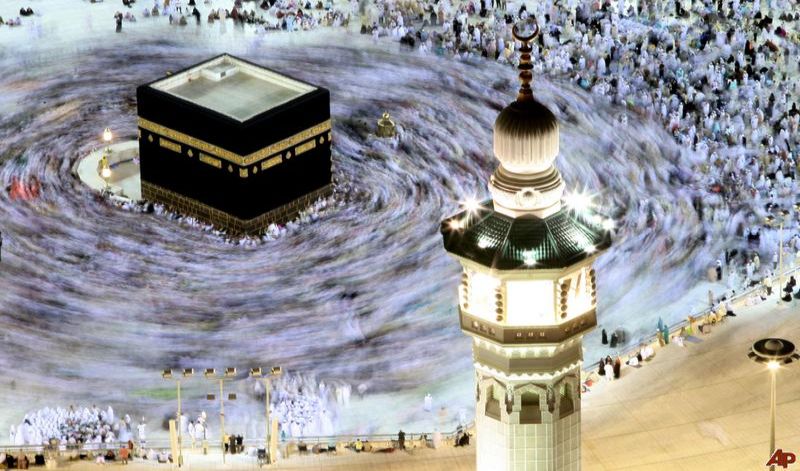
But as the number of people travelling increased so did diseases and death in the Hijaz. By 1860, after several cholera breakouts, it was clear that there was a connection between the Indian pilgrims and the outbreaks of disease.
In 1865, a virulent epidemic broke out and claimed 15,000 pilgrims. Since there weren’t sufficient measures to make sure those returning home weren’t carrying the disease, the disease spread throughout the various ports and by the end, over 200,000 people had died across the globe.
Politics and armed conflicts
Politics didn’t spare Hajj disruptions in Islamic history including the dispute between Abbasid of Iraq and Syria and the Fatiids of Egypt. The Fatimid rulers of Egypt were dedicated to overthrowing the Abbasid’s religious and political position in all of Islam. The political tug-of-war got in the way of pilgrims to travel to Mecca for eight good years from 983-991.
In 930, Mecca came under attack by Abu Taher al-janabi, the Chief of the Qarmatian heterodox sect, who set about killing the pilgrims. Historical accounts say that 30,000 pilgrims were massacred in the holy city. Their bodies were left to rot on the streets or thrown into the Zamzam well.
 Read Also: Responding to the Precious Call of Hajj (Hadiths & Experiences)
Furthermore, there was looting of the Grand Mosque, houses plundered, and the Black Stone was stolen and taken to Bahrain. Hajj was suspended until the Black Stone was returned 20 odd years later. The Abbasid paid a ransom for the Black stone to be returned to its rightful place of Mecca.
In 865, an attack was launched by Ismail bin Yousef, who was known as Al-Safak during his conflict with the Abbasid Caliphate. The attack was launched on the holy Arafat mountain killing pilgrims. This raid forced Hajj to be cancelled.
Hajj 2020
It’s understandable that Muslims are conflicted about the cancellation of Hajj 2020 but nevertheless, Prophet Muhamad established a religion built on revelations and intellect.
The Quran and Hadith inform us of our way of life, hence following the Prophet’s advice, we must adhere to his recommendation in regard to plagues. As the hadith says:
“The Prophet (PBUH) said, “If you hear of an outbreak of plague in a land, do not enter it; but if the plague breaks out in a place while you are in it, do not leave that place.” Sahih al-Bukhari;76:43
Prophet Muhammad’s advice emphasises on taking precaution to avoid spreading the virus especially the advice of quarantining during a pandemic.
It’s our duty and responsibility to contain this virus as the Revelation itself forbids the harming of others or self-harm. We shall continue to make dua, Insha’allah.
“In the name of Allah with Whose Name there is protection against every kind of harm in the Earth or in the heaven, and He is the All-hearing and All-Knowing.”
Ameen.
The post Do You Know How Many Times in History Hajj Has Been Cancelled? appeared first on About Islam.
source https://aboutislam.net/family-life/culture/do-you-know-how-many-times-in-history-hajj-has-been-cancelled/


Comments
Post a Comment