Is the Original Quran Preserved?
There have been some criticisms and speculations regarding the compilation of the Quran within Western scholarship. Some scholars argue that the Quran actually began earlier than the Muslims say it began. Some others would say that the history of the Quran went another 200 years after the time of the Prophet (peace and blessings be upon him).
Recent Scientific Studies
None of those arguments is grounded in recent studies of the available manuscripts. The discovery of new manuscripts helped us to confirm, scientifically, that the Muslims’ story about the compilation of the Quran is, for the most part, accurate.
As Carl Ernst has said, it is a better explanation of the data that we have available to us than any other theory that anyone has proposed
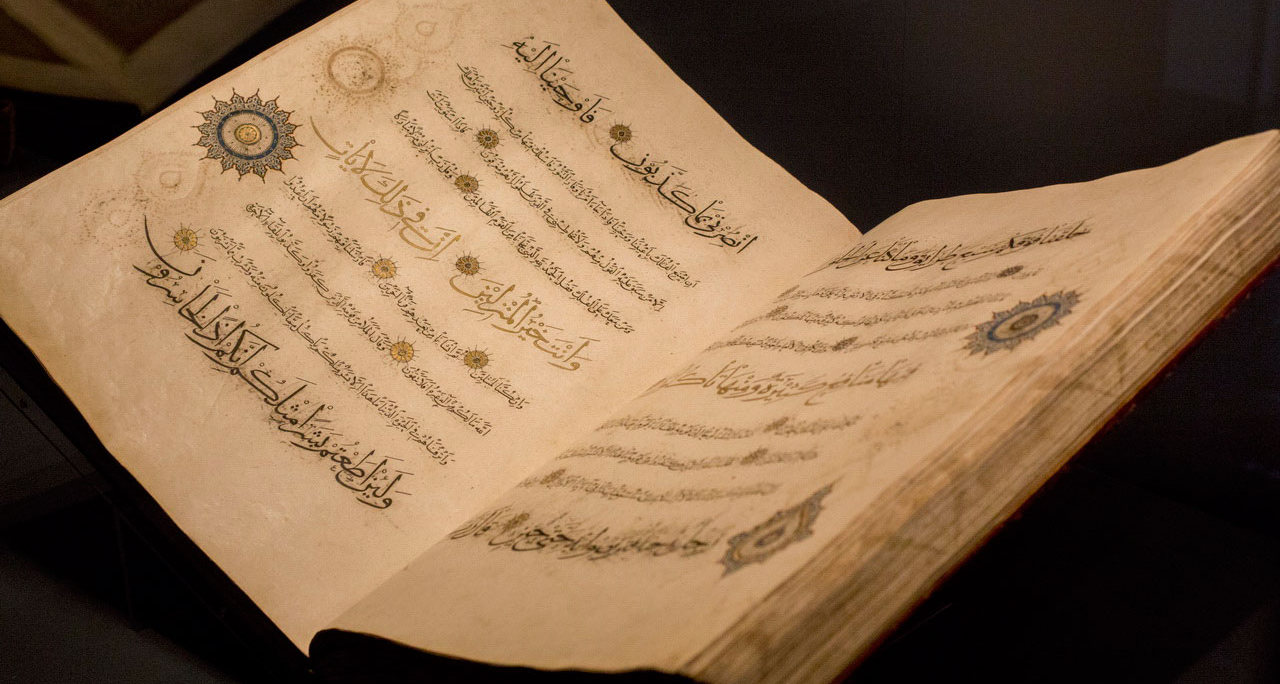
The most recent manuscript that was found and the earliest manuscript of the Quran ever to be found are the ones that were found in the old mosque in Sanaa in Yemen.
There was a lot of speculation when those manuscripts were first found. There was an article in the Atlantic Monthly about how this was going to tell us new things about the history of the Quran.
Well, nobody had studied them. At that point, this was just speculation. Now, they’ve been studied, not all of them, but at least one folio has undergone rigorous analysis.
 Read Also: Omar Khayyam: Poet With Flair for Numbers
That rigorous analysis has demonstrated through carbon dating that the manuscript does come at about the time when Muslims say the Quran was compiled.
Further Evidence
But then, there’s even an under script of the Quran that has shown more about the parchment. In the old days, if you wanted to write something new on a used parchment, you didn’t throw it out because it was so expensive; you would erase what was on there and then you would write something new.
Now the scribes used metal-based inks. So, through infrared photography, we can actually get an image of what that Arabic script was on that parchment. That infrared photography has shown us that the surahs as we know them were there and intact.
Furthermore, they even show that the slight variations that are in the text are once that Muslims have attested. There wasn’t anything that one could call a variant that Muslims have not attested was a variant of the Quran.
Now, if somebody were to make up a history of the text, you wouldn’t have made it up the way that Muslims have the history written down.

You would have said well, it was written at this time and then it was put down under the time of the Prophet Muhammad.
You wouldn’t say, well first after the Prophet died, they didn’t have it written down. Then under the Caliphate of Abu Bakr, it was written in one form. Few years later, around the year 650, it was put down in another compilation. This was the final compilation.
Nobody would make up that story.
So, it is really an act of distrust on the part of the Orientalists to try to find histories that are:
A. different than what the Muslims first accounted for, and
B. not compatible with what the main scripts actually tell us.
Source: Professor Dr. Joseph Lumbard Channel
The post Is the Original Quran Preserved? appeared first on About Islam.
source https://aboutislam.net/shariah/quran/quranic-studies/is-the-original-quran-preserved/


Comments
Post a Comment