I Made the Change – Now What?
By far the biggest change I ever made in my life was becoming a Muslim in 1988, but after that, the next biggest change was leaving my homeland, Australia, and migrating to Egypt where I stayed for eighteen years.
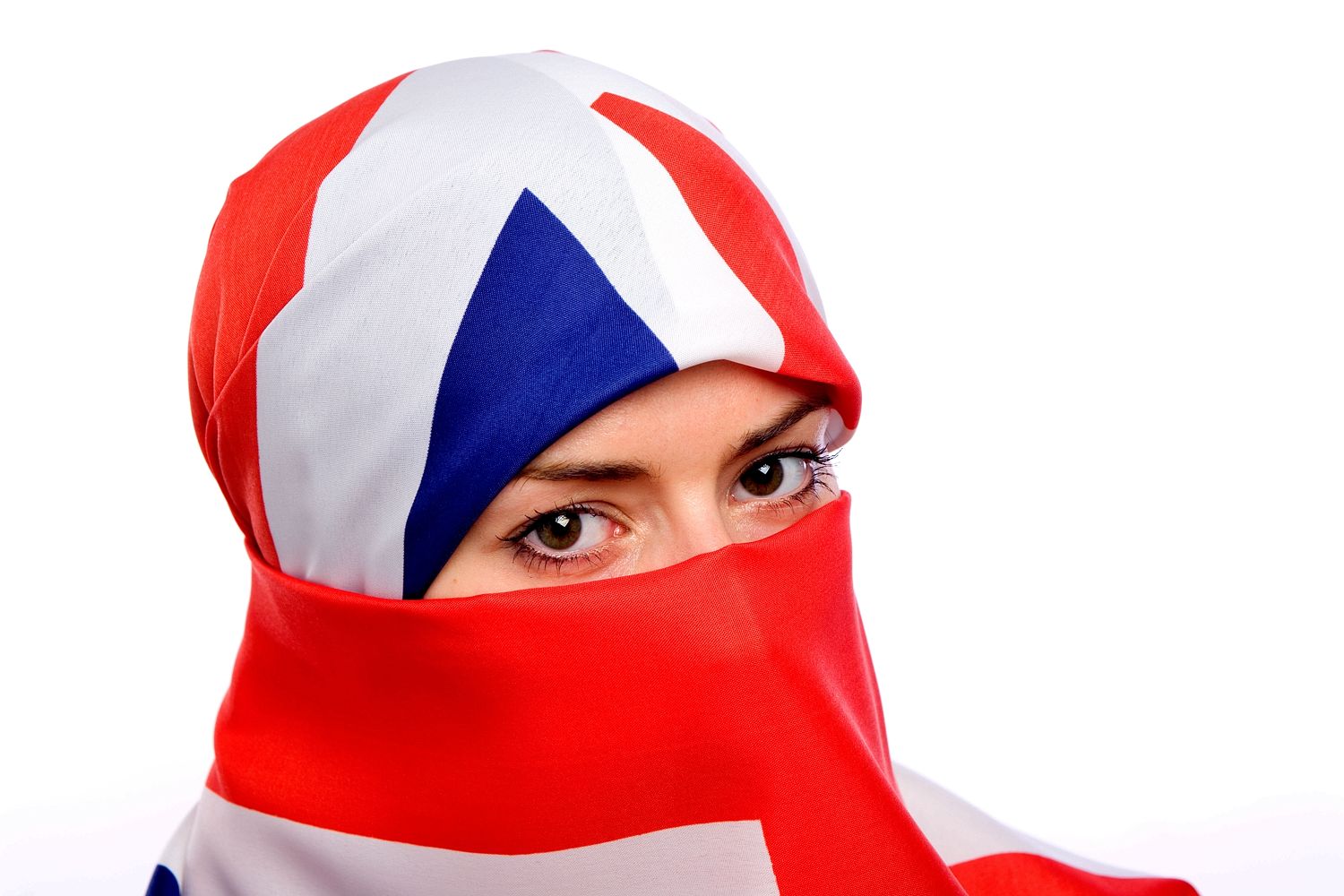
Now back in Melbourne, Australia, trying to make sense of it all has been a challenge to say the least; particularly trying to understand where I go from here.
I had been a Muslim for about five years when I thought of packing up and heading off to a ‘Muslim land’. With young children in tow, I settled in Egypt.
The thought of trying to raise my children alone in Australia had daunted me. I was not confident in my ability to give them the solid moral and ethical foundation in life without the support of a strong family and community network. In those days in Australia, the Muslim community was fraught with nationalistic barriers and ignorance.
As an Australian Muslim I did not seem to fit in anywhere. Everyone seemed to regard their opinion as the right one and as a new Muslim I saw only one way out of this confusion: Arabic! I believed that if my children could understand Arabic they would have the tools to make sense of the myriad of opinions and interpretations that had disunited many Muslims.
I spent the next eighteen years carrying out my intention to have my children learn Arabic and I succeeded, but at a cost: I never learned it myself! I was so busy working and raising my children that there was little time for me.
Living in Egypt
The Islamic atmosphere that pervades some areas of life in Egypt, including school, close friends and my work environment, offered my children a practical look at the manners, etiquettes, support and traditions that have made Muslims throughout history role models of humanity.
The majority of editors in the English department were women, so policies were flexible to enable the women to juggle work and family.
I recall many times bringing my young children to work with me during school holidays and putting down a mat with toys and snacks for them so they could play quietly while I worked at my desk. They saw the staff as part of an extended family; not just a community, who consistently gave them warmth, acceptance and attention.
At first hand, my children saw respect for elders, mercy towards the young, family solidarity and the importance of caring for the poor and needy. As they grew, they felt the happiness of giving to others, rather than just seeking things for themselves.
They have been part of fund raising events and projects to raise money for children in Kenya, Egypt and tsunami-hit Aceh. They developed compassion, the ability to recognize wisdom and the joy of family and friends.
Highlights of their young years have been centered around `Eid prayers held outside in massive spaces for the occasion, with people praying out onto the streets.
On one particular occasion, young eyes witnessed a sea of humanity rising, bowing and prostrating in unison as `Eid was ushered in by early morning prayers held in the open before a day of festivities. Rich and poor alike shared the unity of prayer. God Almighty guided us to Egypt and much good came of it.
Towards the end of our time in the Middle East I realized that Egypt had played its role in our lives. The children were fluent in Arabic and English, they had the understanding of how to behave and think as Muslims and they were confident and hopeful about their future.
The problem was that over the years my children had been separated and I had two sons in Australia and three children with me in Egypt. I longed for us all to be together and I turned to God for help. In a short time, the situation changed for us there and I found a way for us to return to Australia.
If countries could be people, Egypt would be my best friend but Australia would always be my mother. The whole world belongs to God Almighty and He invited humankind to travel and seek His Bounty.
Wherever we go in this world, we will find opportunities to learn, people to help and nature to inspire us. I used to think that if I could be in a Muslim populated country I would feel nearer to my Creator.
And although I miss the sound of the Adhan (call to prayer), I still feel closest to God Almighty when I am close to nature and when I read the Quran and contemplate God’s Greatness.
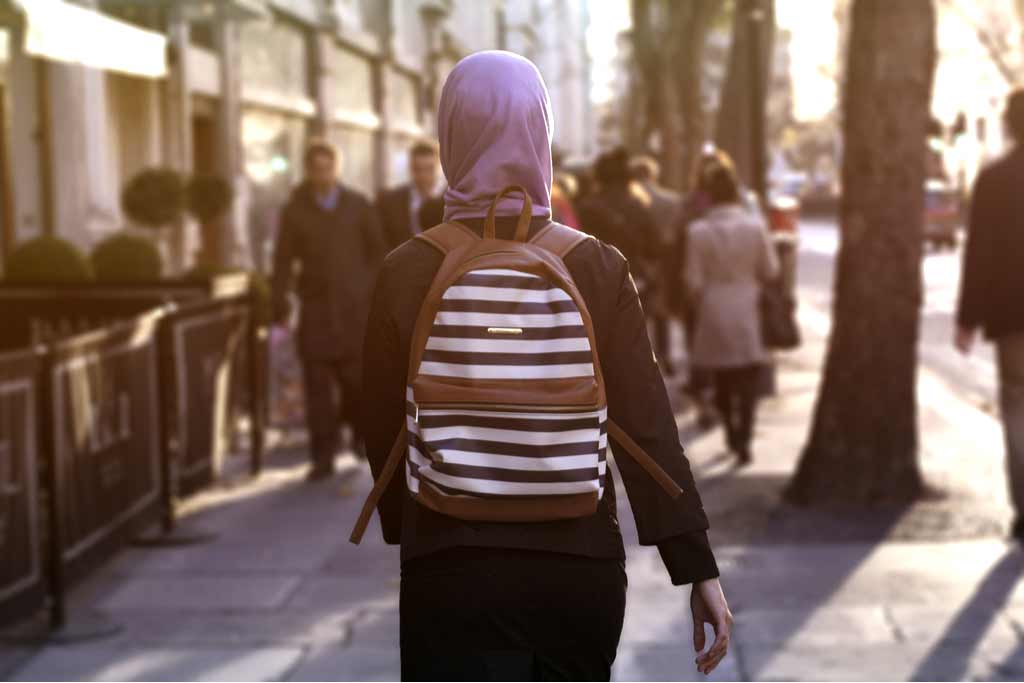
I have found that proximity to people, whoever and wherever they are, does not necessarily draw us closer to God. If the heart is near to Him, wherever we are, we will be close to Him.
Despite the importance of surrounding ourselves with good people, it is also important that we do and say good and set ourselves on a quest to serve the Creator by serving His creation. Wherever we are in this amazing world, we can do this.
Back in Melbourne
After nearly twenty years I look around Melbourne, Australia and see many significant changes. First there are many more Muslims spread all over the city, although some areas are still predominantly Muslim populated.
Muslims are also working in a variety of areas and are free, as before, to show their Islamic identity. The difference is, that now, more people are choosing to do so. More Muslims are completing university studies and contributing in varied and essential ways.
There are still a number of mosques that belong to specific ethnic groups; however, there are a number of centers opening that cater to everyone and especially focus on youth from all backgrounds and new Muslims. Other traditionally ethnic mosques are opening their doors to any group that wants to start lessons, gatherings or projects and there is an atmosphere of growing cooperation.
Islam has and still does receive a lot of media coverage – some positive and a lot negative, but what all this seems to have done is make the general population aware of Islam.
Racism and bigotry have their place in all nations; and often the best way to combat it is to show a practical, positive example of how Islam impacts on a person’s behavior, character and manners.
(From Discovering Islam’s archive.)
The post I Made the Change – Now What? appeared first on About Islam.
source https://aboutislam.net/reading-islam/living-islam/i-made-the-change-now-what/


Comments
Post a Comment