Valores del Ramadán: Eid El Fitr

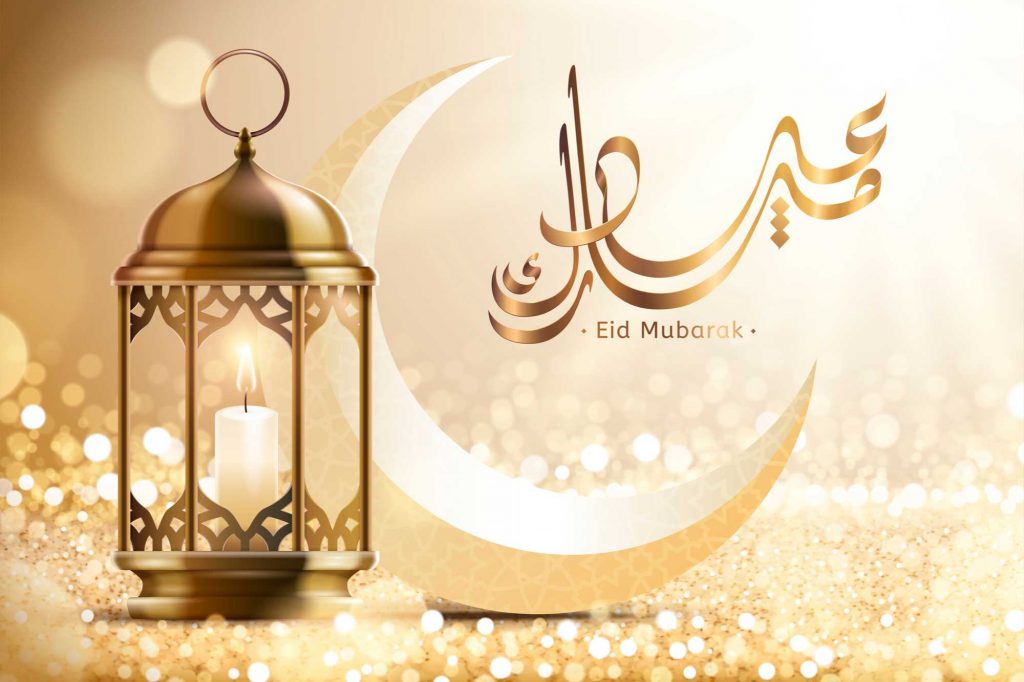
¡Eid Mubarak! En Eid, celebramos haber vivido un nuevo Ramadán en nuestras vidas gracias a Dios. También celebramos completar uno de los pilares de la fe en el Islam. Dejamos los sentimientos de Ramadán más puros y ligeros dentro. Después de un mes de acciones espirituales, nos vamos este mes sintiéndonos renovados.

¿Cómo Celebramos Eid?

Si bien las cosas pueden ser diferentes debido a COVID-19, la forma tradicional de Eid es unirse en oración y sermón con su comunidad. Hoy en día, esto puede significar reunir a los que están en su casa y ver una transmisión en vivo o dirigir la oración y el sermón de su propia familia.

Valores para el día de Eid

Alegria – Eid es un día es un día feliz, es un día de fiesta. El Profeta (la paz sea con él) dijo que aquellos que ayunan durante el mes de Ramadán tienen dos felicidades. La primera es cuando rompes el ayuno. El segundo y más importante es cuando te encuentras con Dios. Entonces, un día festivo es un día en el que sentimos a Dios más cerca de nosotros y sentimos el amor que tiene por nosotros y que tenemos por él más profundamente.

Elegancia / Higiene- Durante Eid, hacemos un esfuerzo especial para dar lo mejor de nosotros mismos. Nos duchamos, ponemos perfume y usamos nuestra mejor ropa.

Fraternidad / Hermandad– Este es un momento para dejar de lado nuestras diferencias y perdonarnos. Es un buen momento para abrazarse. El Profeta (la paz sea con él) dijo que no funciona para dos hermanos no hablar entre ellos durante más de 3 días. El mejor de los dos es el que da el primer paso para mejorar la relación.

Solidaridad– Antes del final del Ramadán, todas las familias musulmanas deben pagar por cada miembro de su familia una limosna hacia una familia necesitada. Este es un momento para pasar tiempo con aquellos en nuestras comunidades que nos necesitan y conocerlos más.

También Te Puede Gustar Leer:
The post Valores del Ramadán: Eid El Fitr appeared first on About Islam.


source https://aboutislam.net/es/valores-del-ramadan-eid-el-fitr/

Comments

Popular posts from this blog

List of Times and Places Where Dua is Accepted

A short reminder regarding the recommended times of dua . And I think what you need to know here is that the recommended times of dua or recommended things that can cause your dua to be accepted, can be divided into two sort of large groups: Am I Good Enough to Make Dua for Myself? Situations where your dua is accepted. Times where your dua is accepted So I’m going to very briefly mention them one after the other as much as possible. As for situations where your dua has been accepted: – The person who has been wronged or oppressed . – A person who finds themselves in severe difficulty after a calamity has struck. – The person who is traveling. – Someone who is fasting. – The one who is reciting the Quran or has just recited the Quran – Someone who is performing Hajj or Umrah or jihad. – The one who is making dua for someone in their absence . Because we know that when you make dua for someone in his absence an angel says: “ Ameen and to you”. – A person...

Ghuraba (The Strangers): Nasheed with English Subtitles

Islam began as something strange, and it shall return to being something strange, so give glad tidings the strangers. (Sahih Muslim 145) This famous nasheed has many versions; this one is from Muhammad al-Salman and has the subtitles in English embedded. [We are] strangers and we do not bow the foreheads to anyone besides Allah  […] Transliteration to help in the pronounciation:  Ghurabaa’ wa li ghairillaahi laa nahnil jibaa Aisha Stacey  wrote in an article for Aboutislam.net : “I think that many of you would agree that being Muslim in the 21st century makes you well acquainted with being strange. It might even be a metaphor for random, as in you have been randomly selected. […] many converts to Islam will tell you about feeling as if they were strangers, before finding Islam. They will speak of feeling that they belonged somewhere else that their lives were just slightly off center. They often speak about a vague sense of knowing they were not like everyone else...

Taqwa – Living the Main Purpose of Ramadan

Taqwa is a major purpose for the month of Ramadan. The people of taqwa are those who do the things that they are commanded and avoid the things which Allah has made prohibitive. And evidently, to reach a state of taqwa requires vigilance, it requires patience and sincerity. The verse is pertaining to fasting I found in a single set of verses in chapter 2 starting at verse 183: O you who have believed, decreed upon you is fasting as it was decreed upon those before you that you may become righteous. ( 2:183 ) A Collective Act of Worship Allah is telling us that fasting has been made obligatory and then Allah tells us that just as it was prescribed for those before us. We often get asked this question in Ramadan, “how’s the fast going for us?” And if we gave ourselves a moment to think about it, we see that Allah Most High has made the fast inside the month of Ramadan easy for us because we know that there is a collective spirit to fasting; we know that we’re not alone in this ...