Fashion Designer Makes Sanitary Hijabs for Healthcare Workers

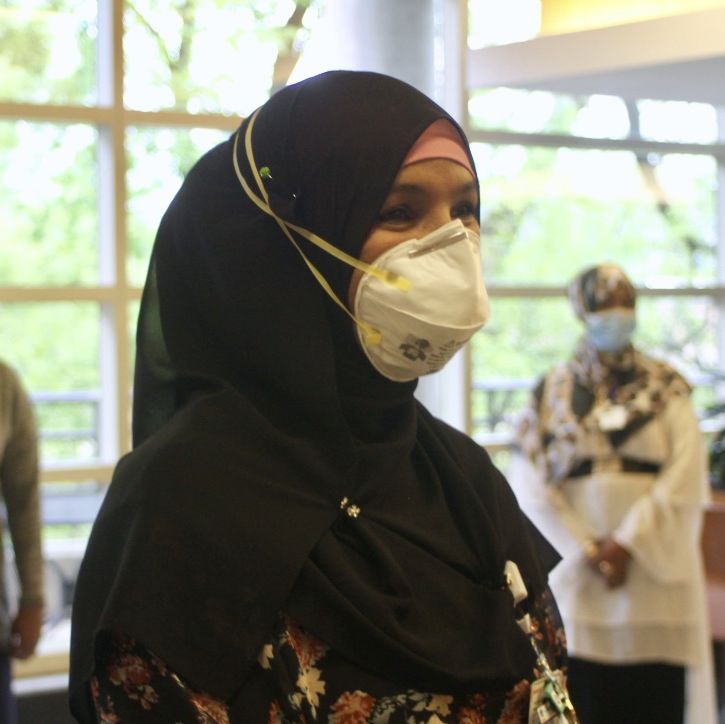
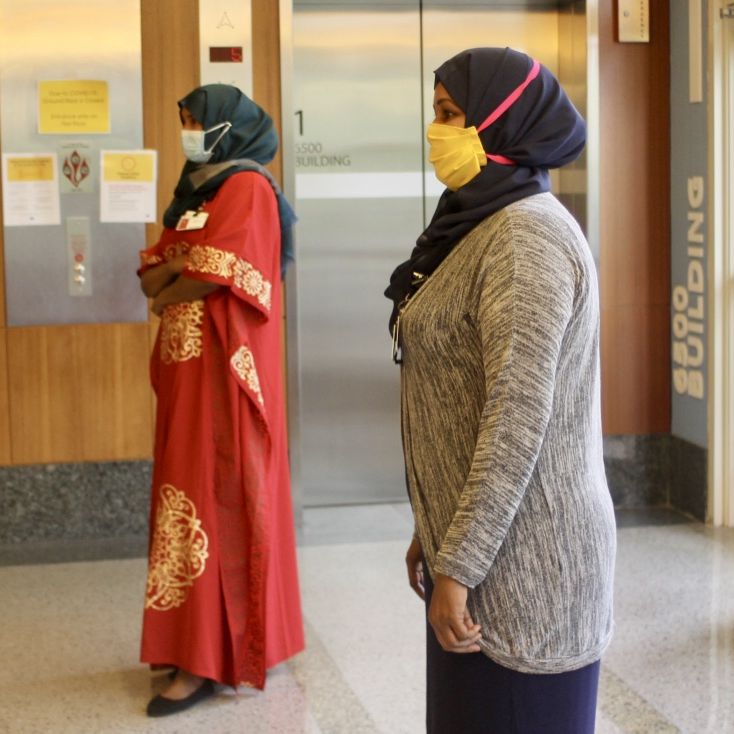
Hijab-wearing healthcare workers have been on the frontlines in the fight against the coronavirus pandemic.

Wearing hijabs, many are facing the challenge of having to wash it frequently to maintain sanitation, while some are even disposing of hijabs to mitigate the spread of the virus.

📚 Read Also: Hijab… a Must, Not a Choice

Addressing these challenges, a Minnesota fashion designer and owner of Henna & Hijabs, a boutique specializing in organic henna and handcrafted hijabs, stepped in to help.

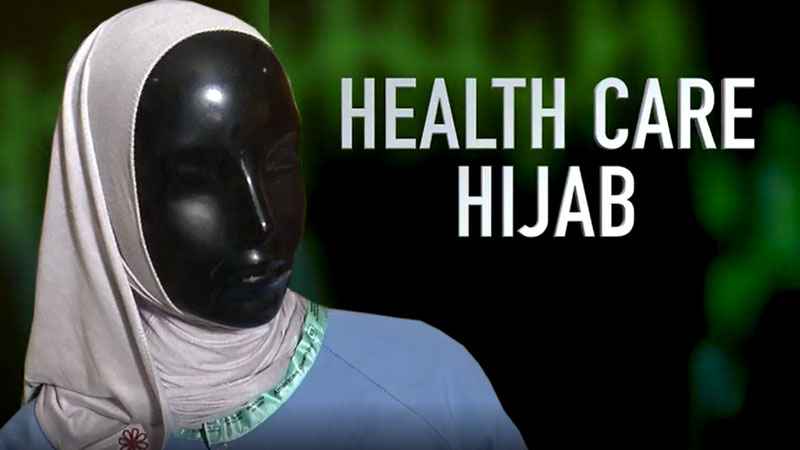
Hilal Ibrahim designed a sanitary hijab that could be easily washed and safely reused. Moreover, she has donated over 700 hijabs to COVID-19 doctors and nurses all over the state.

“Most importantly, they don’t impact mobility on the job and stay securely in place,” Ibrahim told ELLE.com.

“That’s critical, given [that healthcare workers] need to be so mindful of hand to face contact, especially in those environments.”
Patients Also

The hospital-grade hijabs are flexible enough for both patients and employees to wear. They also withstand industrial washing machines.

Over the past weeks, Hilal Ibrahim has received huge requests from healthcare workers for the product.

“A sanitary hijab in a healthcare settings is critical for infection control, and is often considered unessential due to the lack of familiarity with the standard religious head covering of Muslim women,” she says.

“This virus just further exposing the disparities and struggles some groups face in this country… I hope we can move toward a better understanding and breakdown some of the barriers non-Muslim folks have around hijabs.”

As of Sunday, May 31, the COVID-19 pandemic has infected 6,185,935 and killed 371,413 people, according to the latest estimates by WorldOMeter.

The US is grappling with over 1,817,409 confirmed cases of the new virus. It has reported 105,575 deaths so far.

The post Fashion Designer Makes Sanitary Hijabs for Healthcare Workers appeared first on About Islam.


source https://aboutislam.net/muslim-issues/n-america/fashion-designer-makes-sanitary-hijabs-for-healthcare-workers/

Comments

Popular posts from this blog

List of Times and Places Where Dua is Accepted

A short reminder regarding the recommended times of dua . And I think what you need to know here is that the recommended times of dua or recommended things that can cause your dua to be accepted, can be divided into two sort of large groups: Am I Good Enough to Make Dua for Myself? Situations where your dua is accepted. Times where your dua is accepted So I’m going to very briefly mention them one after the other as much as possible. As for situations where your dua has been accepted: – The person who has been wronged or oppressed . – A person who finds themselves in severe difficulty after a calamity has struck. – The person who is traveling. – Someone who is fasting. – The one who is reciting the Quran or has just recited the Quran – Someone who is performing Hajj or Umrah or jihad. – The one who is making dua for someone in their absence . Because we know that when you make dua for someone in his absence an angel says: “ Ameen and to you”. – A person...

Derechos de Las Mujeres en Islam

Durante el Tiempo del Profeta (la paz sea con él) Veamos cómo fueron tratadas las mujeres de todo el mundo durante la época del Profeta (la paz sea con él). En la Europa del siglo VIII, la religión principal era el catolicismo y durante este tiempo debatían si las mujeres tenían alma. Dijeron que las mujeres eran impuras y que no tenían derecho a la herencia. A las mujeres tampoco se les permitía tocar la Biblia. No era como ahora en el Islam, donde ellas no pueden tocar el Corán durante la menstruación, pero a las mujeres en la Europa del siglo VIII nunca se les permitió tocar la Biblia. En China e India, fueron quemadas vivas cuando murieron sus maridos. En Arabia Saudita practicaron infanticidio femenino en el que, si nacía una niña, la enterrarían viva. Si el marido de una mujer muere, un miembro de su familia se unirá a ella para demostrar que ahora es de su propiedad. Mujeres en el Islam Con el Islam llegó una nueva era para las mujeres. En el Islam, las mujeres tienen la...

Ghuraba (The Strangers): Nasheed with English Subtitles

Islam began as something strange, and it shall return to being something strange, so give glad tidings the strangers. (Sahih Muslim 145) This famous nasheed has many versions; this one is from Muhammad al-Salman and has the subtitles in English embedded. [We are] strangers and we do not bow the foreheads to anyone besides Allah  […] Transliteration to help in the pronounciation:  Ghurabaa’ wa li ghairillaahi laa nahnil jibaa Aisha Stacey  wrote in an article for Aboutislam.net : “I think that many of you would agree that being Muslim in the 21st century makes you well acquainted with being strange. It might even be a metaphor for random, as in you have been randomly selected. […] many converts to Islam will tell you about feeling as if they were strangers, before finding Islam. They will speak of feeling that they belonged somewhere else that their lives were just slightly off center. They often speak about a vague sense of knowing they were not like everyone else...