‘Let My Building Burn, Justice Needs to Be Served’: Muslim Restaurant Owner
The death of George Floyd, an unarmed and handcuffed black man, has triggered nights of protests and violence across the US
There are reports of hundreds of businesses being damaged or looted during four days of unrest.
Among these businesses is the Gandhi Mahal Restaurant owned by a Bangladeshi Muslim migrant.
Ruhel Islam, who immigrated to the US 24 years ago, woke up on Friday morning to discover that his family business had been razed to the ground.
 Read Also: African American Muslims React to the Police Killing of George Floyd
When he found out, his daughter, Hafsa Islam, said he only had one response: “Let my building burn. Justice needs to be served and those officers need to be put in jail,” Times of India reported.
“We can rebuild a building, but we cannot rebuild a human,” said Ruhul Islam, 42. “The community is still here, and we can work together to rebuild.”
-
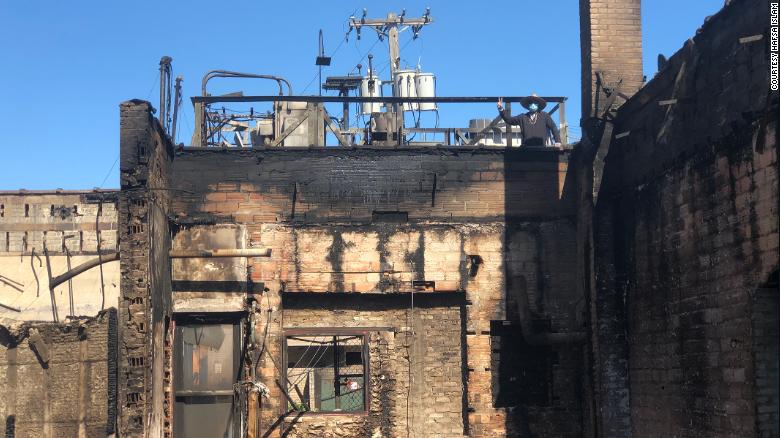
Ruhel Islam standing on the rooftop of what is left of his restaurant, the Gandhi Mahal.
During the protests, Hafsa said the family transformed their restaurant into a safe haven for injured protesters who needed aid.
“We were worried about business, of course, but we were more worried about the protesters,” she told CNN.
“All of Tuesday and Wednesday we took in hundreds of injured people. By Thursday night, it felt too dangerous to be there.”
Despite the loss of their business, Hafsa said they were standing in support of protesters and their cause.
“This isn’t about the business, this is about us. This is about George Floyd and all of the people whose lives have been taken wrongfully because of police brutality.
“We are fighting for justice in such an unjust system,” she added.
Muslims Demand Justice

US Muslims have expressed outrage and hurt, as the video surfaced on various different social media outlets.
Jaylani Hussein, executive director of the Minnesota chapter of the Council on American-Islamic Relations, said his group teamed up with other civil rights organizations to host a rally and march in downtown Minnesota on Thursday.
“We are all in pain as we watch our cities burn. However, our leaders still refuse to acknowledge that this unrest is occurring because of their failure to immediately arrest and charge all four officers involved in the murder of George Floyd,” he said in a statement sent to AboutIslam.
“Where there is no justice, there will be no peace. We need the governor to empower the state attorney general to bring charges against the remaining three officers, who should be held without bail pending trial.
“Justice delayed is justice denied. White supremacists, anarchists and other bad actors are the only ones benefiting from the chaos resulting from delayed justice.”
CAIR-Minnesota has also called for the arrest of all Minneapolis police officers involved in the killing of George Floyd.
That demand came following the arrest of Derek Chauvin, the officer who was seen on video kneeling on Floyd’s neck.
The post ‘Let My Building Burn, Justice Needs to Be Served’: Muslim Restaurant Owner appeared first on About Islam.
source https://aboutislam.net/muslim-issues/n-america/let-my-building-burn-justice-needs-to-be-served-muslim-restaurant-owner/


Comments
Post a Comment