
Studies Show Fajr Prayer is Healthy

And He it is Who made the night a covering for you, and the sleep a rest, and He made the day to rise up again” (Qur’an 25:47).

Certainly sleep is one of the blessings from Allah. At the end of a busy day a person looks forward to sleeping and regaining enough energy for the next day.

Sleep is also important for good health and safety reasons. However, studies vary as to how much sleep is enough. Some studies claim 8-10 hours is a requirement for everyone.

However, Prophet Mohammad (saws) used to sleep very few hours in the night and used part of the night for prayer. Studies have confirmed that this may actually be healthier for some people.

📚 Read Also: Help! I Struggle to Pray on Time or at All!

Sleep is important for health and safety reasons. Lack of sleep can lead to mental illness, relationship problems, absence from work and even traffic accidents.

Researchers have found that people with chronic insomnia are more likely than others to develop several kinds of psychiatric problems, and are also likely to make greater use of healthcare services (Yang).

Lost productivity due to sleepiness has been estimated to cost the national economy as much as $100 billion annually and the National Highway Traffic Safety Administration has estimated more than 100,000 auto crashes annually may be fatigue related (Yang).

Because of this, some studies claim that 8-10 hours should be required for everyone. However, studies have confirmed what Prophet Muhammad did may be healthy for some people.

“…the Prophet slept for a part of the night, (See Fateh-al-Bari page 249, Vol. 1), and late in the night, he got up and performed ablution from a hanging water skin, a light (perfect) ablution and stood up for the prayer (Bukhari).”
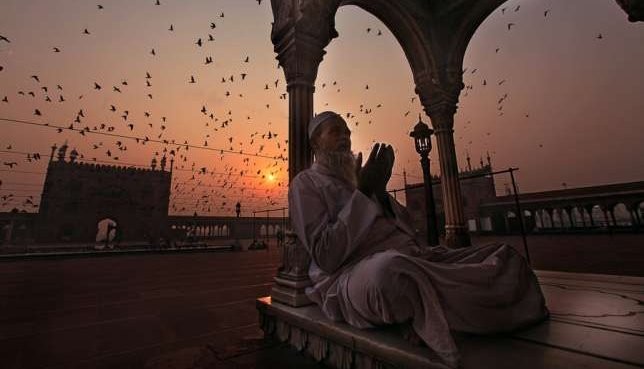
Sleep & Health
Modern studies show that this may actually be the best advice for many people. In fact, many studies are showing that less sleep or even lack of sleep can be healthier in some cases.

A six-year study of more than a million Americans shows that a good night’s sleep lasts seven hours. It also showed that people who sleep for eight hours or more tend to die a bit sooner. Study leader Daniel F. Kripke, MD, says,”You really don’t have to sleep for eight hours and you don’t have to worry about it. It is evidently very safe to sleep only seven, six, or even five hours a night (DeNoon).”

Kripke and co-workers analyzed data from an American Cancer Society study conducted between 1982 and 1988. The study gathered information on people’s sleep habits and health, and then followed them for six years. Study participants ranged in age from 30 to 102 years, with an average starting age of 57 years for women and 58 years for men. In the study the death risk for people with too much sleep was 34% as compared to only 12% for those who slept 8 hours and only 22% for those who had too little sleep.

Comments

Popular posts from this blog

List of Times and Places Where Dua is Accepted

A short reminder regarding the recommended times of dua . And I think what you need to know here is that the recommended times of dua or recommended things that can cause your dua to be accepted, can be divided into two sort of large groups: Am I Good Enough to Make Dua for Myself? Situations where your dua is accepted. Times where your dua is accepted So I’m going to very briefly mention them one after the other as much as possible. As for situations where your dua has been accepted: – The person who has been wronged or oppressed . – A person who finds themselves in severe difficulty after a calamity has struck. – The person who is traveling. – Someone who is fasting. – The one who is reciting the Quran or has just recited the Quran – Someone who is performing Hajj or Umrah or jihad. – The one who is making dua for someone in their absence . Because we know that when you make dua for someone in his absence an angel says: “ Ameen and to you”. – A person...

Ghuraba (The Strangers): Nasheed with English Subtitles

Islam began as something strange, and it shall return to being something strange, so give glad tidings the strangers. (Sahih Muslim 145) This famous nasheed has many versions; this one is from Muhammad al-Salman and has the subtitles in English embedded. [We are] strangers and we do not bow the foreheads to anyone besides Allah  […] Transliteration to help in the pronounciation:  Ghurabaa’ wa li ghairillaahi laa nahnil jibaa Aisha Stacey  wrote in an article for Aboutislam.net : “I think that many of you would agree that being Muslim in the 21st century makes you well acquainted with being strange. It might even be a metaphor for random, as in you have been randomly selected. […] many converts to Islam will tell you about feeling as if they were strangers, before finding Islam. They will speak of feeling that they belonged somewhere else that their lives were just slightly off center. They often speak about a vague sense of knowing they were not like everyone else...

Taqwa – Living the Main Purpose of Ramadan

Taqwa is a major purpose for the month of Ramadan. The people of taqwa are those who do the things that they are commanded and avoid the things which Allah has made prohibitive. And evidently, to reach a state of taqwa requires vigilance, it requires patience and sincerity. The verse is pertaining to fasting I found in a single set of verses in chapter 2 starting at verse 183: O you who have believed, decreed upon you is fasting as it was decreed upon those before you that you may become righteous. ( 2:183 ) A Collective Act of Worship Allah is telling us that fasting has been made obligatory and then Allah tells us that just as it was prescribed for those before us. We often get asked this question in Ramadan, “how’s the fast going for us?” And if we gave ourselves a moment to think about it, we see that Allah Most High has made the fast inside the month of Ramadan easy for us because we know that there is a collective spirit to fasting; we know that we’re not alone in this ...