5 Favorite Things About Holy Month of Rajab
One of the four sacred months on the Islamic calendar, the days of Rajab offer an abundance of blessings and the perfect time for reflection.
Here are our five very favorite things about the month of Rajab.
“The letters Raa-jeem-baa form a root, which indicates supporting and strengthening something with another thing. It was called Rajab because they used to respect it.”-Ibn Faaris
5. Rajab is where to begin our spiritual season that will end with Eid Al Fitr after Ramadan
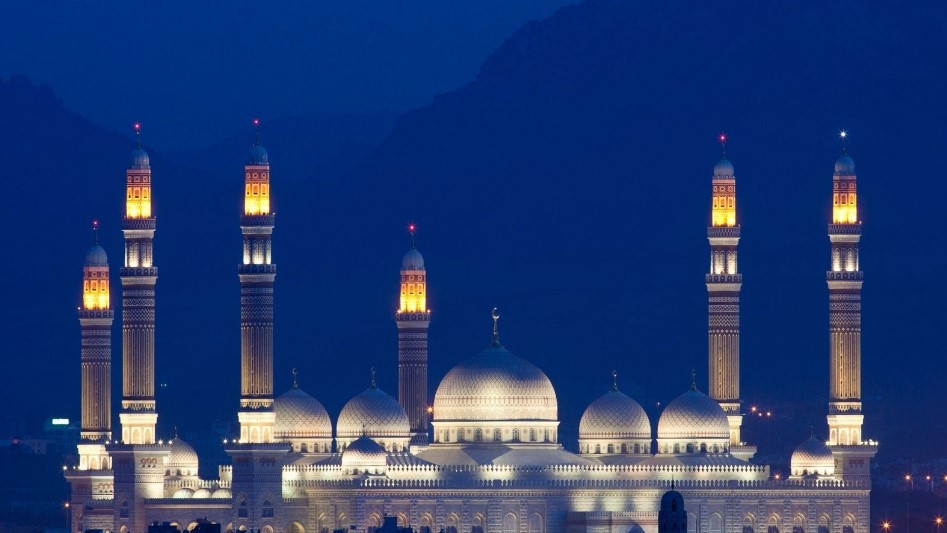
The month of Rajab is different from the other sacred months (Dhul-Qi`dah, Dhul-Hijjah, and Muharram) because it stands alone on the Islamic calendar; Rajab is five months after the others.
This makes it a special reminder to, well, be more mindful.
Imagine Ramadan without Rajab—it’s like being suddenly slammed into the very busy month, whereas if we observe the beauty of Rajab, we may glide more smoothly into Ramadan.
In the month of Rajab you sow the seeds, in Sha`ban you irrigate them, and in Ramadan you reap the harvest.” -Imam Abu Bakr al-Warraq
4. Fighting is off limits
While we know this in terms of warfare—it is prohibited for Muslims to initiate any fighting with others during Rajab to make umrah possible—but how can we translate that to our individual selves?
What if we use the month of Rajab to swallow our anger and pride, not engage in arguing with others, and instead strive for peaceful solutions to even the smallest of problems?

That’s some pretty good nafs training, again, especially with Ramadan coming right up.
3. Breaching the sacred limits is magnified
Hand in hand with the no-fighting clause, transgressions of the sacred limits (i.e., sinning) during Rajab are worse than at other times.
Don’t fret! Again, this is a good time to reel yourself in so that next month you can focus less on reducing your sins and more on raking in blessings.
2. Forgive, Forgive, Forgive
Rajab is also known as “the season of forgiving.”
Prophet Muhammad used to say,
“Rajab is a month of seeking forgiveness, so seek forgiveness from Allah; He is verily the Forgiver and the Merciful.”
There are many duas that people use during this month to ask Allah for forgiveness.
We also suggest that you recognize that you were not made to be perfect and consider forgiving yourself too.
Often, it is easier to seek forgiveness when we have fully accepted our faults in a compassionate way.
1. Our favorite story from Islamic history happened in Rajab – The Night Journey and Ascension
Better than any science fiction, Al Isra’ wal Mi’raaj—”The Night Journey and Ascension”—is a great miracle gifted to Muslims so that we may peek at Allah’s magnificence.

It is reported in Hadith literature, that the Messenger of Allah was carried from the Sacred Mosque in Makkah to the “Farthest Mosque” (Al-Masjid al-Aqsa) in Jerusalem on a creature called Al-Buraq in the company of the archangel Gabriel (peace be upon him).
There he led a congregational prayer of the prophets of God.
Then Gabriel took him to the heavens, where he met the prophets Adam, John, Jesus, Idris, Aaron, and Moses (peace be on them all).
In the seventh heaven, he met Abraham (peace be on him).
He was then brought into the Divine Presence. The details of this encounter are beautifully detailed in the beginning of surat An-Najm (52). Read more here.
About Islam team prays that you discover many blessings during this sacred month of Rajab.
You may also enjoy reading:
- 5 Major Historical Changes Happened in Rajab (Infographic)
- 8 Names of Month of Rajab and Their Meanings (Infographic)
- How to Practice Non-Violent Communication in Rajab
The article is from the archives.
The post 5 Favorite Things About Holy Month of Rajab appeared first on About Islam.
source https://aboutislam.net/family-life/youth-4-the-future/our-5-favorite-things-about-the-holy-month-of-rajab/


Comments
Post a Comment