Hijab Made Me Feel Self-Conscious
Disclaimer: “Hijab” is used in this article to describe the outer appearance of a Muslim woman, specifically headscarf and other clothing. This does not discount the other aspects of hijab for both men and women in Islam.
I officially started to wear hijab when I was 13 years old. I’ll admit, it was much easier then. I lived in a mainly Muslim community. All my friends were doing it. And Islamophobia was less rampant, or at least, less visible. Social media consumption was very restricted because 13 year olds just didn’t have cell phones.
Ten years later, I find myself stuck in the perfect storm of young adulthood with challenges to my faith I never would’ve imagined. I’m grateful for whatever it is God put in my heart to keep me steadfast (to an extent) in maintaining hijab, but I’ve never actually reflected truthfully on why I committed to hijab.
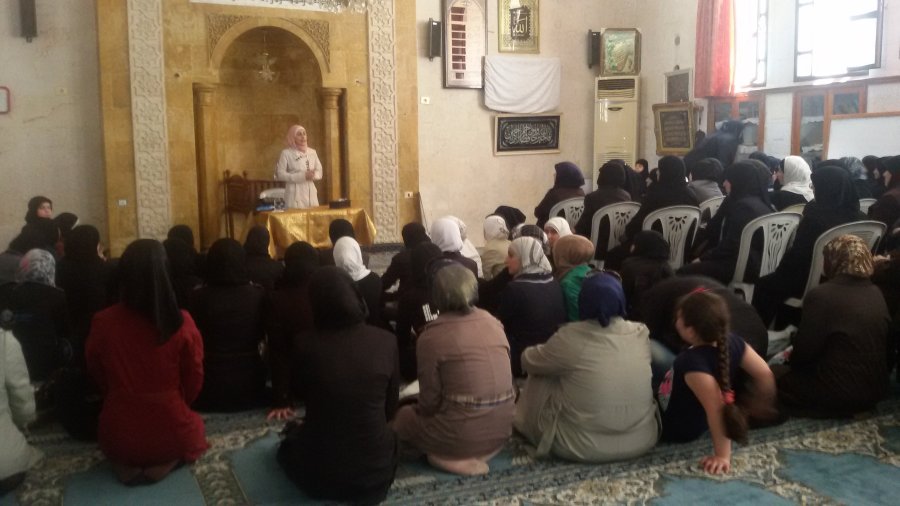
I just did. But, I realize that’s just not okay. So, after ten years of donning the full outer hijab (and trying to perfect my inner hijab), here are my reflections:
Why Do I Even Wear It?
At age 13, I never even thought about it. I just did. I covered my hair because that is what Muslim women do and that was enough for me.
When I learned something was fardh (obligatory) in Islam, I never took that lightly. I knew the obligation, I knew the requirements. I knew exactly what “expose only the face, hands/feet; wear long loose garments that did not show the bodily shape” meant.
As the most public ibada (worship) a Muslim woman could perform with such clear standards, I understood the immense reward waiting for me.
But on the flipside, I understood the sin I risked playing with the boundaries of Allah.
So, Why Was I so Embarrassed to Wear Hijab?
In high school, I saw the culmination of low adolescent self-esteem and an obsession with fashion and looks. Hijab protected me from that. It kept me from receiving the affirmation every teenage girl wants. But that doesn’t mean I appreciated it like I should have.
I never thought of fully removing the hijab (again, so long as God blesses me with strength in my heart, I would not abandon a fardh act). But, I demeaned my hijab. I wore tighter outfits because I had the “body” for it. I wanted people to notice my tiny waist.
Read Also: Answering Why Muslim Women Wear Hijab in Summer
I wore makeup because I wanted people to notice my almond shaped eyes and chiseled cheeks. I wanted my skirts to be tight enough to hit all the “right” places.
My insecurities made me a slave to the affirmation of strangers (most of whom I didn’t even care for). I degraded my servanthood to Allah.
And all for what?
I chased a high that I would never get, because no matter how often I got complimented, I still never felt beautiful. And so it hits me. Instead of seeing the hijab as an honor, I saw it as a burden.
I wish I could go back to that 15 year old girl and hold her hand as she explores what an honor hijab truly is.
I wish that I could tell her seeking the gaze of people wasn’t healthy for her and she would spend the next decade of her life trying to undo the damage she did to her self-esteem because of it.
So What Changed?
Over the next few years, God would place me in positions of immense responsibility. That forced me to truly recommit to hijab in its fullest form.

I would get involved in community organizing and be seen as a “representative” of Muslim communities and organizations. It meant I could no longer dwell in my insecurity. Young Muslim women were looking up to me… and looking at me. These young ladies started to justify their actions based on mine. If I sinned, they were more comfortable imitating the action.
People started to shape their fiqh around what I did. It wasn’t fair, but it came with the territory of leadership. I reflect on the following hadith:
Abu Hurairah (may Allah be pleased with him) reported Allah’s Messenger (peace and blessings be upon him) as saying,
‘He who called (people) to righteousness, there would be reward (assured) for him like the rewards of those who adhered to it, without their rewards being diminished in any respect.
And he who called (people) to error, he shall have to carry (the burden) of its sin, like those who committed it, without their sins being diminished in any respect.’” (Sahih Muslim).
I didn’t want Allah to see me as someone who “called to error”. And so I became stricter on myself and through that process, I conditioned myself to look at what I put on my body and what I show through the eyes of “would God be pleased with this.”
If that was a difficult question to answer, I asked “would I be fully comfortable to stand in front of Prophet Muhammad with what I’m wearing?”
Those simple questions helped give me clarity.
So Am I still Self-Conscious?
I find myself in an interesting space ten years after first putting on the hijab. I am studying medicine and inching closer to the professional world. A hard reality has already hit me. Just because I present confidently as a Muslim woman doesn’t mean people will respect me.
I’ve had to deal with patients questioning my medical knowledge, my trustworthiness and my integrity because of their prejudice against Muslims. To them, my merit was not based on how much I study or how well I articulated myself. It was based on what I wore on my body.
This fact can easily make someone want to abandon hijab. But then, aside from committing an incredibly major sin, I’d be missing the entire purpose of hijab. The ultimate reason why Muslim women practice hijab is quite simply because it is a command of Allah. Nothing more, nothing less.
The consequences of it are protection, empowerment and, a deeper spirituality. While those consequences wax and wane, it doesn’t strip from the basis of dutifulness to Allah.
In addition to that, I’d be doing an incredible disservice to my entire community.
What am I saying if I leave hijab when I enter the professional world?
? That Muslims can’t fully practice if they want to contribute to society?
? That I will allow people to justify their respect of me based on what I choose to cover?
? That I’m better at my job because I’m more exposed?
? That my ascension in the professional world as a woman should be based in my physical appearance?
Whether I make the choice based on these questions makes no difference. I’d implicitly contribute to complacency in the stereotypes against Muslim women. Instead, I choose to resist the prejudice for myself and as an example for the believers at large.
So, What Now?
It’s important to understand hijab in multiple dimensions as an act of worship, as a public statement and as a means of personal development.
And ultimately, we need to cast aside our egos and really evaluate our personal states of hijab. In all honesty, from a strictly fiqh purpose (of permissible/impermissibility), the generally accepted renditions of “hijab” we see on Instagram are Islamically unacceptable.
That’s not to cast judgement on the state of the hearts of women who do practice in that way, but truth is truth regardless of how we feel about it. Showing our necks, shorter sleeves, capri-style pants, tight leggings and bangs don’t follow the Islamic standards of hijab and we should never try to frame that as such.
Otherwise, we carry the sin of the ones we’ve influenced for generations to come. It’s not something a Muslim takes lightly.
I remind myself that “modest fashion” does not equal hijab. Don’t get me wrong. I love fashion. I love getting dressed up. Zeena (decoration) is something I really enjoy, but I understand how dangerous it easily becomes.
The policing of our desires is an essential part of Islam. And while I might feel self-conscious, I can only imagine how self-conscious I’ll feel standing alone before Allah to explain to Him how I did/did not follow His commands.
May Allah keep us steadfast, ameen.
The post Hijab Made Me Feel Self-Conscious appeared first on About Islam.
source https://aboutislam.net/shariah/refine-your-heart/born-again/hijab-made-feel-self-conscious/


Comments
Post a Comment