9 Virtues of Reciting Quran
No other world scripture shares the unique features of the Quran.
Every other holy book is a collection of wisdom and teachings of their religious leaders gathered over time. It is not known who compiled it and how.
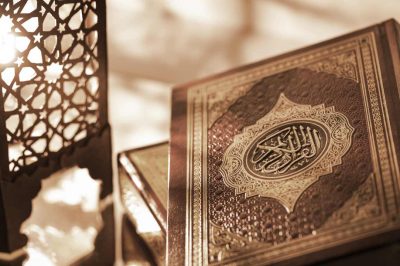
The Quran, on the other hand, is a book that claims to be from the Creator of the heavens and the earth. It is a book that was not collected and edited over time by unknown authors.
Since the entire book is from God, taught to the Prophet Muhammad and handed over to us in its entirety, certain chapters and verses have associated rewards and blessings that Prophet Muhammad has attached with reciting them. The Prophet has mentioned rewards of reciting the Quran, memorizing it, and following its teachings.
The Prophet has informed us that for reciting one letter of the Quran, we get the reward of ten good deeds. It should motivate us to learn to recite the Quran in its original Arabic. It is doable and many people have done it.
One Letter of the Holy Quran is 10 Good Deeds
The messenger of Allah said:
Whoever reads a letter of the Book of Allah will be credited with a good deed, and a good deed gets a tenfold reward. I do not say that Alif Laam Meem is a letter, but Alif is a letter, Laam is a letter, and Meem is a letter (i.e. it is equal to three letters). (At-Tirmidhi)
Some people will undoubtedly find difficulty in learning to recite the Quran in Arabic. After all, they will have to get familiar with certain letters and learn how to pronounce them.
Whoever Recites The Holy Quran with Difficulty has Double Recompense
Prophet Muhammad said:
A person who recites the Quran and reads it fluently will be in the company of the obedient and noble angels, and he who reads the Quran haltingly and with difficulty will have a double recompense. (Al-Bukhari and Muslim)
One of the first chapters of the Quran you should have memorized is Surah al-Fatihah, the first chapter of the Quran that is recited in every single rak’ah of prayer.
Surah Al-Fatihah, Most Superior Surah
Abu Sa’id says that while he was praying, the Prophet called him but he did not respond to his call. Later Abu Sa’id said:
“O Allah’s Messenger! I was praying.”
He said:
Didn’t Allah say: ‘O you who believe! Give your response to Allah (by obeying Him) and to His Messenger when he calls you?’ (8:24)
He then said:
Shall I not teach you the most superior surah in the Quran?
He said:
(It is) ‘Praise be to Allah, the Lord of the worlds’ (i.e., Surah al-Fatihah) which consists of “Seven Repeatedly Recited Verses” and the Magnificent Quran which was given to me. (Al-Bukhari)
Ayah al-Kursi Provides Protection from Allah

The second chapter of the Quran following Surah al-Fatiha is Surah al-Baqarah. It also happens to be the longest chapter of the Quran. 255th verse of this chapter is called Ayah al-Kursi (verse of al-Kursi).
Abu Huraira recalls that Allah’s Messenger ordered him to guard the zakah revenue of Ramadan. Then somebody came to him and started stealing of the foodstuff. Abu Huraira caught him and said:
“I will take you to Allah’s Messenger!”
Then Abu Huraira described that that person said to him:
“Please don’t take me to Allah’s Messenger and I will tell you a few words by which Allah will benefit you. When you go to your bed, recite Ayah al-Kursi, for then there will be a guard from Allah who will protect you all night long, and Satan will not be able to come near you till dawn.”
When the Prophet heard the story he said to me:
He (who came to you at night) told you the truth although he is a liar; and it was Satan. (Al-Bukhari)
Last Two Verses of Surah al-Baqarah
The Prophet said:
If somebody recited the last two verses of Surah al-Baqarah at night, that will be sufficient for him. (Al-Bukhari)
Surah Al-Baqarah and Aal ‘Imran are Two Lights
Describing the second and third chapters of the Quran, the Messenger of Allah said:
Read the Quran, because it will intercede on behalf of its people on the Day of Resurrection. Read the two lights, al-Baqarah and Aal ‘Imran, because they will come in the shape of two clouds, two shades or two lines of birds on the Day of Resurrection and will argue on behalf of their people on that Day. (Musnad Ahmad)
Surah al-Kahf is Tranquility

There is a special surah of the Quran that comes almost in the middle of the book called Surah al-Kahf.
A man was reciting Surah al-Kahf and his horse was tied with two ropes beside him. A cloud came down and spread over that man, and it kept on coming closer and closer to him till his horse started jumping (as if afraid of something). When it was morning, the man came to the Prophet, and told him of that experience. The Prophet Muhammad said:
That was ‘tranquility’ which descended because of (the recitation of) the Quran. (Al-Bukhari)
Surah Al-Kahf is Protection from the Anti-Christ (Dajjaal)
The Prophet said:
Whoever memorizes ten verses from the beginning of Surah al-Kahf will be protected from the Anti-Christ. (Muslim)
Surah al-Kahf is a Shining Light
The Prophet said:
Whoever reads Surah al-Kahf on Friday, will have a light that will shine from him from one Friday to the next. (Hakim)
Source: Islam Religion
(From Discovering Islam archive)
The post 9 Virtues of Reciting Quran appeared first on About Islam.
source https://aboutislam.net/reading-islam/finding-peace/remembering-allah/virtues-of-the-quran/


Comments
Post a Comment