When Hardships Lead Us to Allah – A Convert’s Story
The dunya where we live is not a perfect place that is free of sadness or hardships.
Pain is a part of life that all of us have to go through in different ways.
Alhumdulillah, pain is not a constant value but rather a series of ups and downs.
People deal differently with difficult times that they go through.
Some of us adamantly refuse to give up no matter how much we get hurt- those types are always able to stand up again. But others easily give up and quickly lose hope.
Today’s story is about one of those who never give up; who always realize that there is a god who can change sadness into happiness; and darkness into light.
John Coster is an average Irish Christian man who lived a stable normal marital life with his wife and his sons.
His life was full of happy and sad moments like anyone’s. After 12 years of marriage, everything changed for the worse and the gap between him and his wife started to increase gradually.
After another 12 years of patience and several attempts to fix his relationship with his wife, he realized that his family would not return to the way it was before. They decided to break up.
Coster felt lost after he lost his family- his wife and his four sons.
He realized how much he had become totally alone.
But all those negative feelings and all that pain he went through were actually a gift because they made him rethink everything in his life.
He reconsidered everything: his beliefs, his role in life, his relationships with himself and with others.
One day, he felt that he wanted to go to church to put all that he felt, his weaknesses, before God and to ask Him to help him find his way, give him the strength and guide him in the right direction.
With tears streaming down his face he said “God I’m lost and broken and I need guidance and help now more than ever. Please help and guide me back to you please”.
Two weeks later, Coster purchased a Qur’an from a local bookstore and kept it at his bed.
“It was in my mind to do so though I don’t know why as a Catholic I would buy a Qur’an but I did.” he said.
It was the last two weeks of Ramadan, and he started to read the Qur’an, reading about fasting through social media posts the Muslims were sharing, and he became interested in Islam and Muslims, so he wanted to see if the negative image of Islam portrayed by Western media was fake or not.

On the day of Eid Al -Fitr Coster went on a bus trip to visit a mosque.
When the time was up, he found himself keep going forward instead of going back to the bus.
He looked like someone who had lost something and was looking for it.
At that moment, a guy from the mosque asked him what he was looking for, and Coster answered him, “I want to become a Muslim.”
Straightaway, the guy took him inside the mosque to take Shahada.
“So I took the steps I was urged to take and it all came down to this moment when I repeated the shahada as I was told, and I felt such peace and calmness it,” Coster added.
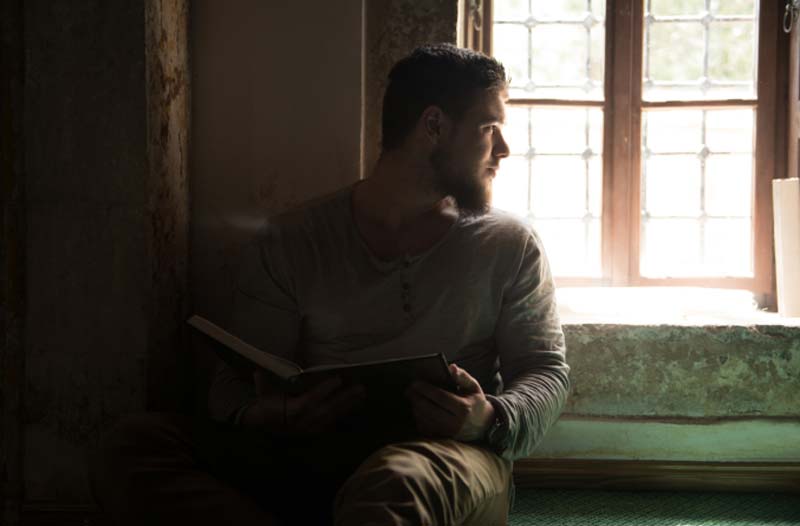
“Embracing Islam is the most important decision I have ever made in my whole life, and I will never regret it because Allah SWT chose me that horrible night and saved me from death and offered me a beautiful gift in Islam and I’m finally happy again Alhamdulillah,” he continued, expressing his gratitude to Allah.
This was a story of a man who succeeded in beating depression, and the dark times that he had lived through after he broke up with his wife led him to Allah instead of leading him to alcohol, drugs or even to suicide.
The post When Hardships Lead Us to Allah – A Convert’s Story appeared first on About Islam.
source https://aboutislam.net/blog/when-hardships-lead-us-to-allah-a-converts-story/


Comments
Post a Comment