
Islamic Solidarity Sports Federation Criticizes Paris 2024 Hijab Ban

  • The Federation called the ban an attack on sportswomen from around the world, not just Muslim athletes hoping to represent France at Paris 2024.
  • It warned that the French position could send a message of exclusion, intolerance, and discrimination.

The Islamic Solidarity Sports Federation has expressed ‘profound concern’ over the French government’s decision to ban its athletes from wearing a hijab during the Olympic Games, warning that the French position could send a message of ‘exclusion, intolerance and discrimination

“The hijab is an aspect of many Muslim women’s identity and should be respected,” a statement from the Athletes Commission of the 57-member international organization, based in Riyadh, posted on Facebook read.

📚 Read Also: FIFA Celebrates First Hijabi Player, Referee at Women’s World Cup

“This ban not only infringes upon the religious freedom of French Muslim athletes but could also deny them the opportunity to participate in the Olympics, representing their country and inspiring others.”

French Sports Minister Amélie Oudéa-Castéra announced last month that the country’s athletes will not wear the hijab during Paris 2024.

“We believe this contradicts the principles of equality, inclusivity, and respect for cultural diversity that the Olympics stand for,” the statement added.
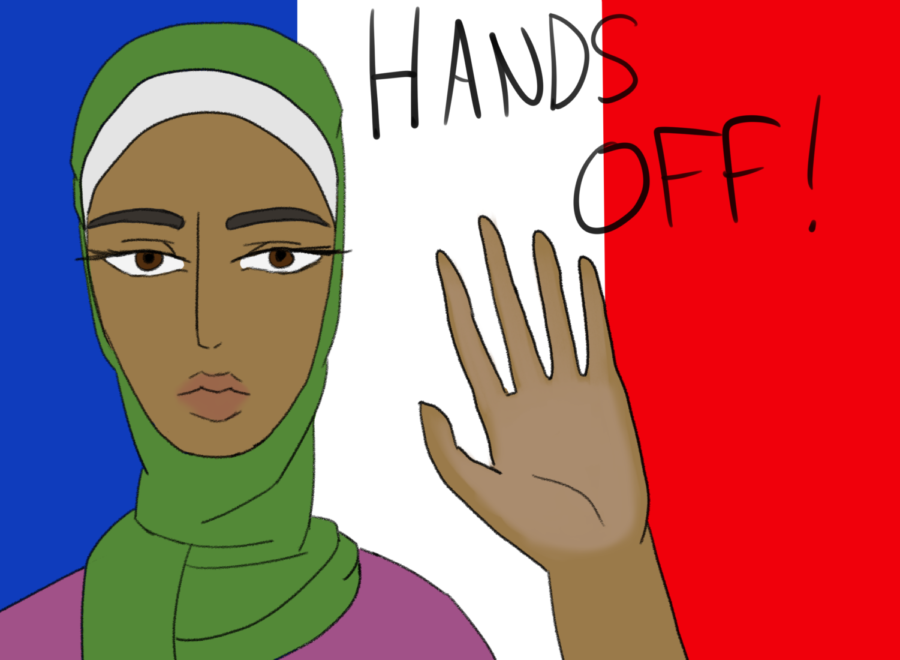
Attack on Sportswomen

The ISSF called the ban an attack on sportswomen from around the world, not just Muslim athletes hoping to represent France at Paris 2024. It also urged the French government to reconsider the ban.

“It contradicts the progress made by the International Olympic Committee in promoting gender equality and inclusivity in sports,” it added.

“The Olympics have historically celebrated diversity, unity, and athletic excellence,

“By implementing a hijab ban for their athletes, a host would send a message of exclusion, intolerance, and discrimination that goes against the Olympic spirit.”

“The Olympics should be a platform where athletes from all backgrounds unite, inspire, and foster understanding among nations.”

Islam sees hijab as an obligatory code of dress, not a religious symbol displaying one’s affiliations.

What Muslim women choose to wear is a controversial topic in France. In 2004, it banned hijab in public schools, and in 2010, it became the first European nation to ban burqa, which covers a woman’s face.

Last week, a spokeswoman for the UN Human Rights Office said, “No one should impose on a woman what she needs to wear or not wear.”

The post Islamic Solidarity Sports Federation Criticizes Paris 2024 Hijab Ban appeared first on About Islam.


source https://aboutislam.net/muslim-issues/sports/islamic-solidarity-sports-federation-criticizes-paris-2024-hijab-ban/

Comments

Popular posts from this blog

List of Times and Places Where Dua is Accepted

A short reminder regarding the recommended times of dua . And I think what you need to know here is that the recommended times of dua or recommended things that can cause your dua to be accepted, can be divided into two sort of large groups: Am I Good Enough to Make Dua for Myself? Situations where your dua is accepted. Times where your dua is accepted So I’m going to very briefly mention them one after the other as much as possible. As for situations where your dua has been accepted: – The person who has been wronged or oppressed . – A person who finds themselves in severe difficulty after a calamity has struck. – The person who is traveling. – Someone who is fasting. – The one who is reciting the Quran or has just recited the Quran – Someone who is performing Hajj or Umrah or jihad. – The one who is making dua for someone in their absence . Because we know that when you make dua for someone in his absence an angel says: “ Ameen and to you”. – A person...

Ghuraba (The Strangers): Nasheed with English Subtitles

Islam began as something strange, and it shall return to being something strange, so give glad tidings the strangers. (Sahih Muslim 145) This famous nasheed has many versions; this one is from Muhammad al-Salman and has the subtitles in English embedded. [We are] strangers and we do not bow the foreheads to anyone besides Allah  […] Transliteration to help in the pronounciation:  Ghurabaa’ wa li ghairillaahi laa nahnil jibaa Aisha Stacey  wrote in an article for Aboutislam.net : “I think that many of you would agree that being Muslim in the 21st century makes you well acquainted with being strange. It might even be a metaphor for random, as in you have been randomly selected. […] many converts to Islam will tell you about feeling as if they were strangers, before finding Islam. They will speak of feeling that they belonged somewhere else that their lives were just slightly off center. They often speak about a vague sense of knowing they were not like everyone else...

Taqwa – Living the Main Purpose of Ramadan

Taqwa is a major purpose for the month of Ramadan. The people of taqwa are those who do the things that they are commanded and avoid the things which Allah has made prohibitive. And evidently, to reach a state of taqwa requires vigilance, it requires patience and sincerity. The verse is pertaining to fasting I found in a single set of verses in chapter 2 starting at verse 183: O you who have believed, decreed upon you is fasting as it was decreed upon those before you that you may become righteous. ( 2:183 ) A Collective Act of Worship Allah is telling us that fasting has been made obligatory and then Allah tells us that just as it was prescribed for those before us. We often get asked this question in Ramadan, “how’s the fast going for us?” And if we gave ourselves a moment to think about it, we see that Allah Most High has made the fast inside the month of Ramadan easy for us because we know that there is a collective spirit to fasting; we know that we’re not alone in this ...