6 Andalusian Thinkers You Need to Know
When we talk about Andalusia, we often immediately think about the Golden Ages of Islam, the glory of Islamic civilization, and how Al-Andalus was one of the most important keys in the history of technological and scientific progress.
Knowledge is power, and searching for knowledge is an obligation in Islam.
No progress could be possible without knowledge, and that’s what the early Muslims did, whether it was in Andalusia or in China.

Andalusian men and women put all their efforts for 800 years into enlightening the conscience and spirit of humanity.
Ibn Rushd, Al-Zahrawi, Ibn Zuhr, Ibn Tufayl, Abbas Ibn Firnas, Ibn Bajjah, and many other Andalusian Muslims sparkled and conquered the world.
But what about other, lesser-known Andalusian scientists who were also important for their contributions?
Here’s a short compilation of other, very important Andalusian scientists:
1. Abu Bakr Muhammad ibn al-Walid at-Turtushi
Born in Tortosa, At-Turtushi was one of the most prominent Andalusian political philosophers of the 12th century.
His book “Kitab Siraj al-Muluk” (The Lamp of the Kings) is one of the most important works ever produced in the mediaeval Islamic world about political philosophy.
2. Ali Ibn Hazm al-Andalusi
Ibn Hazm was an 11th-century Andalusian Muslim scholar, poet, politician, lawyer, genealogist, historian, philosopher, and linguist in Arabic, Hebrew, and Syriac from Cordoba.
He wrote tracts on logic, and the relationship between sound and the speed at which it has to travel.
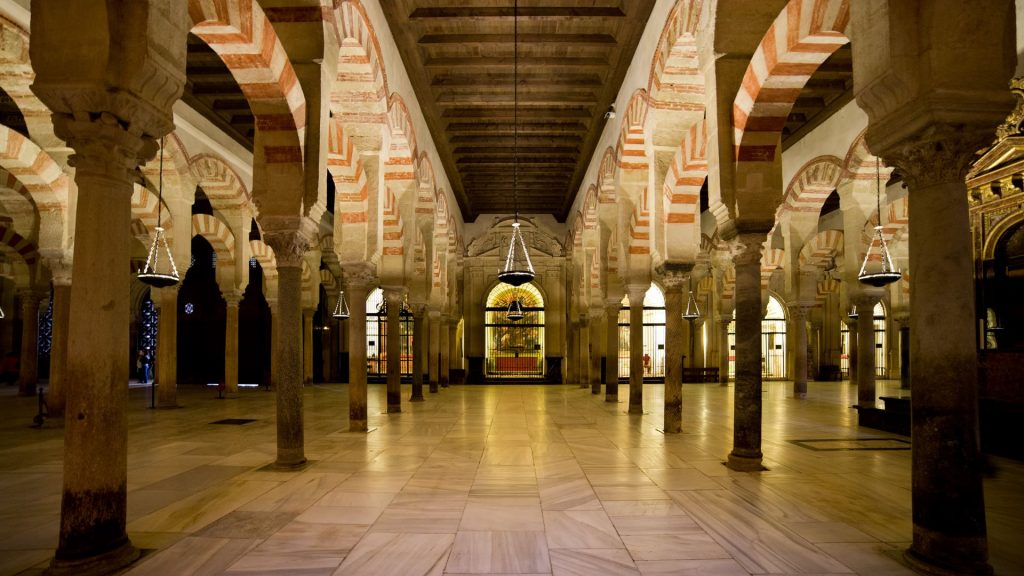
He illustrated this by using the “echo noise” in the mosque of Cordoba and also referred to the interval time between lightning and thunder.
Ibn Hazm studied the Koran, the Bible, and the Torah.
He debated with many Muslim scholars, Christian priests, and Jewish rabbis.
He is considered the father of what we now call the “Study of Comparative Religions”.
Ibn Hazm confirmed, 500 years before Galileo did, that the earth is round and proved it with Quranic verses in his tract.
He also served for a time under the Ummayad Dynasty in Cordoba as Prime Minister.
One of his most famous and best preserved treatises is “Ring of the Dove”, a philosophical and psychological approach to love and loved ones.
Mediaeval Europe learned a lot from this book, and it is still known as one of the best and most popular works that treated both notions of “love” and “loved one” in a pure way.
3. Ibn Razin al-Tujibi
Al-Tujibi was a 13th-century Andalusian scholar, lawyer, poet, and, in particular, a very famous gastronome from Murcia.
He wrote several scientific works, but nothing is left of his works except his cookery book “The Delights of the Table and the Best Types of Prepared Foods”.
Besides his writings about Andalusian and North African cooking and the use of herbs, he also wrote about using the appropriate cooking utensils (the advantages and disadvantages of their use) and arranged the names of the herbs and recipes in alphabetical order with the necessary explanations about their benefit to human health.
Certain herbs were not known in Europe until his book became popular.
4. Abu al-Hassan ibn Ali al-Qalasadi
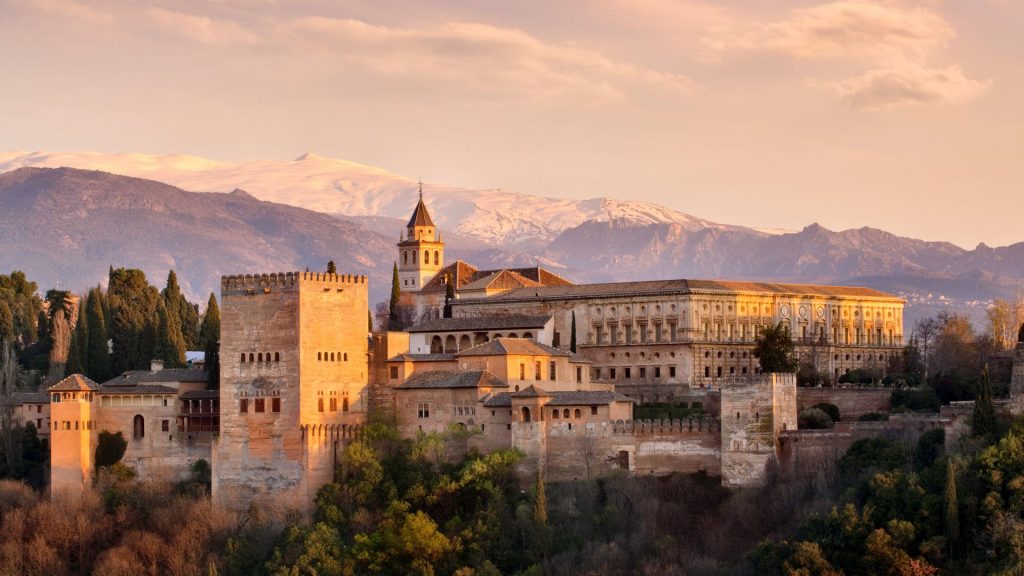
Abu al-Hassan ibn Ali al Qalasadi was a 15th-century Andalusian mathematician, philosopher, physician, and Islamic scholar (a well-known faqih of the Maliki school) from Baza, near Granada.
He is the founder of the standard algebraic symbols that we use today in mathematics.
He is known as one of the most influential voices in algebraic notation since antiquity, and he is the one who took the first steps towards the introduction of algebraic symbolism.
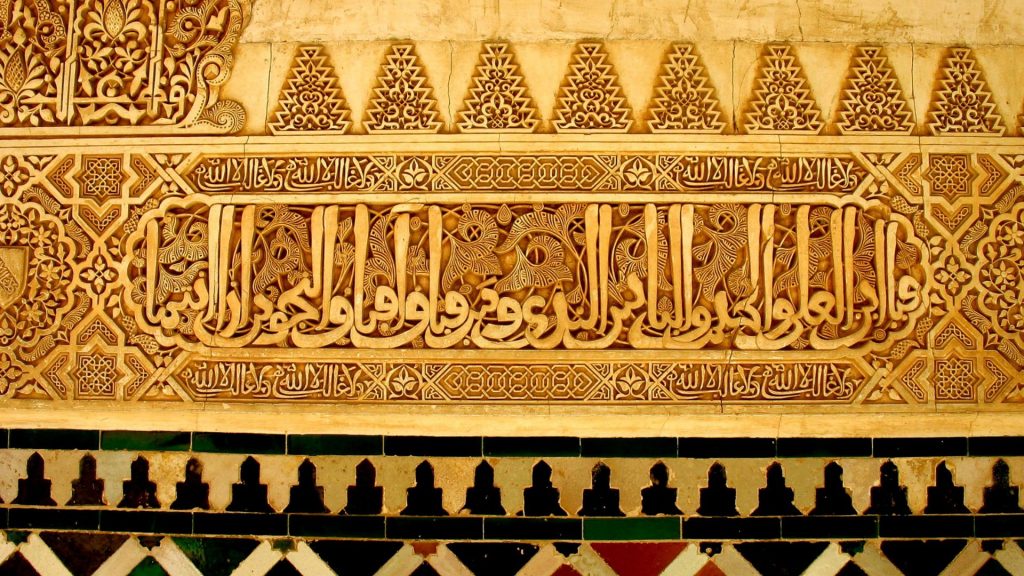
He represented mathematical symbols using characters from the Arabic alphabet. He is the first person to enter the “x” in mathematics.
He also wrote a book in which he explained the role of algebra in Arabic poetry.
His work had an enormous impact on European mathematicians and caused a scientific evolution and revolution in the world of mathematics.
5. Loubna al-Qortobiya
A 10th-century Andalusian female scholar and secretary of the Caliph in Cordoba.
She was one of the key individuals in the palaces of both Caliphs (Abderrahman III and later his son al-Hakam II).
She was a very intellectual woman who specialised in Arabic poetry, grammar, Arabic calligraphy art, and mathematics.
She translated different scientific books and manuscripts into Arabic.
She was the driving force behind the creation of the famous library of Medinat Az-Zahraa, and she was also appointed by the Caliphs as responsible for the library in Cordoba.
6. Maslama al-Majriti and his daughter Fatima al-Majritia
Maslama was a 10th-century Andalusian mathematician (they called him the “Imam of mathematicians in Andalusia”), astronomer, chemist (translated the “Almagest” of Ptolemy), and writer of essays about the economy in Andalusia.
He also predicted a futuristic process of scientific exchange and the emergence of networks for scientific communication.
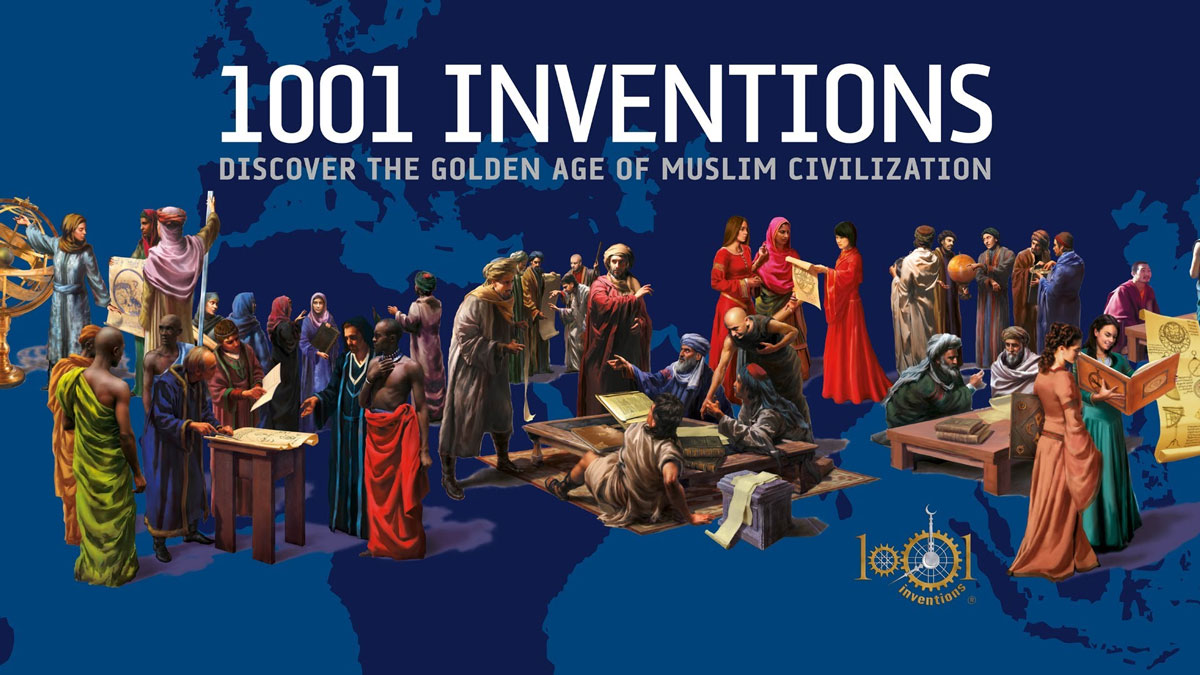
He built a school of astronomy and mathematics, and marked the beginning of organised scientific research in Al-Andalus.
He introduced and improved the astronomical tables of al-Khwarizmi and helped his daughter Fatima’s historians by converting the Persian era to the Islamic era system (Hijri).
Thanks to the introduction of the Islamic era system and the way it was calculated, Cordoba became the centre of the world.
He also introduced new investigative techniques and triangulation.
His daughter, Fatima, made contributions to astronomy. She wrote a very important book on how to use “an astrolabe”.
Maslama and Fatima also worked together on calculating the position of the sun, moon, and planets; a calendar compilation of astronomical phenomena; and calculating the sunset and lunar eclipses.
***
From our archives.
The post 6 Andalusian Thinkers You Need to Know appeared first on About Islam.
source https://aboutislam.net/family-life/culture/6-andalusian-thinkers-need-know/


Comments
Post a Comment