Rehab Yourself Before Ramadan
Modern day rehabilitation centers, spas, and wellness retreats use multi-faceted programs incorporating strictly regulated diet, sleeping, fitness, and meditation routines to facilitate the recuperation, recovery and cure of participants.
The latter might be affected with a mental condition, substance abuse problems, addiction, or any other physical ailment.
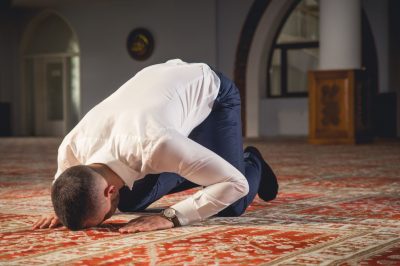
The result of this stint in “rehab” is that the entrant becomes “cleaned up” and “detoxified”, emerging a few weeks or months later with a healthier mind, body and spirit.
Thankfully, God has, in His boundless mercy, already obligated a much better but similarly regimented program once a year for every Muslim. This program is known as “Ramadan”.
The Arabic root of the word “Ramadan” lies in the letters ra-meem-daad, which means, “vehemently heated by the midday heat of the sun” (Lane).
In fact, the fasting of the month of Ramadan is closely associated to the faith that resides in the heart of a Muslim, and is meant to act as a spiritual as well as physical “detox” program that rejuvenates this faith by “burning” off the sins that he or she commits during the rest of the year.
It was narrated from Abu Hurairah that Prophet Muhammad said:
“Whoever fasts in Ramadan out of faith and in the hope of reward, he will be forgiven his previous sins.” (An-Nasa’i)
Besides this burning off of sins, the “heat” of the yearly, 30-day long Ramadan fasting routine is also meant to increase a Muslim’s taqwa, or the level of their consciousness of God:
{O you who believe! Fasting is prescribed to you as it was prescribed to those before you, that you may adopt taqwa.} (Al-Baqarah 2: 183)
Taqwa is embodied or personified by how much a Muslim remembers God, thinks about Him, yearns to please Him, avoids doing anything that displeases Him, and regrets and quickly asks forgiveness for, inadvertently or intentionally doing something wrong that involves His disobedience.
This higher level of taqwa is achieved as a result of the many acts of worship and voluntary good deeds that are ordained during Ramadan, which I have tried to summarily highlight below, in the light of the sunnah of the Prophet (peace be upon him).
Generosity Towards Others, and Review of the Quran

Narrated Ibn `Abbas:
“The Prophet was the most generous of all the people, and he used to become more generous in Ramadan when Archangel Gabriel met him. Gabriel used to meet him every night during Ramadan to revise the Quran with him. Allah’s Messenger then used to be more generous than the fast wind.” (Al-Bukhari)
A fast wind distributes provision by acting as the harbinger of beneficial rains, and also by bringing about the pollination and fertilization of plants. The result of a fast wind is usually the distribution of sweet water that brings about the growth of abundant edible provision from fertile land.
This is exactly how the Prophet used to be towards other people during Ramadan – as generous and prosperity-bringing as the wind. He also reviewed the whole Quran that had been revealed to him till then, on a daily basis with Archangel Gabriel during Ramadan.
As the members of his ummah, we should emulate his behavior during Ramadan ourselves: we should review the entire Quran at least once, in an un-rushed, deliberating, pondering manner, either on our own, or at a daily Quran circle (halaqah), and we should become extra charitable during this month.
This can be done by discharging our yearly zakah to the needy among our extended family and local as well as global community, and by donating clothes and other belongings. We should also try to give fresh food for others to break their fast with for iftar during Ramadan.
We should endeavor to ask ourselves: “Am I reviewing the Quran at least once during this whole month? Am I a means for distributing welfare and provision to others around me, akin to a fast wind?”
Praying at Night
It was narrated from Abu Hurairah that the Prophet said:
“Whoever stands (in the voluntary night prayer of) Ramadan out of faith and in hope of reward, his previous sins will be forgiven.” (An-Nasa’i)
The Prophet used to pray the late night prayer every night as personal routine throughout the year, but he has especially and highly recommended it for Muslims during Ramadan.
All praise to Allah, all the masajid around the world facilitate Muslims to pray this late night prayer in the form of congregational taraweeh during Ramadan. We should strive to not miss even one taraweeh prayer, and if we do, we should try to make up the loss by praying extra units of prayer at home, especially late at night in the 2 hours or so before Fajr, just before partaking in suhoor, the daily pre-dawn Ramadan meal.
The point is that, every minute of Ramadan is precious, and with the long summer days in which Ramadan is happening upon us this year, we should avail the extremely short nights by praying extra units of supererogatory prayers in them, and asking God for forgiveness for ourselves and guidance for the rest of the year.
Our aim should be to not let even one night of Ramadan pass without us standing in voluntary prayer in it.
Abstaining From Forged Speech

Fasting during the days of Ramadan entails more than just abstaining from food, drink and marital relations. It also involves abstaining from lying, lewd jokes, hurtful words, gossiping, arguing, backbiting, swearing, and speaking any statement which classifies, in Arabic, as “zoor”, according to the Quran and hadith:
The Quran enjoins: {…and shun the word that is false (qaul al-zoor).} (Al-Hajj 22: 30)
The same Arabic words “Qaul Al-Zoor” that are mentioned in the above verse of the Quran, are used by the Prophet to indicate the kind of speech that nullifies Ramadan fasting, and is thus completely prohibited, in the hadith below:
Narrated Abu Hurairah:
“The Prophet said, “Whoever does not give up forged speech (qaul al-zoor) and evil actions (amala bihi), Allah is not in need of his leaving his food and drink.” (Al-Bukhari)
The meaning of the Arabic word “zoor” is “deviation, crookedness, or a lie” (Lane).
The hadith above indicates that we should not just abstain from spoken lies during the Ramadan fasts, but also acting upon these lies in any manner, through our actions. Basically, any kind of dishonesty, in word or deed, is completely disallowed while fasting.
Examples of dishonest actions could be: Students asking others to sign in for them before class, to make it appear as if they came on time; employees availing company benefits by lying on official paperwork; a mother bribing her child to do a chore by promising him or her a treat that she doesn’t intend to give; telling someone that your cell phone battery was dead when they called, as an excuse to avoid talking to them, when the truth is that you had deliberately turned it off.
This prohibition is a very serious one, which we should all be extra careful about, as indulging in it nullifies the fast of Ramadan and renders it no more than a stretch of physical hunger and thirst, and not the sacred act of worship that garners the pleasure of God.
The post Rehab Yourself Before Ramadan appeared first on About Islam.
source https://aboutislam.net/reading-islam/living-islam/rehab-yourself-before-ramadan/


Comments
Post a Comment