4 Lessons from the Night Journey for Hard Times
“If God did not give humans the ability to have ‘sabr’ (patience), we would all certainly go insane.”
These are the words I recently heard at a mourning ceremony for the passing of a community member. Reflecting on these words reminded me of the virtue of patience and the truth of Allah’s promise:
{For indeed, with hardship comes ease.
Indeed, with hardship comes ease} (Ash-Sharh 94: 5-6)
In a hadith narrated by Saad ibn Abi Waqqas, the Prophet (peace and blessings be upon him) was asked “which people are most severely tested.”
He replied “The prophets…” and then continued to describe the others that follow (Sunan Ibn Majah).
It is therefore a fact that the Prophet Muhamamd experienced the greatest level of difficulty and tragedy in his life. Now, imagine the hope that these verses represented to him in dire times. We ask Allah to strengthen our hearts and give you peace in trying times.
 Watch Also: Heavens Have a Kabah Too
Difficult Tests
Early in the years of prophethood, the Messenger of God experienced extreme loss. He lost his beloved Uncle, Abu Talib, who was a major protector of the Muslims. He lost his wife, Khadijah (may Allah be pleased with her) in the same year. Psychologists today confidently describe losing a partner as one of the most traumatic experiences one can have.

Thus, this year was dubbed the “Year of Grief.” But, the tragedy didn’t stop there. The Prophet would also have his hopes shattered after being stoned on the streets of Ta’if.
But none of these experiences, as devastating and difficult, are greater than Allah’s promise: Indeed, with hardship comes ease. That ease came in the form of a miraculous journey with Angel Jibreel to Jerusalem then the seven heavens. This journey would occur shortly after the Year of Grief.
For details on the journey, you can read here.
Along with patience, the journey demonstrated powerful lessons that we all can learn from.
Who Are Your Companions?
One of my favorite parts of descriptions of the journey are the Prophet’s encounters with other prophets of Allah. They included Adam, `Isa, Yusuf, Musa and Ibrahim (peace be on them all).
Can you imagine the feeling of support and motivation the Prophet must have felt meeting the men who shared the same message as him?
Watch Also: Night Journey: What Was the Prophet’s Means of Transport?
Can you imagine how he felt being greeted by the likes of Ibrahim and `Isa? Imagine the realization that they were in jannah which would be the Prophet’s home too!
Just as the Prophet was able to lean on those with the same mission for support, we can do the same. Surrounding yourself with healthy and supportive relationships is essential! Friendships can truly make or break your faith.
Salah is Medicine
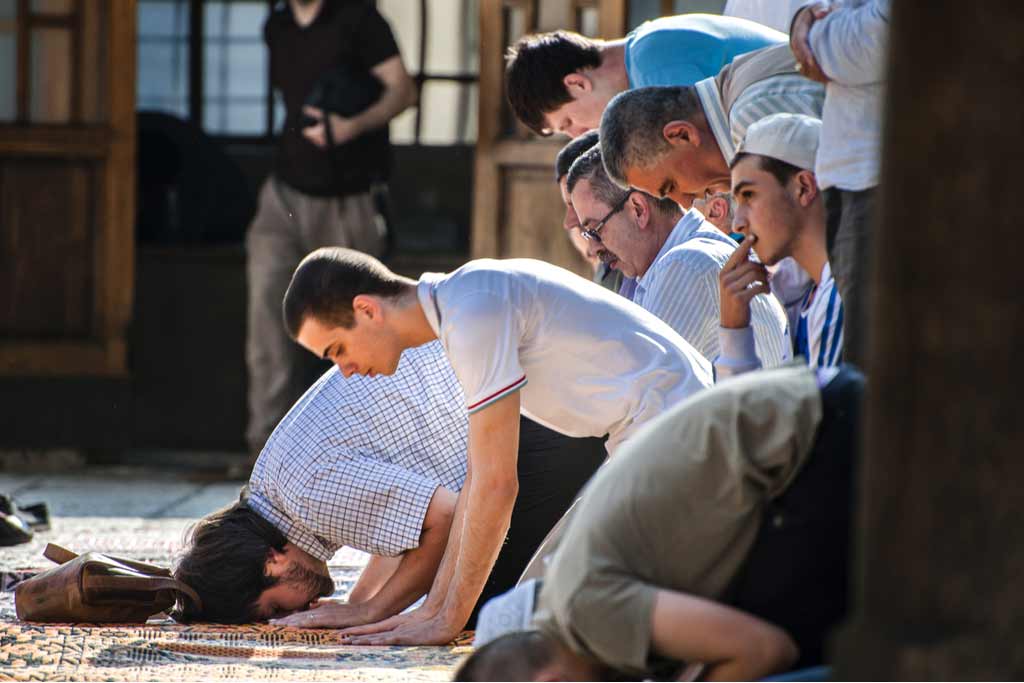
The Prophet saw and experienced many things on his journey. He met Prophets and angels, saw the gardens of Jannah and the fires of Jahannam. But he left with one tangible gift. That is salah.
Scholars tell us that salah being prescribed after the Year of Grief is no coincidence. Salah is medicine. Salah is a retreat. Salah is the ultimate embodiment of peace.
So when you enter your Year of Grief whether short or long, treat Salah like medication in illness and never miss your dose!
Embrace the Night
Al-Israa’ wa al-mi`raj stands for “the night journey and ascension.” While we’ll never be able to meet Jabril for a ride to the heavens, we can still experience a mini-ascension.
The night time is a period of immense blessing. Every night, we can choose to embrace it or sleep through it. Imam Ash-Shafi`i described the duaa during tahajjud prayer as “an arrow that doesn’t miss its target.”
Oftentimes, those familiar with tahajjud only consider it when they are desperately making duaa for something like a good grade, job, or marriage.
Instead, we should perform tahajjud to please Allah and increase us in iman alongside making duaa.
Be Loyal to Your Faith
When the Prophet (peace and blessings be upon him) returned to Makkah and described his journey, the Quraiysh mocked him unrelentingly. They told Abu Bakr (may Allah be pleased with him) of the Prophet’s journey hoping to shake his faith.
Abu Bakr stated “What is so surprising? I believe him when he says something even more incomprehensible. He says he receives revelations from God and I believe him.”
Conviction is such an underrated superpower. It is with this conviction that Allah gives you the strength to cope with hardship.
It is conviction that quiets the anxieties of living our faith. It instills in us the confidence to do the actions that please Allah like speaking truth, praying in public and dressing modestly.
Your conviction will certainly inspire others, Muslim or not because confidence in truth is a beautiful thing!
Conclusion
The Night Journey & Ascension is widely detailed in the hadith. Many more lessons can be extracted from the incredible mission. It is always encouraged to learn more about the details and extract lessons for yourself.
The post 4 Lessons from the Night Journey for Hard Times appeared first on About Islam.
source https://aboutislam.net/shariah/prophet-muhammad/reflections/4-lessons-from-night-journey-for-hard-times/


Comments
Post a Comment