9 Simple, Highly Rewarding Prayer Habits for Life!
Your prayer truly is a treasure chest – and the sunnah (non-obligatory) parts are your opportunity to gain immense rewards, multiple times a day.
“Pray as you have seen me praying.” (Al Bukhari and Ahmad) is the motivation, so let’s discover nine, sunnah prayer habits to take you and your prayer to the next level.
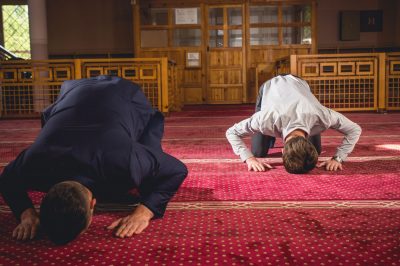
Added actions points will help you establish your new prayer habits and make sure to use sticky notes in the areas you pray, or on a note to keep with you when out and about. Be determined to inspire others and get rewarded for each sunnah of the prayer they revive, by the will of Allah.
1. Go for the Perfect Wudu to Have the Eight Gates of Paradise Opened
Action Points:
Take care of doing a complete wudu and say:َ
Ashhadu an la ilaha illallah, wahdahu la sharika lahu, wa ashhadu anna Muhammadan-abduhu wa rasuluhu, Allahumma-j’alni mina-t tawwabin, waj’alni mina-l mutatahhirin.
‘I testify that none has the right to be worshipped but Allah Alone, there are no partners for Him. And I testify that Muhammad is His servant and Messenger. O Allah! Make me among the repentant, and make me among those who purify themselves.’
Then eight gates of Paradise are opened for you. (Sunan al-Tirmidhī)
Extra:
Make multiple intentions whilst making wudu. For example to fulfill Allah’s command, for your sins to fall off, to revive a sunnah, to be clean to stand before the King (Allah) and to gain the maximum reward for your wudu.
2. Add This to the Start of Your Prayer for Multiple Rewards and Extra Protection
The Prophet Muhammad used this supplication at the start of Prayer:
Allah is the Greatest, Most Great. Praise is to Allah, abundantly. Glory is to Allah, at the break of day and at its end. (Three times) I seek refuge in Allah from Satan, from his breath, from his voice and from his whisper. (Abu Dawud, Ibn Majah, Ahmad, Muslim)
Action Points:
Make intention to perform prayer, say the takbir and use above dua’ after the openings supplication you normally use. Feel it when you seek Allah’s protection from Satan and his tricks.
3. Learn These Phrases of Remembrance Once to Use in Both Ruku’ and Sujood
The Prophet (peace be upon him) said in ruku‘:
Glory is to You, O Allah, our Lord, and praise is Yours. O Allah, forgive me. (Al-Bukhari 1/99, Muslim 1/350.)
Action Points:
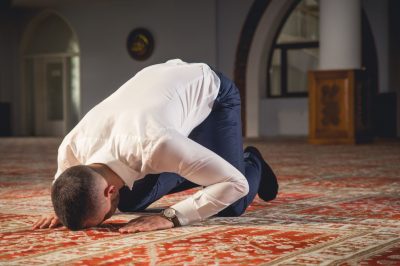
Memorize it and say it in ruku’, after you say ‘Subhana Rabbiyal ‘Adheem and get forgiven and rewarded for reviving a sunnah, many times a day. It’s sunnah to also say this dua’ in sujood, so learn it once and use it in ruku’ and sujood.
The Prophet Muhammad also said this beautiful, short dhikr in ruku‘ and sujood:
Glory (to You), Most Holy (are You), Lord of the angels and the Spirit. (Muslim, Abu Dawud).
You are then calling upon Him with three of His Beautiful Names: As-Subbooh, Al-Quddoos and Rabb. The Prophet also said this powerful, short dhikr:
Glory is to You, Master of power, of dominion, of majesty and greatness) (Abu Dawud, An-Nasa’i, Ahmad)
Let it truly remind you of the power of the Lord you are humbling yourself for in prayer.
4. Say This After Ruku’ to Make the Angels Race
One day, we were praying behind the Prophet and when he raised his head from the position of ruku, he said:
Sami’Allahu liman hamidah.
Allah hears the One who praises him.
A man from behind added:
“Our Lord, all praise is due only to You, praise which is abundant, excellent and blessed.”
When we finished the prayer, the Prophet said:
Who spoke?
The man said:
“I did.”
He said:
I saw some thirty angels all scuffing to see which one of them could record it. (Muslim)
Action Points:
Say it after you come up from ruku‘: After you say sami Allahu liman hamidah, Rabbana wa laka’l-hamd, say it with feelings and visualize the angels race!
5. Say This in Between Prostrations for Seven Amazing Gifts
Use this comprehensive dhikr in between two prostrations in prayer:
O Allah forgive me, have mercy on me, guide me, support me, protect me, provide for me and elevate me. (At-Tirmidhi, Ibn Majah)
Action Points:
Memorize it and say it when you sit in between the 2 sujood (besides the dhikr: Rabbi-ghfirli, Rabbi-ghfirli). So you’ve made one prostration and go back into sitting position – say above dhikr– and go into the second prostration.
As you say it, realize you’ll be getting these amazing 7 gifts insha’Allah: forgiveness, mercy, guidance, support, protection, provision and elevation.
6. Get Rewarded for Taking a Break
Chapter Al-Fatihah is a marvelous dialogue between the slave and his Lord; there is a beautiful, thoughtful sunnah to revive in this conversation between you and Allah the Most High.
When Umm Salamah was asked about the recitation of Prophet Muhammad (peace be upon him), she said:
He used to pause after each verse: (Ahmad, Abu Dawud)
Action Points:
Next time you recite chapter Al-Fatihah in prayer pause after each ayah and internalize that Allah the Most High answers each verse. Experience chapter Al Fatihah in each prayer and realize you are making dua’; do so passionately.
7. Move it, After Prayer
Do you know that when you see people getting up after an obligatory prayer to pray their sunnah prayer in a different spot, they are actually reviving a sunnah?
The Prophet (peace be upon him) said:
One prayer mustn’t be joined with another until you speak or exit. (Muslim)
Ibn Taymiyyah said:

“… he prohibited that any [obligatory] salah be followed immediately by [optional] one; one should separate between them with speech or changing one’s place.”
Action Points:
Next time you finish a prayer, move it; it can be any place, even right next to where you prayed before, or separate between your obligatory and sunnah prayers by reciting dhikr (like Ayatul Kursi) or another beneficial ‘speech’.
8. Ask for This at the End of Prayer
The time just before the tasleem (final salam to end your prayer) is a slot of rewards many don’t utilize! The Prophet Muhammad used to say:
O Allah, I ask You for Paradise and seek Your protection from the Fire. (Abu Dawud, Al-Albani, Ibn Majah)
Action Points:
Say it at the end of any prayer after the last ‘attahiyyaatu‘ or final tashahhud and before you end the prayer with the salam. The Prophet (peace be upon him) also said:
Whoever asks Allah for Paradise three times, Paradise will say: O Allah, admit him into Paradise. Whoever seeks protection from Hellfire three times, Hellfire will say: O Allah, save him from the Hellfire. (At-Tirmidhi)
So make a double intention to gain this reward as well and revive this sunnah at the same time!
9. Get Allah’s Help in Three Major Areas of Life

Do you feel you can’t remember Allah properly and your dhikr is empty, almost robotic? How much have you complained today and all the days before about little things; the food, tasks, family, money? You realize you are struggling to be grateful? You enter prayer and leave it without feeling much difference?
Do you try for tears to roll down your cheeks when reading certain verses from the Quran, but they don’t?
Did the soul-shaking reality hit you that you are not remembering, giving thanks nor worshiping Allah in the way you hoped to?
Revive this 5 second sunnah at the end of prayer which can solve all above!
The Messenger of Allah took Mu’aadh ibn Jabal by the hand and said:
O Mu‘aadh, by Allah verily I love you, by Allah verily I love you.
Then he said:
I urge you, O Mu‘aadh, *never to stop saying at the end of every prayer:
O Allah, help me to remember You, give You thanks and to worship You in the best of manners. (Abu Dawud)
Truly beg Allah with this supplication at the end of each prayer -after the final tashahhud and before the salam by which you exit the wonderful world of the prayer and its radiant rewards.
(From Discovering Islam archive)
The post 9 Simple, Highly Rewarding Prayer Habits for Life! appeared first on About Islam.
source https://aboutislam.net/spirituality/9-simple-highly-rewarding-prayer-habits-life/


Comments
Post a Comment