Reading Prophet Muhammad’s Biography Led Me to Islam
Before I was Muslim, I was what you could classify as a “typical British lad”.
I used to go out drinking on a Saturday evening, and all that kind of thing.
Then about five years ago, I was going on holiday to Greece.
When you go to an airport, you’ve got loads of books packed in your backpack for you to read from, and then you go sitting by the side of the swimming pool and reading a book, and you would never have too many books!
I thought I would go to WHSmith and pick up a good book I could read, and I couldn’t find anything. I got my rucksack on my back, and as I turned around to leave, I knocked the bookshelf and all the books fell off.
Reading the Biography of Prophet Muhammad
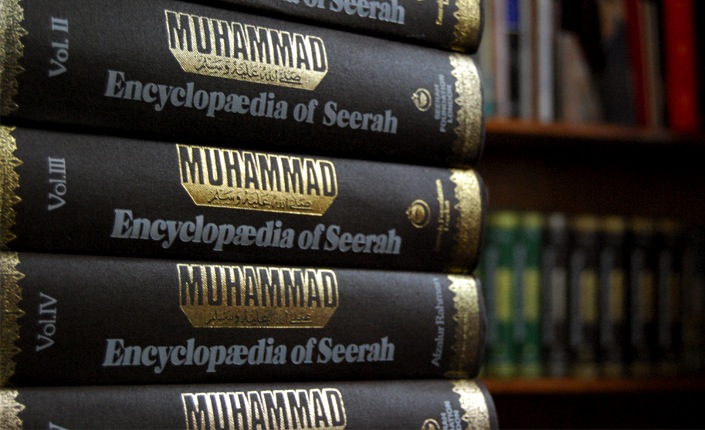
Not wanting to be a bit awkward, so I picked everything up, and the books were all one book, and it was by a western author, called Barnaby Rogerson, and he wrote a book called “The Prophet Muhammad: A Biography”.
I read the first page about the Prophet Muhammad and it looked interesting. And I read the second page, then I bought it and took it on holiday with me.
I read the book, and I thought, “Yeah I want to learn more.”
So I came back, and I started to go to the local mosque, and I spoke to them and I said I wanted to learn more.
And the Imam said:
“Well to tell you the truth, the best way to understand Islam is to become a Muslim.”
I didn’t think twice about it, I just took my shahadah there and then.
I Related to Hamza, Prophet Muhammad’s Uncle
As a revert Muslim, you find that you sort of adhere yourself to somebody from the Sahabah (The Prophet’s companions).
You know you could relate to them, because they were all revert Muslims too.
And my relation was Hamza, because of the way that he lived his life before; he was leading a life of hard drinking and hard living, he enjoyed his life to the full.
He still enjoyed his life to the full after he became a Muslim. I related a lot to him.
So when I went on Hajj, I wanted to go to the battle scene of Uhud to see where he died. So I went to the cemetery, then got off the bus.
As I was walking across, it was like I was walking through tranquility. I felt so emotional, and tears were just streaming down my face, and I couldn’t stop them, and I didn’t know why.
So I kept going, and as I got off this sandy patch unto the little paved area, it all went, and I thought that was strange. I went to the cemetery.
I made my dua to the martyrs and Hamza. And made my way back to the bus when I said “Come on it’s time to go”, and as I walked across that patch of ground it happened again, just crying.
Someone asked me “What’s the matter?” and I told him, to the man who was there next to me because he was translating for me.
He said, “When Prophet Muhammad found out what happened to his uncle he cried, and just wept and wept.”
And I said, “Maybe he just left something there for somebody who wanted to find it,” and I felt it here, in my chest, for Hamza and it hit me fully.
A New Born Baby, Safiyyah
So when I got home I said- and my wife was pregnant at the time- “If we have a son I want to call him Hamza,” and we had a little girl.
So before I went to see my mum, I went on to the internet to see if there are any female relations of Hamza to give her a second name, and I couldn’t find anything.
My wife said “Ask your mum”. So I asked my mom and my mum went away. A couple of days later, she said she went through the internet and found three names for us.
The one we liked most was Safiyya. So we thought “OK then, we will give her the name Safiyya”.
Few months after we had done that, I was feeling really depressed and frustrated.
I got a book and I just opened it up to read and see what there is in there. I was reading about the aftermath of Uhud. It just opened there, and it was talking about them going wrapping the Muslim Martyrs up and burying them.
Then the book started talking about Hamza’s sister, coming with two pieces of cloth. And Hamza’s sister was called Safiyya!
The post Reading Prophet Muhammad’s Biography Led Me to Islam appeared first on About Islam.
source https://aboutislam.net/reading-islam/my-journey-to-islam/reading-the-biography-of-the-prophet-led-me-to-islam/


Comments
Post a Comment