Get to Know Surah Al-Taghabun – With Brother Nouman
This is the 64th. Surah of the Quran, and the last of the mussabihat in the Quran, which are the surahs that declare Allah’s perfection.
In this beautiful surah, Allah summarizes all the subject matters which are in the previous surahs; matters of faith, disbelief, conviction…
Get to Know a Surah of the Quran is a new series of videos brother Nouman Ali Khan presented in 2016 during the month of Ramadan.
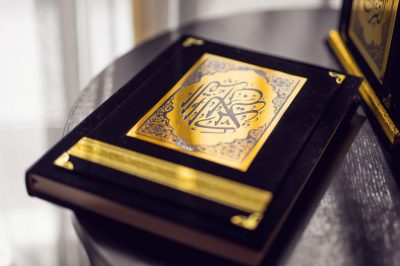
The following is a summary of some of the most important points and reflections brother Nouman mentioned in this sixteenth episode.
Introduction
This surah can easily be divided into several parts.
The first of them is the idea that the skies and the earth declare Allah’s perfection.
But human beings, {among you is the believer and among you is the disbeliever} (64:2)
{He created the heavens and earth in truth and formed you and perfected your forms; and to Him is the [final] destination.} (64:3)
Allah imposes on us the favor that He did by designing us in the remarkable way that He did the human being.
Allah’s Control and Knowledge
You will notice that in this first passage, there are two attributes of Allah that are at the opening and at the end, which complement each other.
At the opening, {…He is over all things competent} (64:1)
So He has complete control.
And at the end, {…And Allah is Knowing of that within the breasts.} (64:4)
So Allah’s control, and Allah’s knowledge.
These two things are talked about when we talk about trust and reliance on Allah.
Why?
Because Allah knows what you are going through. And Allah is capable of changing your circumstances. And whatever you are going through is happening because Allah is allowing it to happen.
When bad things happen to people, they start questioning Allah and say “If He is All-Powerful, how come He is not changing my circumstances?” They in fact question “He is over all things competent.”
And then on the other side of the “pre-destination problem” is “if Allah already knows what I’m going to do, how is it my fault?”
And Allah actually established first of all both of those as realities, that Allah is in fact knowledgeable of whatever goes on inside the chest, and He is in fact in complete control.
These two attributes, once again, the purpose of them is to establish one powerful dimension of our faith, and that is reliance on Allah and trusting Allah …
Things that in my life are within my control; what I eat, how I sleep, how I deal with people, what I say … They are things which are in my control.
And then there are things that are beyond my control.
There are aspects of my health that I can try to take care of, but again health and sickness are in Allah’s hand ultimately.
Life and death is in Allah’s hands.
Whether you are living in a city that is enjoying good weather, or you are in the middle of a tornado or an earthquake, that’s not in your hands.
Whether you are driving perfectly on the road, that is up to you, but someone else comes and rams into you, that’s out of your control.
There are things that we have to relegate to Allah; they are just beyond us.

That is an aspect of our faith that is highlighted in this beautiful surah.
A Call to Faith
In the next passage of the surah, you’ve got this interesting dichotomy.
Allah will talk exhaustively about those who disbelieved in previous nations.
{Has there not come to you the news of those who disbelieved before? So they tasted the bad consequence of their affair, and they will have a painful punishment.} (64:5)
Also:
{Those who disbelieve have claimed that they will never be resurrected…} (64:7)
So the disbeliever is talked about over and over again.
Therefore, if you look at the consequences of those who did not rely on Allah and thought that they were invincible, and that they are not going to be brought to question, as a result of learning about their accounts, you should renew your faith:
{So believe in Allah and His Messenger and the Qur’an which We have sent down. And Allah is Acquainted with what you do.} (64:8)
This is one of the unique places in the Quran where the Quran is described as light…
To find out more reflections and details on this surah explained by brother Nouman and how the Surah concludes and to watch the full episode, please click here.
Read also Part 1 – Part 2 – Part 3– Part 4– Part 5 – Part 6 – Part 7– Part 8 – Part 9– Part 10 – Part 11 – Part 12 –Part 13 – Part 14 – Part 15
(From Discovering Islam archive)
The post Get to Know Surah Al-Taghabun – With Brother Nouman appeared first on About Islam.
source https://aboutislam.net/reading-islam/understanding-islam/get-know-surah-al-taghabun-brother-nouman/


Comments
Post a Comment