Treaty of Al-Hudaybiyah – The Manifest Victory
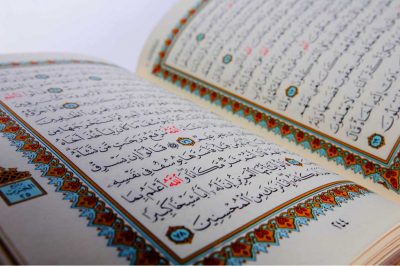
The Victory is a short but detailed twenty-nine verse chapter. Its name is derived from words in the first verse that reveal the subject matter, a great victory in the form of a truce with the disbelievers of Makkah.

This is known as the Treaty of Hudaybiyah, signed at an area known as al-Hudaybiyah. The chapter was revealed while the Muslims were on their way back to Madinah after the signing of the peace treaty, and approximately three years after the chapter preceding it, Muhammad.
Prophet Muhammad (peace be upon him) and his companions intended to reach the mosque in Makkah to perform the minor pilgrimage called Umrah but were prevented from doing so by the Makkans.
However, the Makkans were agreeable to a peace treaty, and Prophet Muhammad agreed to turn back to Madinah and perform Umrah the next year.
By revealing this chapter, God declared the treaty to be a manifest victory. War had been a barrier between the Muslims and the idolaters, but now both parties met and talked together, the Muslims were recognized as a formidable force and the Islamic State was duly recognized, and the no-war pact brought peace and security allowing the new religion to spread rapidly in the land.
At al-Hudaybiyah, Prophet Muhammad’s companions numbered 1400, but two years later at the conquest of Makkah he led an army of more than 10,000.
The general atmosphere of this chapter gives the impression that the Muslim community has matured over the past three years. They are no longer being put to the tests mentioned in the previous chapter and are growing increasingly strong.
Throughout the chapter, Prophet Muhammad is assured that the treaty is a great breakthrough. The hypocrites and idolaters are condemned, and the chapter concludes with praise for the believers.
Verses 1 – 10 Success for the believers

The chapter opens with three verses addressed to Prophet Muhammad. It is a statement outlining the great favors bestowed on him by God. He has been given a glorious victory, complete forgiveness, blessings, and assured guidance. All because of his complete and unwavering trust in God.
The chapter then goes on to describe the great blessings given to the believers. Tranquility was put into their hearts and they were promised more favors in the Hereafter. Forgiveness of sins and admittance to Paradise is the ultimate goal and true success.
Another aspect of God’s wisdom at this time was His plans for the disbelievers. He groups together all the enemies of Islam and tells us that He will punish the hypocrites, both men and women, and the idolaters, both men and women, and all those who had an evil thought about Him.
Evil will befall them because God’s wrath has fallen upon them and their destination is Hell. All the forces in heaven and earth belong to God; He is Almighty and Wise.
Once again the chapter addresses Prophet Muhammad pointing out his role and its objective. Prophet Muhammad has been sent as a witness, a bearer of good news, and a warner. The believers are told to believe in God and His messenger, honor and respect Prophet Muhammad, and praise God in the morning and then again in the evening.
Prophet Muhammad’s companions swore allegiance to him, and in doing so, they swore allegiance to God Himself. They placed their right hand on top of the Prophet’s hand, and the Hand of God was above their hands. Anyone who breaks the pledge breaks it at his own peril. However, the one who keeps the pledge will be given a great reward.
Verses 11 – 17 Choosing to disobey results in punishment
God now addresses the Bedouin (desert Arabs) who refused to accompany Prophet Muhammad because they expected defeat at the hands of the Makkans. It reveals the excuse these Arabs will have when they see Prophet Muhammad return safely. By making assumptions about the true nature of the expedition they destroyed themselves and became a ruined people.
Prophet Muhammad is told of the rich war booty the believers would soon acquire, and God warns him not to allow the Bedouin, who previously refused to accompany him, to join him on the next expeditions.
However, soon they will have another chance to fight, by facing a mighty enemy. At that time if they obey, they will be rewarded, but if they turn away, they will be punished. The blind, the lame, and the sick will face no such punishment. Those who obey will be admitted to gardens with flowing streams, but those who choose not to will be severely punished.
Verses 18 – 28 Swearing allegiance pleases God
This part of the chapter speaks to and about the unique believers who gave their pledges to Prophet Muhammad just before the signing of the Treaty of Hudaybiyah.
God says that when the believers, under the tree, swore their allegiance to the Prophet He was pleased. He knew what was in their hearts and He gave them tranquility and a speedy victory. He is Mighty and Wise and has promised that the future will hold many spoils, victories, and gains.
The enemy’s hands were restrained and that was a sign for the believers so that they would be guided to the straight path. There will be other spoils and gains as well, but they are not yet within reach. If the unbelievers had fought rather than sign the treaty the believers would have been victorious.
However, God’s plan was to set in motion other victories, and His plans will never fail to be triumphant. God’s way has never changed, nor will it ever do so.
Those who turned the believers away from Makkah were guilty of gross misconduct, but there were believing men and women among the Makkans and had the fighting taken place they may have been killed. God left the Makkans in their fury and ignorance and protected the believers.
God will fulfill Prophet Muhammad’s vision of entering Makkah; the believers will perform Umrah. God knows what you do not know and will grant a speedy victory. He has sent Prophet Muhammad with guidance and the religion of truth that will be shown to be above all false religions.
Verse 29 A description of the believers

Muhammad is the Messenger of God. Those with him are harsh with the disbelievers and compassionate with one another. You will know them when you see them bowing down, prostrating in prayer. They seek God’s bounty and pleasure, and their faces (foreheads) show the marks of their prostrations.
In the Torah and the Gospel, they are described as a seed that sprouts, strengthens and stands firmly on its stem, delighting the sower. The disbelievers are enraged by them. God promises a great reward to those who believe and do righteous deeds.
Source: Islam Religion.com
(From Discovering Islam archive)
The post Treaty of Al-Hudaybiyah – The Manifest Victory appeared first on About Islam.
source https://aboutislam.net/reading-islam/understanding-islam/treaty-of-al-hudaybiyah-the-manifest-victory/


Comments
Post a Comment