
Descripción del Profeta Muhammad en los Shamail al-Muhammadiya

¿Te has preguntado alguna vez cómo sería una descripción del Profeta Muhammad? Cómo era físicamente, cómo se vestía o hablaba o cómo era su carácter. La encontramos en el libro “Shamail al-Muhammadiya“.

Shamail al-Muhammadiya: una descripción del Profeta Muhammad

Antonio De Diego, musulmán converso y profesor de la universidad Pablo Olavide de Sevilla, nos presente un recorrido por este libro magnífico para conocer al Profeta Muhammad.

En el aprenderemos cómo era el Profeta Muhammad en su vida cotidiana. Cómo comía, hablaba, caminaba, se vestía o peinaba. También conoceremos su magnánimo carácter y su exquisita forma de tratar a la gente.
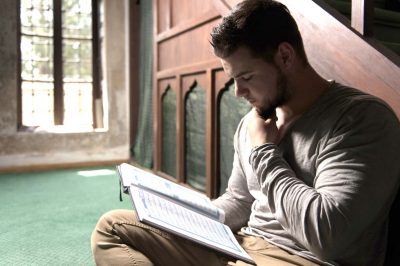
Conocer al Profeta Muhammad, el mejor de la creación, es una forma de incrementar nuestro amor por él y, al conocerle mejor, poder imitarle en la medida de nuestras capacidades. Cuanto más le imitemos y más nos parezcamos a él, más cerca estaremos de él y de Allah.

Sobre los Shamail al-Muhammadiya

Al-Shama’il al-Muhammadiyya (“Las Sublimes Cualidades del Profeta Muhammad”) es la colección más famosa de narraciones que detallan las perfecciones morales, físicas y espirituales del Profeta Muhammad. Comúnmente conocida como “Los Shamail” y compilada por el prolífico Imam al-Tirmidhi, esta obra maestra perenne conecta nuestros corazones con el bendito del Profeta, la paz sea con él.

Los Shamail nos invita a experimentar las cualidades más detalladas y exquisitas del portador del mensaje: el Profeta Muhammad, que la paz sea con él. Este conocimiento informa y orienta nuestra comprensión del Mensaje que trajo, el Corán.

Conocer los Shamail es una gran ayuda para comprender adecuadamente el Islam en general y la vida del Profeta (Sira) en particular a través de una descripción del Profeta Muhammad; su hermosa apariencia, estilo de vida y carácter brindan el contexto definitivo para desarrollar una apreciación profunda y holística del Mensaje y del Mensajero al mismo tiempo. Los Shamail nos dejan una impresión profunda e indeleble que nos empodera espiritualmente para aplicar el Islam a nuestras vidas.

Conocer los Shama’il es una forma probada y verdadera de llenar nuestros corazones de reverencia por el Profeta, que, a su vez, llena nuestros corazones de reverencia por su Sagrada Ley.

The post Descripción del Profeta Muhammad en los Shamail al-Muhammadiya appeared first on About Islam.


source https://aboutislam.net/es/introduccion-al-islam/descripcion-del-profeta-muhammad-en-los-shamail-al-muhammadiya/

Comments

Popular posts from this blog

List of Times and Places Where Dua is Accepted

A short reminder regarding the recommended times of dua . And I think what you need to know here is that the recommended times of dua or recommended things that can cause your dua to be accepted, can be divided into two sort of large groups: Am I Good Enough to Make Dua for Myself? Situations where your dua is accepted. Times where your dua is accepted So I’m going to very briefly mention them one after the other as much as possible. As for situations where your dua has been accepted: – The person who has been wronged or oppressed . – A person who finds themselves in severe difficulty after a calamity has struck. – The person who is traveling. – Someone who is fasting. – The one who is reciting the Quran or has just recited the Quran – Someone who is performing Hajj or Umrah or jihad. – The one who is making dua for someone in their absence . Because we know that when you make dua for someone in his absence an angel says: “ Ameen and to you”. – A person...

Ghuraba (The Strangers): Nasheed with English Subtitles

Islam began as something strange, and it shall return to being something strange, so give glad tidings the strangers. (Sahih Muslim 145) This famous nasheed has many versions; this one is from Muhammad al-Salman and has the subtitles in English embedded. [We are] strangers and we do not bow the foreheads to anyone besides Allah  […] Transliteration to help in the pronounciation:  Ghurabaa’ wa li ghairillaahi laa nahnil jibaa Aisha Stacey  wrote in an article for Aboutislam.net : “I think that many of you would agree that being Muslim in the 21st century makes you well acquainted with being strange. It might even be a metaphor for random, as in you have been randomly selected. […] many converts to Islam will tell you about feeling as if they were strangers, before finding Islam. They will speak of feeling that they belonged somewhere else that their lives were just slightly off center. They often speak about a vague sense of knowing they were not like everyone else...

Taqwa – Living the Main Purpose of Ramadan

Taqwa is a major purpose for the month of Ramadan. The people of taqwa are those who do the things that they are commanded and avoid the things which Allah has made prohibitive. And evidently, to reach a state of taqwa requires vigilance, it requires patience and sincerity. The verse is pertaining to fasting I found in a single set of verses in chapter 2 starting at verse 183: O you who have believed, decreed upon you is fasting as it was decreed upon those before you that you may become righteous. ( 2:183 ) A Collective Act of Worship Allah is telling us that fasting has been made obligatory and then Allah tells us that just as it was prescribed for those before us. We often get asked this question in Ramadan, “how’s the fast going for us?” And if we gave ourselves a moment to think about it, we see that Allah Most High has made the fast inside the month of Ramadan easy for us because we know that there is a collective spirit to fasting; we know that we’re not alone in this ...