The Quest for Home: Why Do People Migrate?
The world has indeed become a global village. Not only do words move with a swish but the people themselves.
Emigration is usually driven by a few common motives: persecution & war, pursuing a better future, job relocation, etc. However, its outcome is bittersweet as it presents challenges such as language barriers, integration, etc.
I spoke to some of those who decided to emigrate and find a new home in a new country. They tell us their stories, why did they move and how it feels like..
Driven out by persecution & war
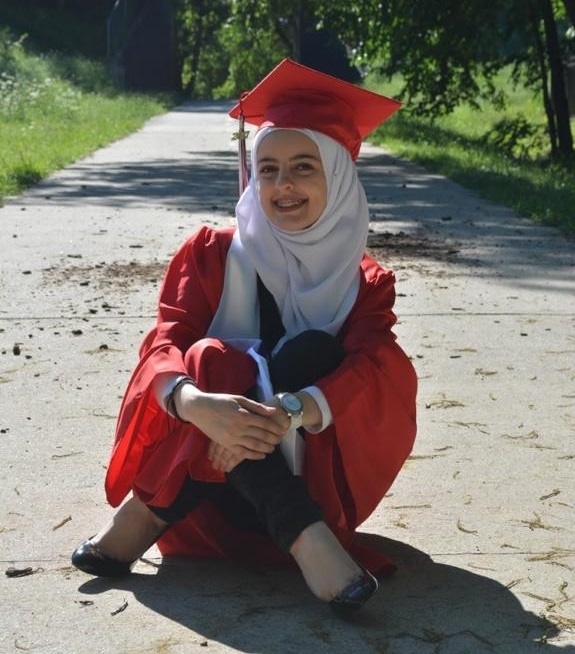
“My name is Ghufran Alrahal and I’m a freshman at Richland College in the US. I’m from Syria, and I’ve been a refugee in two different countries so my emigration path was from Syria to Turkey and from Turkey to the United States.
As all people know there is a massive war in Syria so I left because of that, living out of Syria has never been like I imagined, there was much more struggles and difficulties than I thought.”
Pursuing a better future
“My name is Sara Hassanien. I hold a BA of Arts in English Literature and a MA of Arts in TESOL. I’m a language instructor, wife and mom of three. I emigrated from Egypt to Canada, but I spent a transitional year in the USA, which helped me a lot with adjustment and culture shock.
I decided to leave and make a fresh start because I had grown fed up with the way things were being run in Egypt especially at educational institutions. As a family, my husband and I wanted to secure a better and safer future for our kids. As a woman, I found it very hard, even impossible to strike a balance between my ambition /career and my traditional roles as a wife/mother.
In a nutshell, I was after a community that can nurture my needs and support my quest for a work life balance.”
Job relocation
“I’m Marwa, my husband is a petroleum engineer and I’m a mother of two daughters and a son. We moved from Colorado to Texas and this was the fourth move within the past 7 years actually! We moved due to my husband’s work.
It was really hard for the kids to change schools in the middle of the year and make new friends! My oldest got mad when she got the relocation news because she loved Colorado and she was having a lot of Egyptian friends there! I miss my Egyptian group of friends as well, I considered them as family. It wasn’t easy spending around 3 months super busy selling our house and get another one in the new location.”
Challenges along the way:
Language barriers

Ghufran: “I left to two different countries that speak two different languages and I had to learn these languages in the fastest time possible so I can help myself and my family in our daily needs. Also, going to school here in the US was a challenge because it’s a complete different language, culture, and school system.
Sara: “The French language is another challenge for me. I hope to improve my level and encourage my kids to speak it and study Math and Science in French when they join the regular classes soon.”
Integration
Sara: “Not all what glitters is gold. Amidst my rapture when I got the visa for Canada, I forgot about the cold weather and harsh winter, the aloof nature of most people, and the sense of isolation that permeates the city. But I must say that my culture shock this time is less severe than when I went to live in Texas. I feel more immune.
Perhaps the biggest challenge is that of integration. I still find myself unqualified to talk about issues that concern the Canadian Community. And that makes me feel alienated most of the time. I will discuss any issue from an Egyptian perspective. I need to change that.
Life is tough, but I figured that out before coming to Canada. The lack of religiosity/faith of most Quebecers is shockingly sad. There is no accommodation for prayer areas in the office and thus my 5 daily prayers as a Muslim is a daily struggle. My heart sinks when I have to switch off the azan if it goes off in a public space.
Finally, despite being a first world nation, it’s not easy to make money in Canada or make any savings.”
Survival tips
“It is very stressful to leave your home, country and loved ones. Leaving things you are familiar with and giving in to the unknown. People are reluctant and resistant for change:” Says Haleh Banani, MA in Clinical Psychology.
She continues: “My foremost recommendation to them would be as a Mumin we don’t have a choice but to be optimistic. Attitude is crucial. Your mind is going to prove you right, so change your mindset. Accept the Qadar of Allah. Trust in His judgement.”
She mentions how she lived in four different countries and what kept her going was her sense of optimism, excitement and meeting new people and opportunities.
Haleh emphasizes how crucial it is as a newcomer to take an initiative; to add value to your new surroundings. Get involved in volunteer work, host halaqas, etc.
Haleh Banani is founder of the 5 Pillars of Marriage Program with over 20 years experience.
“The challenges facing refugees are endless,” says Hala Halabi, Director of Refugee Facilitation at ICNA RELIEF. “Language, harsh living conditions, unemployment,etc. only to name a few.”
“My foremost advice to refugees is they have to work hard to settle down smoothly.” She mentions how it does pay off for those who work hard and take benefit of not only the ICNA aid, but enroll as well in awareness, language, religion, job placement, mentor, etc. classes that ICNA offers. They learn the language, how the society works, how they can be muslim and american at the same time; land a job. Basically, they are able to integrate faster.
She adds how to make the aforementioned classes thriving, the community needs to do their part as well by not only offering financial support, but by offering their time as well.
First published: November 2018
The post The Quest for Home: Why Do People Migrate? appeared first on About Islam.
source https://aboutislam.net/family-life/culture/the-quest-for-home-why-do-people-migrate/


Comments
Post a Comment