
How to Apply Islamic Legal Maxims to COVID-19 Queries

Part 1| Part 2

In the previous article we looked at how the legal maxim, “Do not cause harm and do not get harmed [lā ḍarar wa lā ḍirār]” was implemented in Islamic Law throughout history. Now we look at some sub-maxims under the same category which helps Muslims arrive at decisions about what to do in life.

Harm Should Be Removed [Aḍ-Darar Yuzālu]

One of the ways to apply the “do not cause harm” principle is by removing any harm that already exists. This is technically a sub-maxim because it addresses an issue where harm has already occurred.

For example, early Muslim scholars discussed the question about what to do if someone installed a water drain pipe in their home but it ended up flowing out onto a public area such as a sidewalk.

The issue becomes slightly confusing because technically the owner of the home has the right to install anything he wants in his own property.

However, the flip side of the issue is that others are being harmed by that. Using the principle of “harm should be removed”, scholars understood that the harm resulting from the drain pipe must be removed.

Principle of Preemption

The basis for such a ruling is spread throughout different guidelines which Islam had already established. For example, the Prophet Muhammad established the principle of preemption [shufʿah] by saying: “The right of preemption is valid in every joint property, but when the land is divided and the way is demarcated, then there is no right of preemption.” [Bukhārī #2496]

Preemption is the right to purchase something before another person. The Prophet specified that a partner in a land has first priority to purchase the share of the other partner when it is put up for sale.

This right to purchase first, at a reasonable price, ensures that a person who may be directly affected by a new owner will have first priority to purchase something so they will not be affected by the transfer of ownership. Such a rule removes the potential, or likely, harm that would occur.

Closing Mosques and Cancelling Umrah
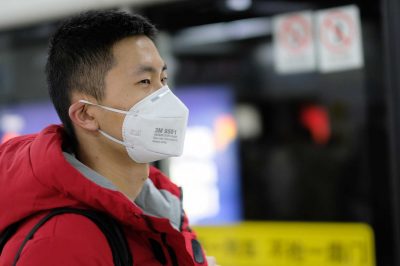
In the case of the Novel Coronavirus, Muslim scholars have relied on the same principle to “remove harm” by closing masjids for jumuʿah prayers and canceling ʿUmrah visas to Makkah.

This seems like an unprecedented and drastic move, which it is. However, it is justified based on the principle of “removing harm” given the current understanding of the effects of COVID-19 and how it spreads faster through large gatherings where close contact is normal. Both the Friday Prayer and Ṭawāf around the Kaʿbah are gatherings which cause people to congregate close to each other and it would be almost impossible to have such large gatherings observe some type of social distancing measures.

By using the “remove harm” principle the masjids have been forced to close, including the masjids in Makkah and Madinah.

The post How to Apply Islamic Legal Maxims to COVID-19 Queries appeared first on About Islam.


source https://aboutislam.net/shariah/contemporary-issues/how-to-apply-islamic-legal-maxims-to-covid-19-queries/

Comments

Popular posts from this blog

List of Times and Places Where Dua is Accepted

A short reminder regarding the recommended times of dua . And I think what you need to know here is that the recommended times of dua or recommended things that can cause your dua to be accepted, can be divided into two sort of large groups: Am I Good Enough to Make Dua for Myself? Situations where your dua is accepted. Times where your dua is accepted So I’m going to very briefly mention them one after the other as much as possible. As for situations where your dua has been accepted: – The person who has been wronged or oppressed . – A person who finds themselves in severe difficulty after a calamity has struck. – The person who is traveling. – Someone who is fasting. – The one who is reciting the Quran or has just recited the Quran – Someone who is performing Hajj or Umrah or jihad. – The one who is making dua for someone in their absence . Because we know that when you make dua for someone in his absence an angel says: “ Ameen and to you”. – A person...

Ghuraba (The Strangers): Nasheed with English Subtitles

Islam began as something strange, and it shall return to being something strange, so give glad tidings the strangers. (Sahih Muslim 145) This famous nasheed has many versions; this one is from Muhammad al-Salman and has the subtitles in English embedded. [We are] strangers and we do not bow the foreheads to anyone besides Allah  […] Transliteration to help in the pronounciation:  Ghurabaa’ wa li ghairillaahi laa nahnil jibaa Aisha Stacey  wrote in an article for Aboutislam.net : “I think that many of you would agree that being Muslim in the 21st century makes you well acquainted with being strange. It might even be a metaphor for random, as in you have been randomly selected. […] many converts to Islam will tell you about feeling as if they were strangers, before finding Islam. They will speak of feeling that they belonged somewhere else that their lives were just slightly off center. They often speak about a vague sense of knowing they were not like everyone else...

Taqwa – Living the Main Purpose of Ramadan

Taqwa is a major purpose for the month of Ramadan. The people of taqwa are those who do the things that they are commanded and avoid the things which Allah has made prohibitive. And evidently, to reach a state of taqwa requires vigilance, it requires patience and sincerity. The verse is pertaining to fasting I found in a single set of verses in chapter 2 starting at verse 183: O you who have believed, decreed upon you is fasting as it was decreed upon those before you that you may become righteous. ( 2:183 ) A Collective Act of Worship Allah is telling us that fasting has been made obligatory and then Allah tells us that just as it was prescribed for those before us. We often get asked this question in Ramadan, “how’s the fast going for us?” And if we gave ourselves a moment to think about it, we see that Allah Most High has made the fast inside the month of Ramadan easy for us because we know that there is a collective spirit to fasting; we know that we’re not alone in this ...