Hardships in Life; A Blessing in Disguise
I am a born Muslim who was privileged enough to grow up in Arabia, the land of the Prophet (SAW).
However, growing up in a Muslim family wasn’t all rainbows and sunshine. You might be surprised to learn that belonging to a Muslim family does not automatically guarantee that you will be spiritually uplifted by your family and friends.
The hardships that I endured forced me to search for my faith, and strangely enough, those hardships actually strengthened my faith more than the times of ease and comfort.
Abu Huraira reported: The Messenger of Allah, peace and blessings be upon him, said:
Ṣaḥīḥ Muslim 145, Grade: Sahih
Islam began as something strange and will revert to being strange as it began, so give glad tidings to the strangers.”
I learned to appreciate blessings and deeply understood the meaning of Tawbah in my life.
It’s also worth mentioning that I understood more profoundly that this life is a test. In the face of injustice, I was among those who lacked adequate support.
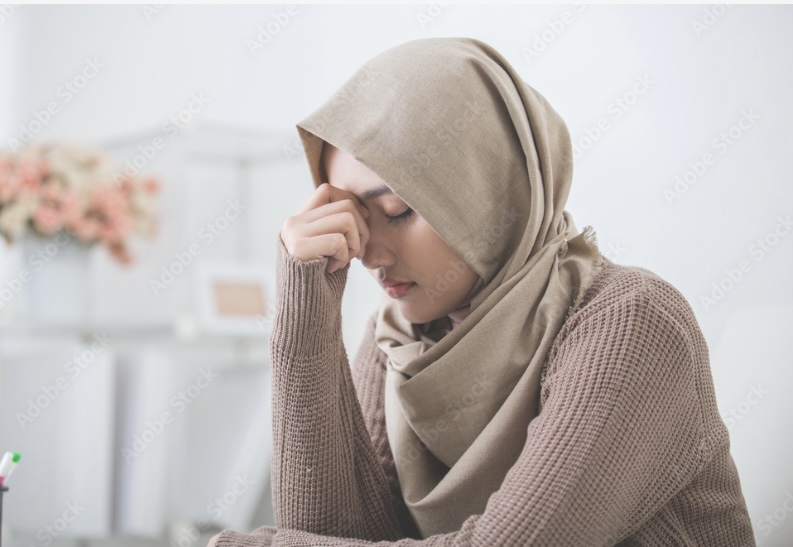
In spite of being faced with traumatic experience, my family’s violence taught me the most valuable lesson in life.
I moved to Canada, which was the beginning of a new chapter in my life. Now I study at a good college as an international student and it has been a miraculous journey of recovery and healing after a life of trauma and struggles.
It was hard finding the right support to heal from the effects of domestic violence and it negatively affected my academic performance since I did spend the first 15 years of my life as a student.
It affected my health, affected my relationships, and affected almost every other aspect of my life.
Today, I’m in a much better place mentally, spiritually, and physically. InshaAllah, I hope others can learn from my journey that our iman matters.
It’s written in the Quran to hold tightly to the rope of Allah and that’s what I did. That’s why I don’t have feelings of regret regarding my past.
It was a part of my destiny which I had to deal with and overcome. There were many good moments in life too but the reason I’m focusing on the hardships today is because in today’s age its hard to feel like we belong or relate to someone closely.
It is also true that when hardships befall us, we may lose hope, and feel helpless and alone as a result.
That is when I began to reflect on examples of other Prophets from the Quran as well as authentic Hadith and discovered that the Prophets and other righteous people of the past were also tested during their lifetime, just as other believers will be tested also.
It is worth mentioning that we shouldn’t take the stories from the Quran and Hadith narrations as mere fairy tales or bedtime stories.
Certainly, Prophet Muhammad (SAW) is the final Messenger of God and our generation is the last before the day of Judgment occurs.

Therefore we should take him and his companions as our role models instead of looking up to social media influencers or celebrities.
We may feel a sense of disconnection from the Prophets and the Sahabah since we were born in a very different time and age, and our world has become very fast-paced, modern and advanced.
However, that shouldn’t serve as an excuse to live life according to our own wishes and desires.
As the human being is created by Allah (SWT) and therefore the best guide is the guidance gifted to us by Allah through the Quran and Sunnah.
Click here to submit your article.
The post Hardships in Life; A Blessing in Disguise appeared first on About Islam.
source https://aboutislam.net/blog/hardships-in-life-a-blessing-in-disguise/


Comments
Post a Comment