Adjusting to Ramadan – From a Muslim Professional’s Perspective
Ramadan Kareem my brothers and sisters in Islam!
We’re now deep into the holy month of Ramadan where many of us have all made our daily routines transform in order to adjust to a new cadence.
This has also had an impact on the work-life balance of many busy Muslim professionals, especially in the western and non-Islamic countries, where the broader system is not adiusted for Ramadan.
It does require some adjustments on our part to both stay productive at work and also derive the most spiritual benefits fom Ramadan.
The Productive Muslim company has put together a great program, called “High-Performance Ramadan”, which I highly recommend that you attend (it is free!).
It provides simple steps on how to manage our energy, focus on how to get the most out of Ramadan as a busy Muslim. I highly recommend it.
They also provide many additional resources on this subject which I find very valuable.
In this blog, I would like to add some more practical tips and guidance on how we can maximize this Ramadan.
How to optimize work on a typical Ramadan week day.
The program provides great guidance on how to be productive in Ramadan – both from a working and spiritual perspective.
However, we all know how our cognitive and energy levels drains as the Ramadan day progresses.
We are typically at our peak energy and cognitive levels right after Farj (fueled by the Suhur food and coffee/tea).
In the absence of a mid-day meal and additional doses of caffeine throughout the day, we typically feel more drained after mid-day than we’d normally be.

In my opinion, the time between Farj and Zuhr prayers represents the best opportunity to get done your creative work that requires greater level of focus, cogitation and energy.
This means that we start our work day as early as possible – right after Farj prayers since we don’t need to spend any time on breaktast than we traditionaly do on non-fasting days.
According to the Sunnah of our Prophet (PBUH), this is also the time of immense barakah (blessings).
Fasting means that we no longer need to take time off from work to go for lunch. Many have suggested that we use this time right after the Zuhr prayers for a power nap, if that is possible, since obviously we get less sleep during the night.
Others prefer to use that time for Quran recitation, we typically begin to feel the cognitive energy drain sometime between Zuhr and Asr prayers.
In addition, the gap between mandatory prayer times shorten, which means that it is difficult to perform work that requires long un-interrupted sessions.
Generally speaking, I recommend that we conclude our work day sometime maybe 30 minutes before Maghrib prayer. This gives us the time to do the recommended sunnah.
The High Performance Ramadan program even suggests the time between Asr and Iftar might be a good time to get some physical exercise.
I personally prefer short terms of an-aerobic exercises (such as situps and planks) throughout the day.
Others prefer to do their aerobic exercises after Isha or Taraweeh prayers
How to ensure you complete at least one full recitation of the Quran during Ramadan.
Ramadan is obviously the month where engagement with the Quran is highly recommended.
Many people attempt to complete at least one full recitation during the month of Ramadan, many use the time right after Fair, or after Asr to do so.
In addition to these, I also highly recommend using the Tahajjud prayers every night for this purpose.
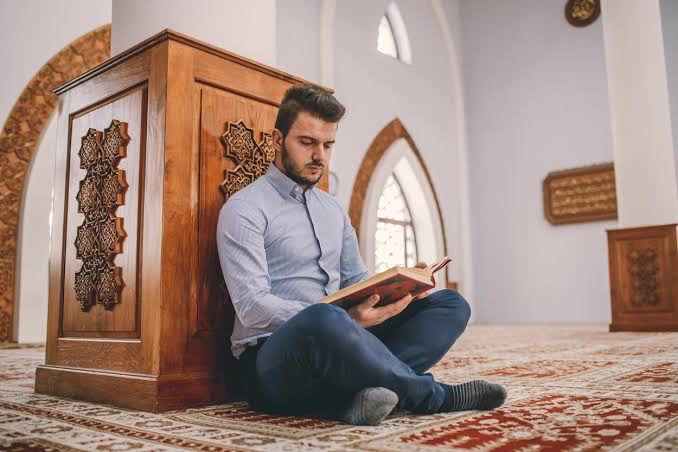
Reading the Tahajjud prayers has great merit, especially during Ramadan. Our beloved Prophet (PBUH) used to recite the Quran at length during Tahajjud prayers.
As it turns out, unlike other prayers where we have to recite the Quran from memory, it is allowable during Tahajjud to recite it using a copy (mushaf) of the Quran – either physical or digital.
That makes it easier for those of us who do not have large parts of the Quran memorized.
There is an authentic hadith from the Sunnah of our beloved Prophet (PBUH), it’s translation which says;
“The Prophet (PBUH) said: If anyone prays at night reciting regularly ten verses, he will not be recorded among the negligent; if anyone prays at night and recites a hundred verses, he will be recorded among those who are obedient to Allah; and if anyone prays at night reciting one thousand verses, he will be recorded among those who receive huge rewards.
My recommendation is, during each night of Ramadan except the last 5 odd nights (the nights when Lailatul Qadr may Occur), we need to read at least 100 verses during Tahajjud prayer.
This normally takes about 15 to 20 minutes. Assuming we do this for 25 nights, we are able to complete 2500 verses.
Now, on the last 5 nights, we normally stay up longer during the night, so we should attempt to read 1000 verses during these holy nights.
This is achievable in less than 2 hours. So that gives us 5000 verses, for a total of 7500 verses over 30 nights in Ramadan (or 7400 in 29 nights). That’s more than the 6348 verses in the entire Quran
May Allah (SWT) guide us, grant us his forgiveness and mercy and accept our worship during this holy month of Ramadan!
Click here to submit your articles
The post Adjusting to Ramadan – From a Muslim Professional’s Perspective appeared first on About Islam.
source https://aboutislam.net/blog/adjusting-to-ramadan-a-muslim-professionals-perspective/


Comments
Post a Comment