The Path to the Light: Healthy Hearts
Sometimes everything seems dark. We look around and wonder what has happened to our world. Innocent people are being killed, families are being torn apart, and so many are suffering. The aches in our hearts and the lumps in our throats linger into the night.
At such times we might forget that darkness doesn’t exist on its own. Darkness is merely the partial or total absence of light. This series, The Path to the Light, aims to help us illuminate whatever darkness we find ourselves in. It is meant as a reminder for all of us that we are in control of the light we let into our lives, and that light—both physical and spiritual—are gifts from our Creator.
In the previous article, we introduced some of these concepts. We remembered how in every unit of our prayers, we ask for guidance to the straight path. And we also discussed how the path may be very clearly marked, but we will not be able to follow it in the darkness. We need a source of light.
Just as we can distinguish physical darkness and light with our eyes, we too can distinguish spiritual darkness and light. Not with our eyes, but with our hearts.
The Importance of the Heart
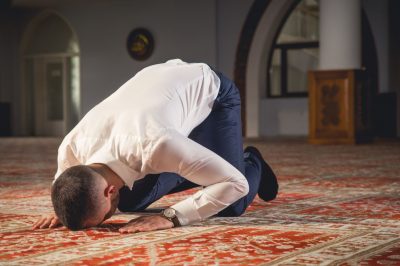
Almost universally, religious traditions have stressed the importance of the heart. Numerous examples in the Judeo-Christian tradition,[1] in various eastern traditions,[2] and even among the ancients,[3] discuss the heart as the vehicle used to connect to the Divine.
In contemporary discussions, we often refer to the heart when talking about human behavior. For example, when someone has a shift in their attitudes or actions, we call it a “change of heart.” When we want to convey sincerity, we speak “from the bottom of our hearts.” Someone who has a “heart of gold,” is extremely kind and helpful, while their opposite, a person with a “heart of stone,” is cold, stern or cruel.
We’re told by society to “follow our hearts,” but usually warned that doing so will get us hurt. The heart is devalued by virtue of it being emotional, impassioned and impulsive. Logical reasoning, thinking, and comprehension, we are told, are faculties reserved for the brain.
But Islam says otherwise. Islam teaches that the heart is the most valuable possession of the believer, best able to know and love the Creator, distinguish between good and evil, and derive meaning from life’s circumstances.
The Quran tells us that with our hearts we “know” and “comprehend” (Quran, 22:46), “see” (Quran, 7:179), and find peace (13:26). The heart is a vessel, a container meant to be filled with faith, light, and guidance. Its soundness is equated with soundness in speech, thinking, and action.
Prophetic Guidance

One of the most famous of the hadith about the heart is as follows:
“There lies within the body a piece of flesh. If it is sound, the whole body is sound; and if it is corrupted, the whole body is corrupted. Verily this piece is the heart.” (Bukhari and Muslim)
Interestingly, this is only part of a much longer hadith. This first part of this hadith states:
“That which is permissible is clear and that which is not permissible is clear, and between them are matters unclear that are unknown to most people. Whoever is wary of these unclear matters has absolved his religion and honor. And whoever indulges in them has indulged in that which is not permissible. It is like a shepherd who herds his sheep too close to preserved sanctuary, and they will eventually graze in it. Every king has a sanctuary, and the sanctuary of Allah is what He has made not permissible.” (Bukhari and Muslim)[4]
When we put these ideas together, we see that there is a direct connection between the states of our hearts and our ability to withhold from doing the wrong things, from violating the sanctuaries of our King.
The Prophet, peace be upon him, also said:
“Indeed if a believer sins, a black spot covers his heart. If he repents, and stops from his sin, and seeks forgiveness for it, his heart becomes clean again. If he persists (instead of repenting), it increases until it covers his heart…” (Ibn Majah)

The Quran references this idea as well, mentioning a seal, veil, or stain that covers the hearts of those who knowingly deny the truth once it has come to them (83:14). Like a blindfold, this covering prevents the heart from “seeing” by the degree to which it covers it. A heart enveloped in darkness will not perceive light.
Keeping Our Hearts Healthy
It thus follows that one of the best ways to ensure our hearts are illuminated is by safeguarding our actions. The Quran tells us to {Do good to others, surely Allah loves those who do good to others} (2:195). Speaking truth, helping others, enjoining what is good and advising against what is not are all actions that contribute to the health and light of our hearts.
None of us is perfect, and we undoubtedly make mistakes. But when we do, let us turn in humility to our Lord, Sustainer, Master and Cherisher, and ask forgiveness. Repentance ensures our hearts remain pure, healthy, and full of light.
The Quran tells us that the person who {repents, believes, and works righteous deeds, Allah will change the evil of such persons into good} (25:70). And over and over again, the Quran emphasizes Allah’s Mercy towards His servants: {Surely Allah forgives the faults altogether; surely He is the Forgiving the Merciful.} (Quran 39:53)
As we said previously, the straight path of Islam is not a single spot. It is a series of infinite spots all connected together to form a way. Finding the path doesn’t mean we’ve arrived at our desired destination. It just means that we’ve now found the way there. We begin at the path by recognizing the importance of our hearts and committing ourselves to improving our actions. We also seek forgiveness for the times we’ve erred.
At a time when there is much darkness around us, we can all benefit from increasing the spiritual light in our lives and sharing it with others. In the next articles, we will, God-willing, discuss more ways of doing so.
References:
[1] https://ift.tt/oXBawu7
[2] https://ift.tt/TaJ6Hps
[3] : https://ift.tt/53hv0xp
[4] https://ift.tt/f0L79Ok
(From Discovering Islam archives)
The post The Path to the Light: Healthy Hearts appeared first on About Islam.
source https://aboutislam.net/spirituality/path-light-2/


Comments
Post a Comment