You Need Salah (Prayer) to Spiritually Breathe
“Prayer is oxygen for the heart.” I’ve heard Ustadha Yasmin Mogahed refer to this several times when she is speaking on different spiritual matters. Just as our bodies need oxygen to survive, our hearts need salah (prayer) so our faith can survive.

Think about that for a while.
How Long Can You Hold Your Breath For?
A quick internet search tells us that humans can hold their breath for anything between 30 seconds and 2 minutes. More than that and death could potentially be imminent.
The same goes for our faith. We should all be fulfilling our 5 daily prayers but if we are regularly skipping salah it’s like holding our breath. It will lead to spiritual discomfort and, eventually, distress.
And when we are in distress, the need to take in more oxygen is even more acute.
No one Can Do it For You
You can’t ask your parents to do it for you. You can’t ask your friends to do it for you. And you can’t pay anyone to do it for you. You must do it for yourself. That applies to both breathing and prayer.
Our need for oxygen is so vital to our survival that it’s an involuntary action. You don’t need to think about it and you don’t forget to do it. The same should be true for our prayer.
It should be such an integral part of our lives that we do it out of pure habit, we should feel pulled towards it. We should start to feel uncomfortable when we become lazy.
Our prayer is our connection to Allah.
No prayer, no connection. No oxygen, no life.
Drowning
This life is a test. Some of us will get off lightly, others will be tested with greater difficulties. This is all part of Allah’s plan.
And We will surely test you with something of fear and hunger and a loss of wealth and lives and fruits, but give good tidings to the patient. (Quran 2:155)
Have you ever heard of these sayings, “to be thrown in at the deep end” or “to sink or swim”?

We use these sayings when someone has experienced an unexpected hardship. Both refer to being able to rise to surface and breathe. In other words, overcome your difficulty and survive. To fail would be to drown.
Sink or Swim?
There are times when Allah will throw us in at the deep end to test our faith. Do we sink or swim?
Do you neglect your prayers when life is hectic or difficult or do you guard your prayer and turn to Allah with even more faith?
If you choose to neglect your salah, you are essentially cutting off your oxygen supply. Evidently, this will make matters worse.
Your struggle will be more intense.
But if you choose to turn to Allah, remain faithful to Him in times of hardship then, eventually, you will rise to the surface and experience that gulp of air that brings relief, gratitude and joy.
Take Deep Breaths
What about those who do faithfully perform their 5 prayers? How should they approach life’s difficulties if they are already “breathing”?
If you have ever experienced a breathing difficulty, a panic attack (or even the common cold), it was not because you chose not to breathe. Sometimes life throws us a calamity which completely takes our breath away.
And what advice are we given in that case?
“Take nice deep breaths. In through your nose, out through your mouth.” We pay special attention to how we breathe until the situation eases.
With life, it is the same. When times are tough, pay special attention to your prayer. In fact, several times in the Quran, Allah specifically tells us to approach our problems with patience and prayer.
Seek Allah’s help with patient perseverance and prayer. It is indeed hard except for those who are humble. (2:45)
Oh you who believe! Seek help with patient perseverance and prayer, for God is with those who patiently persevere. (2:153)
A Spiritual Oxygen Mask
Personally, I have experienced panic and anxiety. My breathing becomes erratic and I feel completely suffocated.
In these times of distress, I remember Allah by slowly repeating His Names or reciting some verses of the Quran. This provides me with focus and encourages me to control my breathing.
I like to think of it as a spiritual oxygen mask.
In this case, prayer gives me relief physically and spiritually; my body starts to calm down and my heart remembers that, whatever my worry, Allah is my rescue and relief.
The Sweetness of Salah
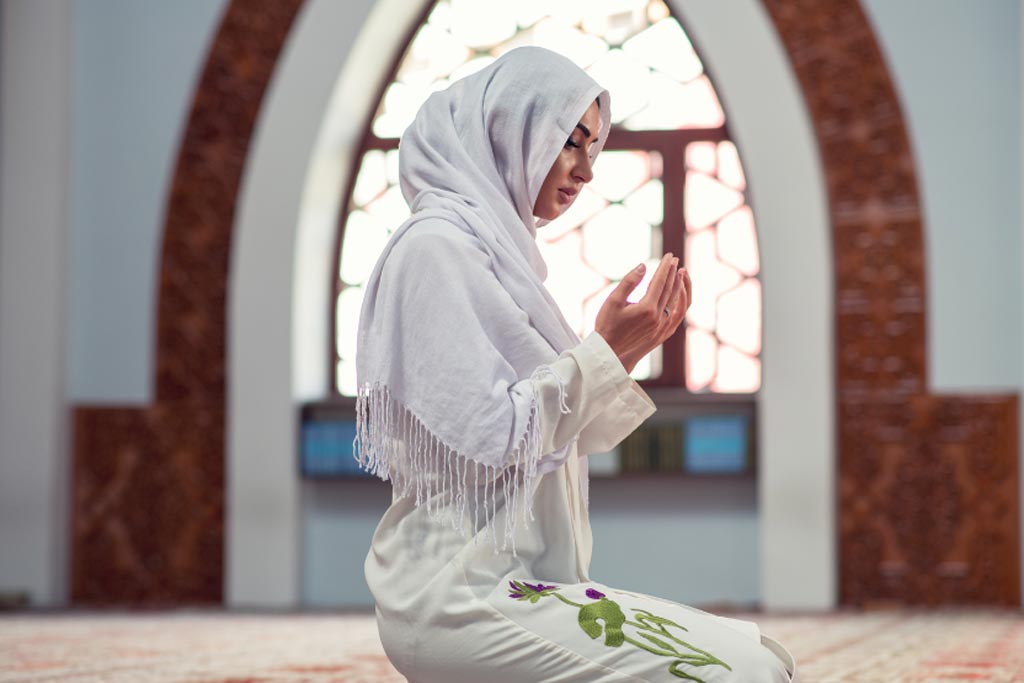
Prayer is our regular time out from our daily routine. We perform ablution, tidy our appearance and stand quietly at our prayer mat.
The prayer will always be there, it will always be our refuge, our time with Allah to just breathe.
And when we are sad, afraid, anxious, then our prayer can be that glorious gasp for air as we reach the water’s surface.
No one knows you better than Allah, when you turn to Him in prayer, you can be assured that you don’t need words to tell Him how you feel, there are never any misunderstandings.
So when you stand on your prayer mat, pour out your worries, set down any burdens you may be carrying.
Supplicate at any time of the day or night for:
Verily, in the remembrance of God [men’s] hearts do find their rest. (Quran 13:28)
(From Discovering Islam archive)
The post You Need Salah (Prayer) to Spiritually Breathe appeared first on About Islam.
source https://aboutislam.net/spirituality/you-need-prayer-to-spiritually-breathe/


Comments
Post a Comment