The Hard Lessons from COVID-19 Pandemic
Since the outbreak of the COVID-19 pandemic the world has seen an unparalleled rise in infections and deaths. The recent remarks from the Director General of the World Health Organisation (WHO) could not be starker when he said,
“We are at a critical juncture in this pandemic… The next few months are going to be very tough and some countries are on a dangerous track. We urge leaders to take immediate action, to prevent further unnecessary deaths… and essential health services from collapsing.”
The pandemic has created an unparalleled public health and economic crisis with uncertainty across the globe. While some economically developed countries have been able to respond through government intervention, others are facing national emergencies. The virus may not discriminate but in reality it is the poor, including those living within developed countries, who are suffering most.
 Read Also: COVID-19: Sense of Responsibility and Power of Solidarity
The pandemic has laid bare the cavalier attitude and narrow selfish view held by many of our political leaders. Even in these testing times, when ordinary citizens for the most part are helping one another, the politics of nationalistic chauvinism and racial and religious bigotry and intolerance have continued unabated in many parts of the world.
How have the powerful countries handled the pandemic?
Four countries, in my opinion, have become a source of disappointment, embarrassment or pessimism for the world.
First is the world’s largest economy. The US is a classic example of the dismal failure to protect its citizens. Political division and racial bigotry have worsened during the period.
Instead of lending support to less fortunate countries and supporting the WHO cope effectively with the crisis, the US has become more inward looking. In the middle of the pandemic, it formally notified to withdraw from the WHO inviting widespread criticism and seen as an abdication of its political and moral leadership in the world.
The next is China, the world’s second largest economy. While figures suggest that authorities have contained the virus, the subjugation of the minority Uighur Muslims in Xinjiang has continued unrestricted with inhuman cruelty.
In the name of education, over a million Uighurs have been thrown into internment camps. This is no less than a cultural and religious genocide.
Rising Islamophobia

The third is India, the world’s largest democracy. Since 2014, when a Hindu chauvinist political party closely linked with a paramilitary Hindutva body that praised European fascism came to power, Indian Muslims have been subjected to bigotry, hatred and ostracism. Despite making up over 15% of the population, they suddenly found themselves treated as second class citizens; discrimination and attacks were rife. The situation has only worsened during the pandemic; the Indian administration accused a Muslim apolitical religious group of spreading the virus.
The last is a veto wielding country at the heart of Europe. A colonial power with a bloody history which ruthlessly upholds a militant form of secularism when it comes to religion, particularly Islam, France has struggled with tackling the pandemic. Its post-war culture of denying its Muslim population the right to exercise their free speech and religion has been rising alarmingly.
As the vilification of Prophet Muhammad (peace and blessings be upon him) continues with state endorsement, the tension between the state and its Muslim community often rises.
When a tiny number of criminals from amongst the estimated 6 million Muslims commit heinous crimes, the establishment are quick to jump on Islam and all its followers rather than address the issue with the politics of sanity.
Unhelpfully, the French President recently declared that Islam itself is in crisis and thus needs a reformation. Critics have no doubt that his attack on Islam is aimed at pandering to the right.
We swim or sink together
Covid-19 has now become part of our life and it looks to be this way for the long haul. The virus has created a health crisis amongst many including the elderly and those with underlying health conditions. Alarmingly, it has also impacted seemingly young and healthy individuals.
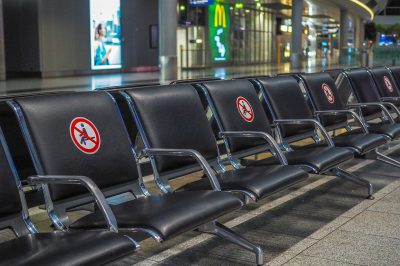
Unlike many previous pandemics, it has touched every corner of the world thanks to globalisation and increasing human inter-dependence. Our world can no longer pin the hopes on powerful political leaders who have little moral authority or willingness to unify people. On the other hand, many of them seek to divide people on the basis of race, religion or culture.
It is ordinary people everywhere who are coming forward and working with others in civil societies to help those that are less well-off.
As it is across many countries, we see in the UK an upsurge of empathy for fellow Britons who struggle to feed their children because of poverty. Amid the government’s intransigence against directly helping to feed children during the school holidays, the footballer Marcus Rashford’s campaign touched a public nerve and gathered people together for a compassionate objective.
Human beings are stewards of God earth (Al-Qur’an 2:30) who were given dignity (Al-Qur’an 17:70) and created with diversity (Al-Qur’an 49:13)’. Conscientious Muslims have an unconditional moral duty to rise above any form of bigotry and work their best for the common good of all, irrespective of backgrounds.
What the world desperately needs is servant leaders in the model of the Prophets, amongst whom Prophet Muhammad was sent as a ‘mercy to the worlds’ (Al-Qur’an 21:107)’.
The post The Hard Lessons from COVID-19 Pandemic appeared first on About Islam.
source https://aboutislam.net/shariah/contemporary-issues/the-hard-lessons-from-covid-19-pandemic/


Comments
Post a Comment