In MAS-ICNA: Audience Urged to Support Muslim Women Activism
Getting elected in Congress, appearing on the covers of magazines, and breaking barriers, Muslim women have significantly come to the frontlines of the American Muslim community.
In reaction to their ordeal of being constantly targeted by the media, government officials, internet trolls, and even the White House, Muslims gathering in Chicago for the annual MAS-ICNA convention discussed how to support women and stand shoulder to shoulder with them.
The Muslim Women Alliance (MWA) hosted on Saturday, December 28, a wonderful series of lectures that truly discussed internal challenges like patriarchy in the Muslim community and external such as Islamophobia and sexism.
The panel included both Zahra Billoo and Margari Hill, the two well-renowned women in the realm of Muslim affairs, and women issues in particular.
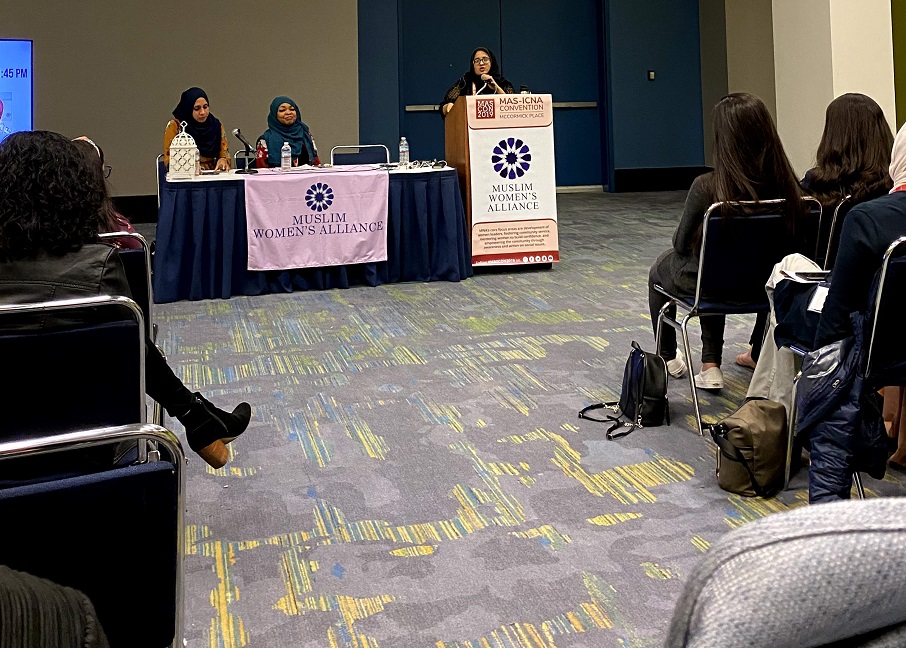
Margari Hill began the session with a story: “There was a time in my life when the Muslim community didn’t stand up for me.”
She began to explain one of her college experiences, retelling the early 90s, around one of the international relations courses she took. At a time “before 9/11”, she still felt like an early revert, that there were a lot of different events and early Islamophobia before the events that unfolded.
“However, behind us, there were two Nazi sympathizers that would say demeaning things about Africans, Muslims, even to the point of calling the people of color in the room.” She was however warned that the Nazi sympathizers targeted Margari herself. Not at one point, did any of the other Muslim students develop a way to protect her or to escort her. She felt isolated and neglected at that moment.
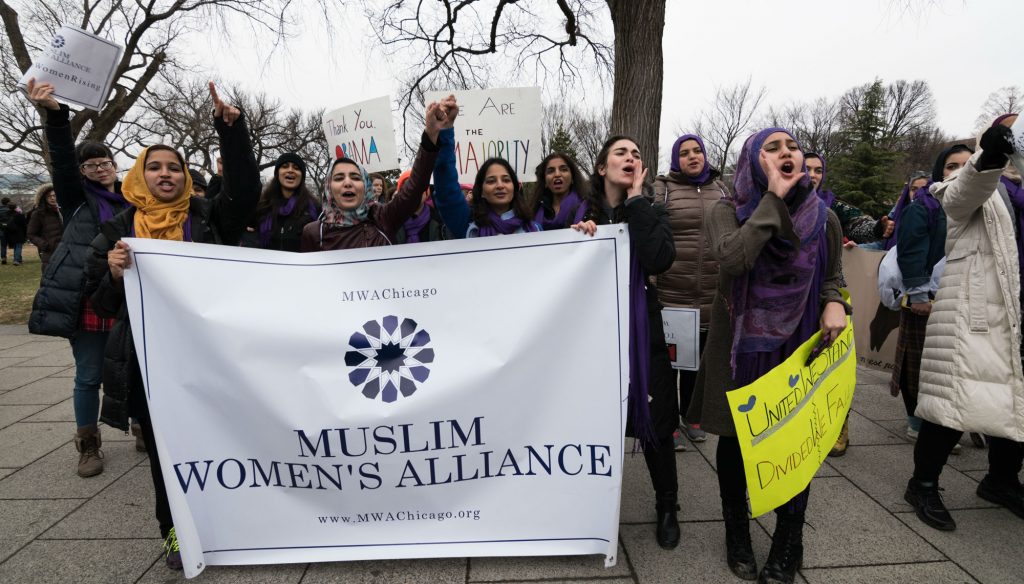
Support Needed
With that example, she felt at that point there were very few instances where people felt they were inclined to stand up for Muslim women.
“Fast forward 25 years later, it has gotten to the point of structural violence, much larger than just personal bullying” alluding to Trump using his bully pulpit to target Muslims, in particular, Muslim women.
She brought up other instances in the public eye, where mainstream Muslim circles did not make an active effort to protect but rather participated in the maligning of Muslim women; particularly high-profile figures like Linda Sarsour, Rashaida Tlaib, or Ilhan Omar.
“We need to encourage women at the very least, if you are not willing to physically defend them, to keep them in their duaa at the very least. Keeping that goodwill is very important.”
Having Voice
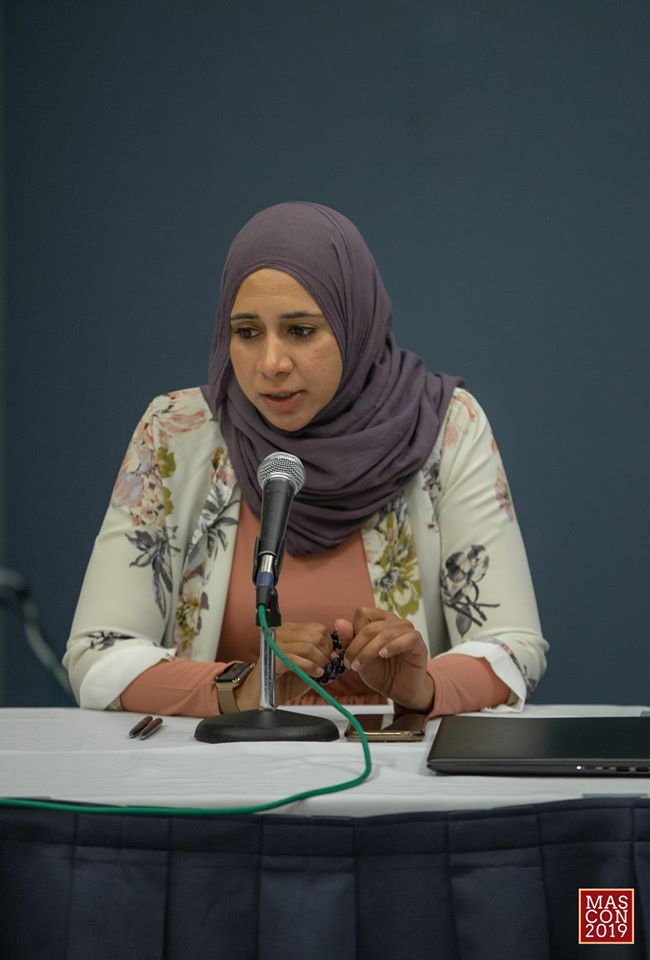
Zahra Billoo then took the stage and began talking about activism and the blessing of having a voice.
She talked about the Women’s March, the attacks and outright “lies” that defined the ideas/concepts of the entire Muslim leadership that participated in it.
Billoo lamented the smear campaigns, and right-wing pressure, that wanted to replace her with a more neutral and less controversial leader.
“When Allah gives you a test, He doesn’t give you something that you can’t handle” and that there is a certain beauty to it; a beauty in surrendering it,” Billoo said.
Specifically, here, she talks about it as a destination and not a journey.
Speakers concluded the sessions by talking about how Muslim women should have a voice in today’s American and the challenges that surround it.
This voice and activism should be fully supported by family, friends and the community at large to be truly influential in enacting change in the community and society.
In order to truly move forward, the Muslim community has to acknowledge the causes, politics, and other issues that impact women overall.
The post In MAS-ICNA: Audience Urged to Support Muslim Women Activism appeared first on About Islam.
source https://aboutislam.net/muslim-issues/n-america/in-mas-icna-audience-urged-to-support-muslim-women-activism/


Comments
Post a Comment