US Muslims Discuss Today’s Challenges, Look for Better Future
Facing a myriad of daunting challenges, American Muslims gathered Friday, Dec 27, in Chicago, for the annual MAS-ICNA convention, to analyze the challenges and opportunities ahead of the community, envision for a solid plan for these challenges, and harness their opportunities.
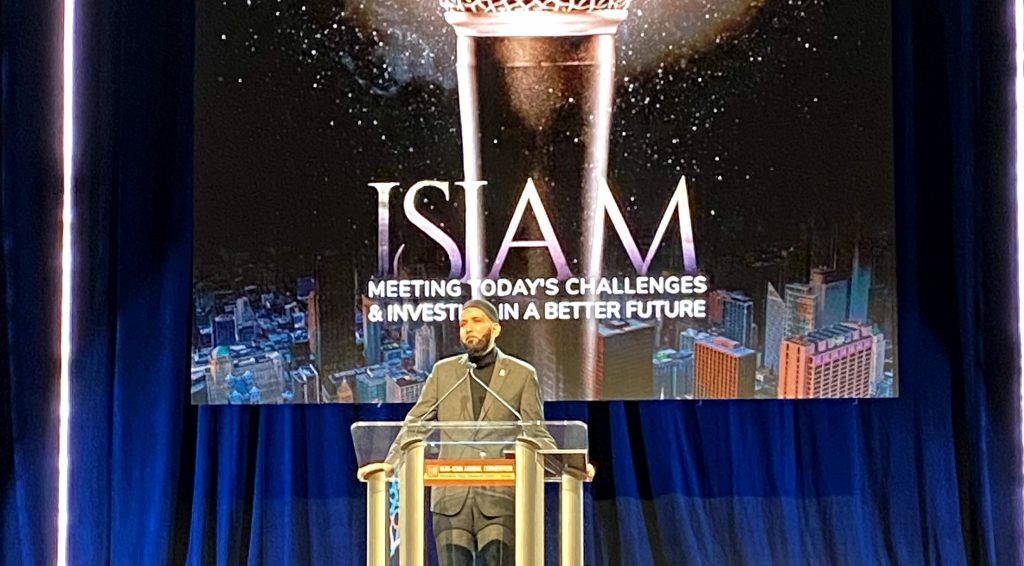
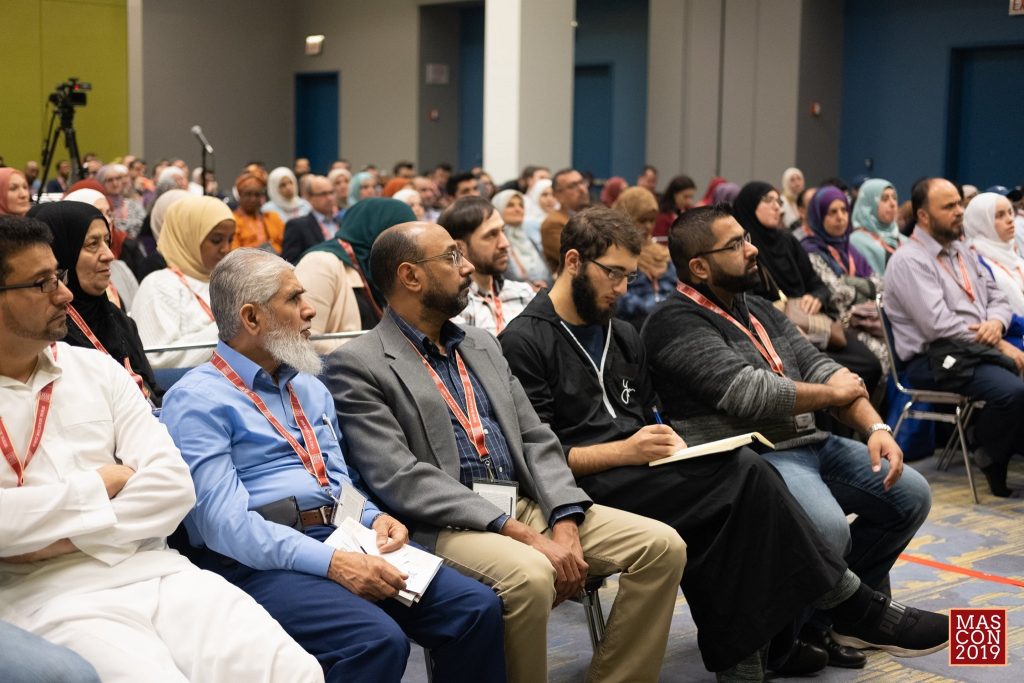
Addressing a huge audience, Sheikh Omar Suleiman took the stage and started his speech by asking: “Who among you have politics in your Masjid?”, and the entire crowd enthusiastically raised their hands.
He then asked the audience again: “Who among you have watched a fight in your Masjid? Verbal or not?” A surprising number of people also raised their hands.
He then went on to shed light on a series of prophetic examples from the Seerah, demonstrating the equally tumultuous and debate-filled history of the earliest Islamic years.
“Similarly, every mosque in our country began with a vision and a belief; but Shaytan always has played a role in deviating it away from them. We have issues in our communities that is the core weakness of mankind,” he said.
Ummah Struggles
Suleiman emphasized that local Muslim communities, spread throughout the country, were akin to many prophetic examples that were a part of the dialogue(s), the disagreements, and even the armed conflicts that predicated the Ummah in the very early stages.
“Our ummah is singular, and can be consumed by fitnah; at any moment,” he warned.
The leading imam consistently highlighted a series of challenges facing Muslim communities, as well as the external and internal forces that shape the consistent transformation of the mosques, at a very granular level, all the way to political leadership in the halls of Congress.
He alluded to political, social, and activist leaders that have become the subject of attack and ridicule in the past year.
“We have an incredible ability to be very powerful and yet very weak,” he stressed.
He then went on to talk about the state of our ummah as a whole.
“Our institutions are consumed by ego and bickering; do you want the future generation to associate our mosques and centers with that version of Islam? That image”. The crowd was unrelenting in its cheer and agreement at that moment.
“Do you not see the value in our unity?”
American Politics
Afterward, Suleiman took the message beyond the Muslim sphere into the political realms that consume American politics today.
“We have to have more love for each other than their hatred” in reference to the right-wing Islamophobic American political arena.
Suleiman was heavily concerned that the groups that consistently maligned and profited from “oppression” politics, were ultimately targeting Muslims wholesale without discriminating among their liberal or conservative leanings.
The danger of such a movement, Suleiman believed, was that it would pick away at the differences that existed in Muslim circles and profited off of those differences; similar to Muslim majority countries that are recovering from colonial premises.
“When they attack ISNA, our political or religious leaders, they are attacking us because we are Muslim, we have to have each other’s backs.” Afterward, He paused and then said:
“We have a message of hope, we are not afraid, whether Muslim sponsored governments or non-Muslim governments, like our own. We will not be silent in front of any type of environment, whether it is a caged child at the border or a concentration camp in China, we must stand with the oppressed.”
Imam Suleiman ended the speech on a closing note:
“May Allah unite our Ummah, one that is defined by Islah, an act of reconciliation and redemption as a whole; a beautiful concept that combines two meanings in one word; the true power of the eloquence of the Qur’an.”
The annual convention of the Muslim American Society (MAS) and the Islamic Circle of North America (ICNA) ran from December 27 to 29.
This year’s theme for the summit, held in Chicago’s McCormick Congress Center, was “Meeting Today’s Challenges and Investing in a Better Future.”
The post US Muslims Discuss Today’s Challenges, Look for Better Future appeared first on About Islam.
source https://aboutislam.net/muslim-issues/n-america/us-muslims-discuss-todays-challenges-look-for-better-future/


Comments
Post a Comment