Atlanta ICNA Convention: Muslims Discuss How to Deal with Peer Pressure
The scent of brewed coffee filled the lobby of the Renaissance Waverly Hotel, Atlanta, GA, on a breezy Sunday morning in Atlanta, GA. The ICNA-MAS convention’s second day of sessions began promptly at 10:30 AM.
Sheikh Saad Tasleem opened the session with a discussion on Peer Pressure in the main Grand ballroom. The Hadith from Prophet Muhammad (SAAW) “A person is on the religion of their close friend,” opened up his passionate talk on peer pressure.
“Sooner or later, we will take upon the lifestyle of the people around us. Sometimes it may happen without us realizing it. We may take on their habits, behaviors, and morals or lack of morals,” Sheikh Saad Tasleem stated as he began to elaborate on his opening Hadith.
“Regardless of your age, you can succumb to peer pressure. Everyone is included in this Prophetic reminder. We see this trend happening socially and culturally,” Sheikh Saad continued.
As the session continued, youth began to take their seats in the crowd to listen intently to this topic.
Sheikh Saad, who is a well-known scholar amongst the youth, reminded the crowd of the importance of not passively listening to this lecture and deflecting it off on ourselves. It is essential for each everyone to reflect on how peer pressure impacts their lives and make changes to combat this negative trend.
He continued by sharing the story of a young woman dealing with domestic violence in her house. This woman went to her parents and explained how she was being abused by her husband. She was advised to be patient and told that this is the Qadr of Allah. The family advised their daughter to live in abuse due to peer pressure from their cultural norms of not having a divorced daughter. This is a cultural norm that is problematic in many families and we must openly speak against it.
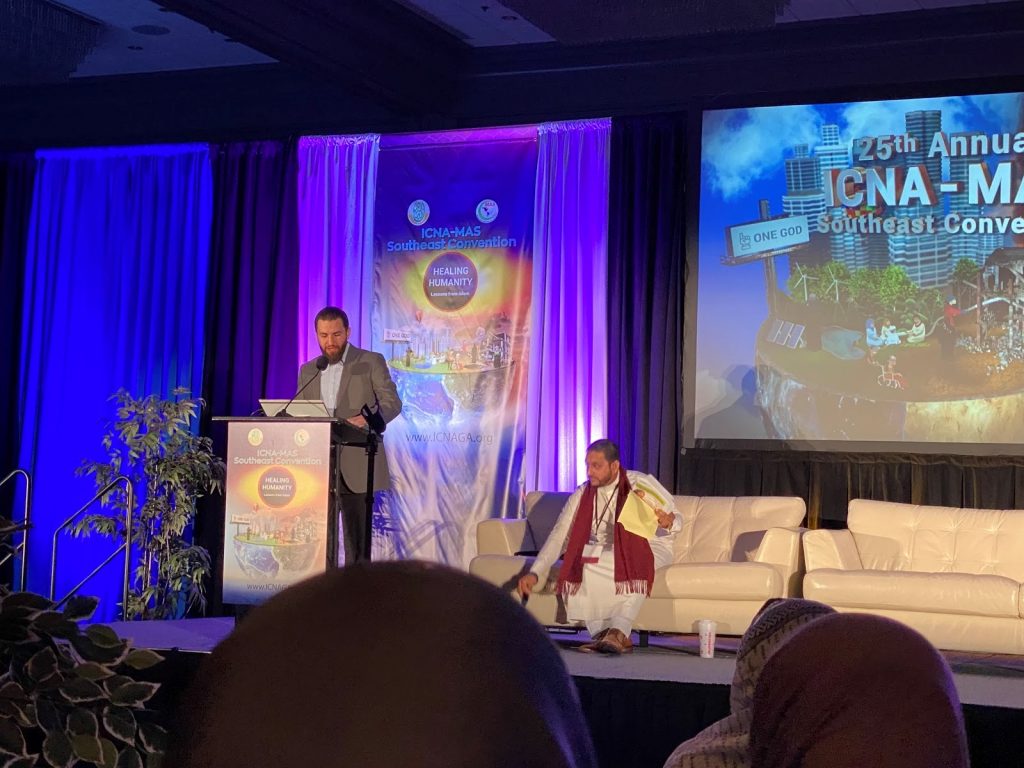
Sheikh Saad Tasleem shared two solutions to help Muslims navigate peer pressure in this society.
Number 1:
Know who you are and know what you believe. Have confidence in what you believe.
Number 2:
Maintain your spirituality and connection with Allah. Find your strength in your spirituality.
Self-control
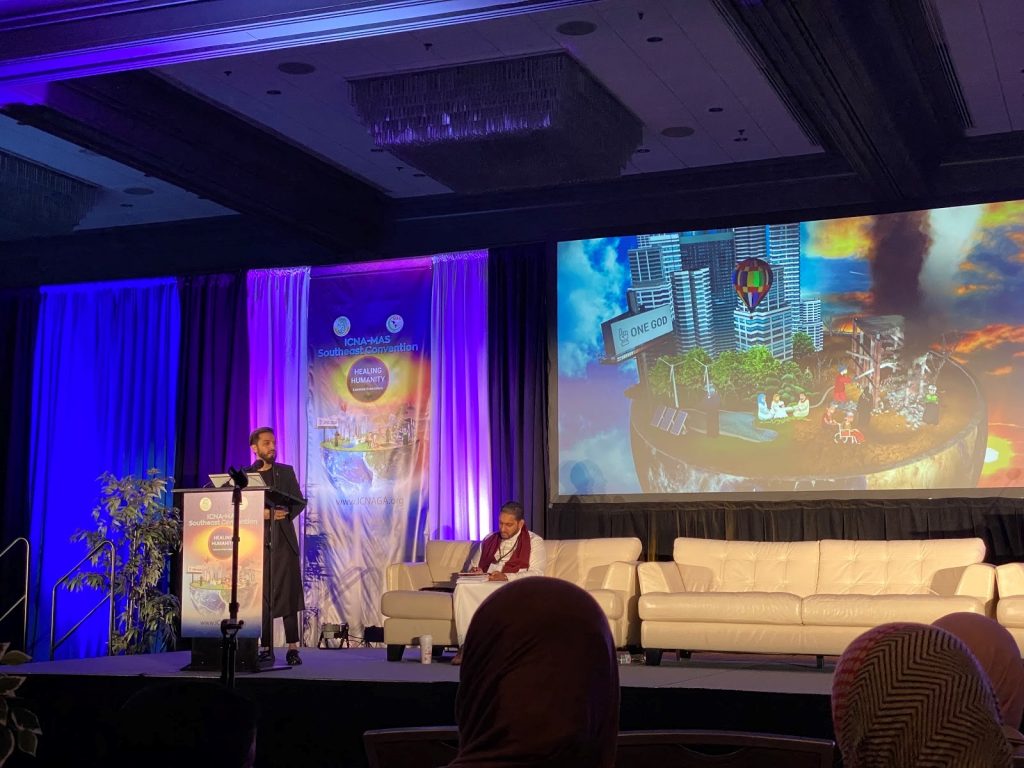
Sheikh Majed Mahmoud graced the stage to discuss the topic of self-control and having patience when facing the haram.
Being patient when presented with the haram (unlawful) can be very difficult for Muslims. He addressed the topic of patience through self-control by looking at five steps.
Step 1
“The first step to being patient is understanding what patience means. The word sabr doesn’t mean patience (directly). Patience in the English language is passive and Sabr in the Arabic language is active. Sabr is broken into three parts. The heart should never be hopeless. Never allow your tongue to complain about Allah. Don’t allow your body to be disobedient to Allah.”
Step 2
“Sabr (patience) involved looking up to our role models. Prophet Yusuf is the strongest example of being tested with patience. We learned three things from Prophet Yusuf during the time of being tested with haram (which is listed in the remaining steps).

Step 3
Seeking refuge with Allah and praying for Allah’s help is a crucial step in staying away from the haram.
Step 4
Prior to committing a sin, it is essential to remember the blessings of Allah. You cannot commit a sin without using a blessing from Allah. Reflecting on the blessings and mercy of Allah right before you go forward with a sin can truly help remind you of the importance of refraining from disobeying Allah.
Step 5
The final step involves being conscious of the punishment if the haram is committed.
The session ended with wide smiles and feelings of empowerment from participants. “I really enjoyed Sh. Majed Mahmoud’s talk on patience and abstaining from the unlawful,” Rami Ahmed told AboutIslam.net.
The session was held as part of the 25th annual ICNA-MAS conference which ran from Saturday, Dec 21 to Sunday, Dec 22.
The post Atlanta ICNA Convention: Muslims Discuss How to Deal with Peer Pressure appeared first on About Islam.
source https://aboutislam.net/muslim-issues/n-america/atlanta-icna-convention-muslims-discuss-how-to-deal-with-peer-pressure/


Comments
Post a Comment