Muslims Discuss How to Build Bridges, Demolish Walls
- “If you want to build bridges, build bridges for our sisters” – Imam Siraj Wahhaj
- “I am struggling with my teenager and I don’t always know how to connect with him” – Aisha Ansari
- “If there is one take away for you from this conference, it is for to be unapologetically Muslim” – Linda Sarsour
At the ICNA 2019 Southeast convention, held in Atlanta from December 21-22, Imam Siraj Wahhaj graced the stage at 3:00 pm on a very cold Sunday afternoon to discuss how American Muslims can build bridges for a better understanding in the American community.
He stood tall in his famous crisp white khamis and opened up the session by reminding the crowd about the importance of loving each other.
“People confuse symptoms with the real problem. The symptom is the indication that there is a problem. Before bridges can be built with others, we should build bridges with each other, in our own Masjids, our own communities, and with ourselves.”
“If you want to build bridges, build bridges for our sisters. Some Masjids won’t even allow sisters to access the Masjid. We must build bridges with the youth because they are struggling. We have to work with them and not judge them,” Imam Siraj continued.
“There are two things that symbolize the health of the community. The access of the youth and the women in your Masjids. If you do not have a Masjid that caters to the youth, you have a dying Masjid.”
During Imam Siraj’s amazing talk, he asked for the organizers to turn on the lights. Once he was able to see the crowd, he was able to engage them in questions regarding the wisdom of being Shepards of our flocks. Our job is to protect and be responsible for our children and families.
This reminder struck one of the participants to reflect on her personal relationship with her children.
“I am struggling with my teenager and I don’t always know how to connect with him. This session talk reminded me about the importance of reconnecting with him. I’m still responsible,” Aisha Ansari told AboutIslam.net.
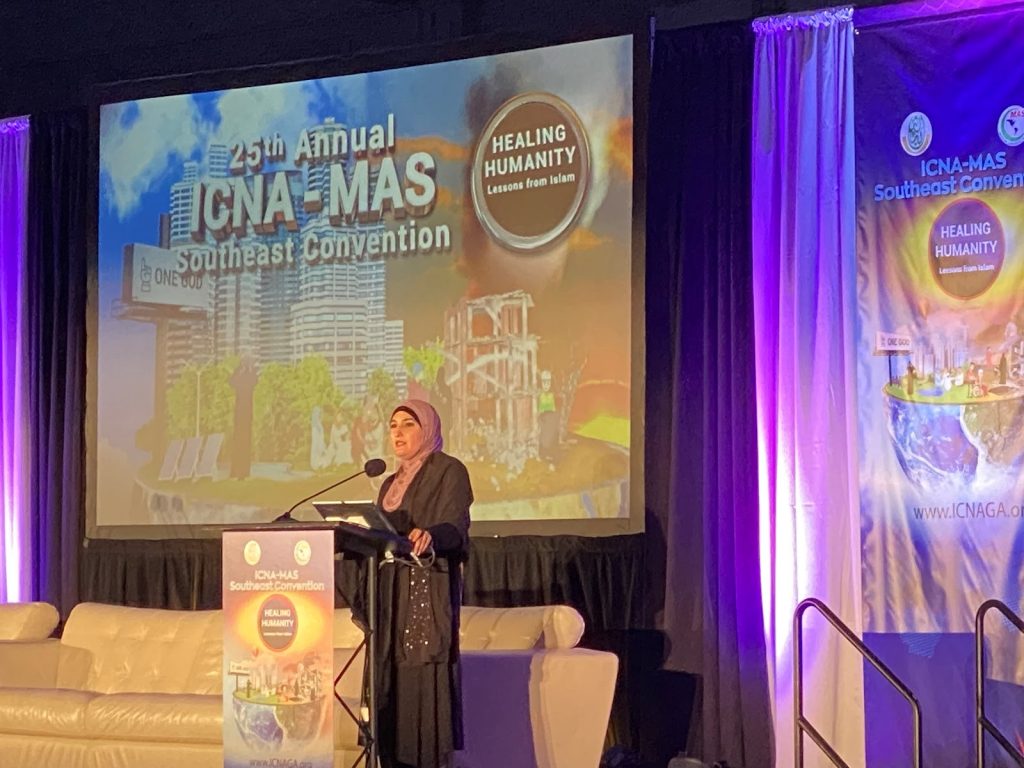
How to be a Visible Muslim
You could hear a pin drop in the Grand Ballroom as Linda Sarsour approached the podium stand. She stood tall and vibrant, as the seats of the large hall filled quickly.
“I don’t apologize for who I am. I am unapologetically Muslim. There cannot be a few Muslim leaders being visible on behalf of our community. Continue to be a visible Muslim in this country,” Linda spoke in a confident tone.
“I am not an activist. I am a Muslim. Your duty as a Muslim is to stand up against injustice. Our Prophet was the first victim of Islamophobia and not one time did he walk away from this deen. He did not allow anyone to give up the pursuit of justice,” Linda continued as the conference participants sat in awe.
“We as Muslims should be teaching the rest of this nation about anti-racism and the importance of fighting for the rights of women. Oftentimes we hear people say that Islam is a religion of peace. But you cannot have peace without justice. What I love about my beloved deen is that justice is not just for us. Our deen tells us to stand up for justice for all people,” she added.
You could hear the stillness in the room, as the crowd passionately watched from their seats. Young women sat on the floor close to the stage and listened to her every word. You could feel her emotions as she continued to speak about the plight of marginalized people living in this country.
“Hundreds of years ago, on this land you stand on today, there were enslaved African people on this land. About ⅓ of these people were Muslims. They were the most notable people and they sacrificed everything. I want you to think about those enslaved people,” she said.
“Some of them were forced to covert but still were able to transcribe the Quran. Then afterward, immigrant Muslims came to this country and built organizations, Masjids, and communities. I mention this because these people sacrificed everything for us to stand here today,” Sarsour vigorously spoke from the stage.
“If there is one take away for you from this conference it is for to be unapologetically Muslim,” Sarsour said as she ended her session.
The crowd exploded into passionate claps and shouts of “Allahu Akbar,” as Sister Linda exited the stage.
Her smile was wide as she humbly took her seat in the first row of the lecture hall. Her beauty and strong presence were undeniable to everyone in the room.
The post Muslims Discuss How to Build Bridges, Demolish Walls appeared first on About Islam.
source https://aboutislam.net/muslim-issues/n-america/muslims-discuss-how-to-build-bridges-demolish-walls/


Comments
Post a Comment