Girls Talk: Rethinking Outer Beauty and Makeup
A few years ago, I saw a Facebook post that caused a bit of outrage. The post was a picture of a nearly naked young woman, whom the poster believed looked perfect.
In addition to the photo, the misogynist who posted it had a message to all women: If you don’t look like this [his idea of physical perfection], then you have basically failed at life.

When women and girls obsess over how they look, it is because of this kind of thinking— a woman’s worth as a human being is entirely based on her appearance.
This message about beauty as worth is nothing new, but the pressure is intensifying as technology advances.
With the scrutiny of social media and the ubiquitous camera, the obsession with appearance has never been so gripping.
A Disease of Superficiality and Waste
Spending on beauty products has increased significantly in the past few years and has increased drastically in the past few generations.
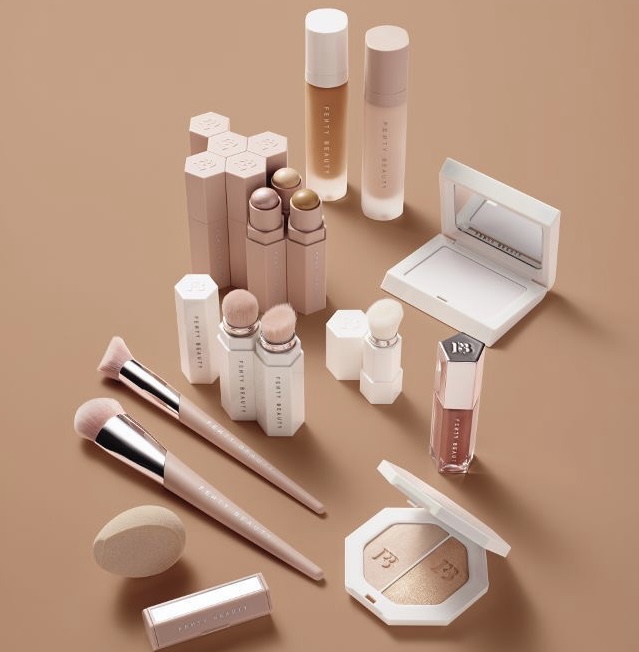
In the past decade, the annual view of beauty-related videos has gone up exponentially.
The obsession with appearance and the intense pressure on women (and increasingly on men) have become a disease of superficiality.
We are taking human potential and focusing it entirely on shallow pursuits.
And the Ummah is not immune to this disease. We are online, on social media, receiving these messages of toxicity day in and day out.
It is hard to combat it. It is hard to overlook the importance the world seems to put on appearance in the age of image.
We are spending more on expensive clothes and makeup. We are using more of our brainpower to learn how to contour and what is trending this week in fashion.
We are letting more and more life slip away as we worry over our worry lines while more lasting and meaningful pursuits pass us by.
Know the Source
“Follow the money” is a popular proverb because the root of most ills in the world can be traced back to financial interests.
Fanning the flames of our obsession with appearance, the beauty and fashion industries have a vested interest in our waste and superficiality.
Clairol taught us that our natural hair color wasn’t good enough. The bleaching cream industry taught dark-skinned women they were “too dark”, and the tanning industry taught light-skinned women they were “too light”.
We never would have known that our teeth needed to be blindingly white, our nails needed to be ruby red, and our eyelashes needed to be miles long if it didn’t bring in a profit.
Similarly, the fashion industry has not only convinced us we are never, ever wearing the “right” thing, they have altered time itself to do so.
It used to be that we had two seasons of fashion to correspond with the changing needs of the weather (spring/summer and fall/winter).
But now we have 52 micro-seasons wherein “seasonal” clothing is produced with such rapidity. It will be “over and out of style” in no time.
The bottom line is that our weakened sense of self and our confusion over purpose and value are these industries bottom lines.
A Cycle of Low-Self Esteem and Arrogance
When appearance becomes our only source of worth, it creates a never-ending cycle of low self-esteem and arrogance.
At first, we hyperfocus on what is sold to us as our flaws. We struggle to fix them, spending everything we have, even our own life force. Many fail at “fixing” a flaw that will, in a few years, be a celebrated mark of beauty.
And so we are taught to hate ourselves because our very worth as human beings is tied up in aspects of our appearance that we can do very little about.
Our esteem is the highest. And we look for any glimpse of affirmation, grasping at any straw of worth. And this is where arrogance sneaks in.
Because even if we feel that we don’t match the ideal of beauty, we tell ourselves that at least we are “better” than those “ugly” people.
We dissect what others are wearing, how they apply their make-up, and what color eyes, hair, nails, and clothing they have.
Showing no mercy, we zero in on how thin, tall, skinny, or short they are. And we tear them apart to make ourselves feel some worth, or at least more superior than someone else.
But low self-esteem cycles back around when we inevitably have a pimple, gain a few pounds, and eventually “lose our beauty” to old age.
The post Girls Talk: Rethinking Outer Beauty and Makeup appeared first on About Islam.
source https://aboutislam.net/family-life/your-society/rethink-outer-beauty-makeup/


Comments
Post a Comment