How the Prophet Muhammad Cared for Converts
It’s amazing to reflect upon that moment when the revelation came to the Prophet (peace be upon him). And to reflect on how people begin to embrace Islam and begin to follow the Prophet (peace be upon him).
In a very real way, Islam comes as a human but also as a disruptive force to the Arabian Peninsula.
The nature of true religion is that it agitates a society. It highlights the negative things in that society that need to be remedied. And it acts as a refuge for people in that society that maybe suffering from the ills that are prevalent in it.
This was very much the case when Allah brought the final revelation to our beloved Prophet Muhammad.
So people begin to embrace Islam, at first in smaller numbers. And they’re congregating in Dar Al-Arqam, in Makkah.
As time passes, more and more people embrace Islam.
Reflect for a moment upon the idea that the Prophet (peace be upon him) and his closest companions were there for people as they embrace Islam. There was a very well opportunity for human transmission to take place, in addition to people processing and digesting the revelation, as it came to the Prophet (peace be upon him).
And with that came the idea of there being a refuge or a safe space for people as they embraced Islam.
Looking for a Safe Refuge
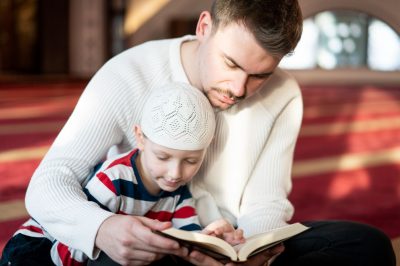
If you fast-forward to our day in time, and think for a moment about the parallel between Dar Al-Arqam, this refuge for converts and safe space for the people, and what people find in our communities.
I think, if we’re being honest with ourselves, we can admit that we have a lot of room for improvement to get back to that idea of Dar Al-Arqam, the safe refuge for people as they embraced Islam.
Because just like people were fleeing from the negative norms in Arabian Peninsula in the sixth century to Islam, there are converts to Islam today, not only seeking other worldly redemption, and not only seeking theological truth, but also seeking social redemption and social safety.
So, as they come into the Muslim community, they’re going to be looking for a safe space.
Reflect for a moment on the idea that the companions could talk to the Prophet about whatever was going on in their life, for better or for worse, and they were met with that beautiful open prophetic heart.
And reflect for a moment upon the priority that the Prophet put on new Muslims and the sensitivities that they brought with them. When he tells our mother, Aisha, in a rigorously authenticated narration, and there is variants of it:
O Aisha, were it not that your people were new to Islam, I would have rebuilt the Kabah on the foundation of Abraham.
In other words, the Prophet knew that the Ka’bah was built on other than the exact foundation that Abraham had built it. And that if it wasn’t going to affect the sensibilities of the people in Makkah that were new to Islam, he would have put it back on its original foundation.
So think about it, for the Prophet (peace be upon him) the sensibilities of people that are new to Islam, our priority over the exact placing of the Ka’bah. So what then does that say about us?
Safe Spaces for Converts Today
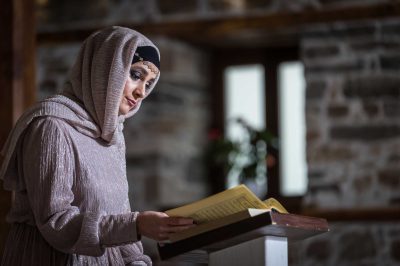
If we were to say, well, we would really like to make a safe space for converts in our community, but it would disrupt the standard of religiosity as it were that we have established in our community.
Or it will disrupt the kind of the norm that we have in our community.
So, converts are going to have to just come and conformed, or whatever we’ve got going on.
I think that we can do better. We can revisit this idea and make our community safe spaces for people as they are new to Islam, as they’re fleeing from whatever they’re fleeing from to Islam.
And whether that be by conversion to Islam or by way of re-commitment to Islam, or revisiting Islam… we have a lot of room for improvement in terms of making sure that our communities are safe spaces.
We ask Allah to give us success to do what is pleasing to Him in that regard.
May Allah enable us to bring about more safe spaces in our community.
(From Discovering Islam archive)
The post How the Prophet Muhammad Cared for Converts appeared first on About Islam.
source https://aboutislam.net/reading-islam/about-muhammad/how-the-prophet-muhammad-cared-for-converts/


Comments
Post a Comment