Finding A Mosque You Can Call Home
Would you like to see our mosque?
“Sister, would you like to come with me to see the mosque?”
This question was totally unexpected and caught me off guard.
I was a non-Muslim, I was white and I had no scarf for my head. Having only just met this lovely lady for a coffee in Starbucks, I wanted an informal chat about Islam, this wasn’t part of my plan.
The stereotype I held in my mind about how a mosque would be like is almost quite comical in hindsight. I pictured a very sombre, serious place, full of frowning men and mysterious rituals.
Yet, curiosity got the better of me and I accepted this impromptu invitation with a mixture of excitement and trepidation.
I had been reading into the religion of Islam for only a matter of months when it became clear to me that this was something that I should be taking seriously. I read anything I could get my hands on but felt I needed to speak with someone to clear up some questions I had.
The sister I met with was so warm and friendly, I was instantly at ease in her company. We chatted before she asked me to accompany her to the university mosque so she could pray.
So, This is Real Life?!
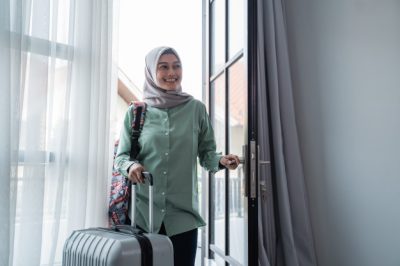
“Are you sure? Will no one mind?” I did not expect to be welcomed there at all. In fact, I had the impression that the mosque wasn’t really a place where women would be welcomed.
When we arrived we removed our shoes, I wasn’t asked to cover my head and simply sat at the back of the sisters’ section while the call to prayer was announced. I watched enthralled at the beauty of the salah for the first time in real life.
This first experience was very discrete and not at all overwhelming. I wasn’t expected to know anything and was completely at ease. Compared with some other converts, I know that this was a very gentle first experience, alhamdulillah.
University Mosque
The thing about a university mosque is that there is such a vibrant mix of Muslims; different nationalities, ethnicity, cultures, sects. Everyone gravitates together with the sole intention of belonging to the community with the need to worship and learn together while they are far from home. As such, there is a strong feeling of tolerance and acceptance of others.
The community is also in state of constant flux. Students come and go, graduate and move away. There is no room for ego or politics, just community.
Fresh faces are always welcomed and new friendships forged. With the prayer room on campus you will always meet a friendly brother or sister if you call in to pray.
Diversity
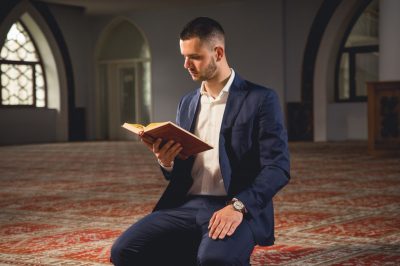
With such diversity comes a wealth of knowledge and talent. It’s also helpful that students do not need to work around strict timetables. So if you need to learn to pray, read Arabic, make wudu or just want to chat about Islam, life and everything in between, there will probably be someone around.
You will never, ever hear, “This is a Pakistani/Arab/Somali mosque.”
For those of us who are new to Islam, you would be forgiven for wondering why this would even be an issue but a diverse mosque can often be a luxury of city life.
My own experience at my university mosque was incredibly positive. I was welcomed into the circle of sisters with open arms, met up regularly to study and forged lifelong friendships. My contributions to discussions and lessons were valued and I was never made to feel like I was less of a Muslim because of my newness, race or background.
I remember sitting among this group of about a dozen women and wishing that the world could see what the reality of Islam was all about. They were happy, intelligent, kind and caring. I had honestly never known sisterhood until I had met these women. The scene was a far cry from the image I had initially held in my mind.
Back Home
On my return home to my small town in Ireland, I found a very different scenario. Having been nurtured and supported for several months I was now isolated and alone. The established Muslim community didn’t seem to have room for one more and I really struggled to become involved in any meaningful activities. But don’t despair!
If you can travel once a month to a larger mosque to attend a study circle or a Friday prayer, then I strongly encourage you to do so. It’s good for the soul to make sujud in line with your brothers and sisters.
But even if that is not possible then there are still alternatives.
1- Online Support
While we urge our dear readers to be careful when sourcing their knowledge, there are so many wonderful and beneficial social media accounts that are worth following. We can highly recommend Omar Suleiman, Mufti Menk, Dr Yasir Qadhi and Nouman Ali Khan. Listening to their talks and reminders will lift your imaan and teach you many basics.
2- Groups

Please check out our About Islam Supporting Converts group. We can guarantee you a warm welcome and an environment of learning and understanding. With the support of our team of experts we are also able to answer questions from a scholarly or counseling perspective.
3- Set up Your Own
Perhaps your community is just waiting for someone like you to come along and start things rolling! Ask around about meetings and study groups and if there are none being held regularly then suggest it.
Dear Muslims…
Please welcome converts into our communities. Guide them, befriend them and nurture them. Promise yourself that you will never be that person who turned someone away from Allah.
Open up the mosques and make room!
(From Discovering Islam archive)
The post Finding A Mosque You Can Call Home appeared first on About Islam.
source https://aboutislam.net/reading-islam/living-islam/finding-a-mosque-you-can-call-home/


Comments
Post a Comment