Humans on Destruction Path
“Do not corrupt the earth after it has been set right. Call on Him in fear and aspiration. Indeed, the mercy of Allah is near for the good-doers” (Quran 7:56)
My childhood was rather colorful. The privilege of growing up in both the city and village made me appreciate the beauty and importance of nature.
I remember the days when my cousins and I used to fish at a small open drain in front of my grandma’s ‘Kampung-style’ house. Yes, it was only a drain to accommodate water surplus when rainfall got heavy, yet it was so clean that fish and other kinds of water animals could survive.
 Read Also: An Eye on Climate Change
Nothing made me happier in those days than the sight of a jumping fish, a swimming frog, and the crystal-clear stream.
That was more than two decades ago. Now things have surprisingly changed. My subsequent trips to the village no longer thrilled me as I saw the once lively drain (as I child, I considered it as a mini-river) getting dried up and dirtier each day.
On one trip I was shocked to see the water inside black and turbulent, with green algae dominating another part of it. No fish or animal could possibly survive in such a polluted condition.
My heart broke as I thought of the happy shoals of fish I played with. Why did they have to pay the price of humans’ greed and carelessness?
The earth today is in dire need of proper governance, preservation of nature and balance. It has come to a stage where one single species, human beings, are pushing against the limits and thus chasing away the other species (animals and plants) to extinction.
Men are pursuing so many destructive activities, either deliberately or out of negligence that they seem to forget that the repercussions will eventually come back to the human species. As we threaten the lives of animals and plants on top of polluting the earth, we are merely putting ourselves on the verge of destruction.
Read Also: Signs in Surat At-Tariq
Seeking Energy

Energy, whose main source is fossil fuel, followed by oil and gas, is the main drive of the world economy. The burning of fossil fuel gives rise to carbon dioxide which, together with other greenhouse gases such as methane and nitrous oxide trapped heat in the atmosphere and warmed the earth.
Essentially this heat is needed for human survival but the current phenomenon shows an excessive release of greenhouse gases and the subsequent temperature increase in various parts of the world.
This, in turn, leads to the melting of glaciers and the rise of sea-level with all their dangerous implications such as coastal erosion, floods and threatened livelihood especially among inhabitants of small islands.
As the concentration of carbon dioxide goes up, the earth, already in a compromised state, tries to cope by having the gas dissolved into the ocean. It may first seem like good news as it means the amount of carbon dioxide will remain more or less balanced as part of the burden is transferred to the sea.
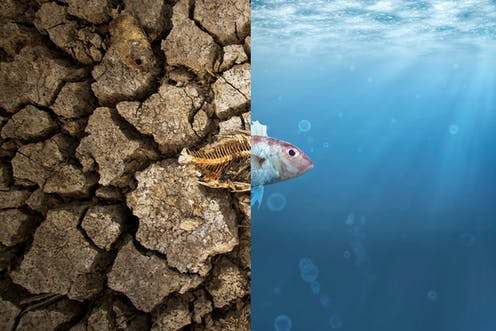
But this process poses harm to marine life. Increased ocean acidity renders life impossible for fish and other marine species. Carbonic acid resulting from the absorption of carbon dioxide into water threatens the lives of animals that rely on calcium shells for protection. So far it is estimated that the ocean’s acidity has increased by 30% due to excessive carbon dioxide emission.
The post Humans on Destruction Path appeared first on About Islam.
source https://aboutislam.net/muslim-issues/science-muslim-issues/humans-destruction-path/


Comments
Post a Comment